
Excel consulting for Atascadero businessesCall 949-464-7489

Atascadero, California · San Luis Obispo County

Excel Consulting Services in Atascadero, CA

Atascadero has plenty of customers. What it does not always keep is their spending, because larger retail and services sit a short drive in either direction. That makes the question for a business here not how big the local market is but how much of it stays, and in which categories it goes. JAAD Group provides Excel consulting in Atascadero for businesses that need that answered with figures.

  • Local spend-share analysis
  • Category leakage
  • Catchment and drive-time modeling
  • Automation and VBA
25+Years building Excel and Office systems for businesses
40+Person-hours a month returned on one reporting rebuild
1700Faster record retrieval after a workbook was restructured
66Improvement in budgeting accuracy across thirty entities

The market is here and the money is not

Your Customers Live Here and Spend Somewhere Else

A business in an isolated town competes with nobody. A business in a growing one competes with newcomers. A business here competes with a short drive, which is harder to see and harder to argue with, because the customer is not lost so much as occasionally absent.

What makes this specific rather than general is that leakage is uneven by category. Some things people will always buy locally regardless of price or range, some they will reliably drive for, and some sit on a boundary where range, hours or a single missing line decides it. Knowing which category you are in determines whether competing on range is sensible or futile.

Almost no local business has that view, because its own records only show what it sold. They say nothing about what the same households bought elsewhere, which is precisely the number that matters for deciding what to stock and what to stop.

The useful substitute is comparison and inference rather than a market research exercise: how a category performs here against how it performs for comparable businesses, where the gaps are widest, and what changes when range or hours move.

You are not competing with another shop. You are competing with a short drive, which never shows up in your own sales records.

What the work is really about

What Excel Consulting in Atascadero Usually Involves

Share of local spend, not size of local market

The first build is a view of performance by category rather than in total, because leakage does not happen evenly and a total hides it completely. Within the same business some categories will be performing at or above what the local population should support while others sit well below, and that difference is the signal. It points to where spending is going elsewhere and, more usefully, to where it is not. Businesses that have only looked at overall revenue are often surprised to find that two or three categories are carrying the shop while one or two are effectively absent from local purchasing habits. Producing the category view is a short piece of Excel reporting work on records already being kept.

Leakage is uneven by category

Second, the categories need classifying by how portable the purchase is. Some things are bought where the customer happens to be and will never justify a journey. Some are planned purchases where people compare and will travel without hesitation. The interesting group is in between, where a journey is worth making only if the local option fails on range, hours or price — and that group is where a business can actually change the outcome. Sorting your own lines into those three buckets is a judgment exercise done once, and it turns a general anxiety about competition into a short list of lines worth fighting for.

Your own records cannot see what left

Third, the honest limitation has to be stated: your own records cannot show what left. They show what you sold, and the spending that went up the road is invisible by construction. That means this work is comparison and inference rather than measurement, and it should be presented that way. Comparing category performance against what similar businesses achieve, watching what happens when you change range or hours, and tracking the categories that respond — those are the available instruments, and used consistently they are considerably better than instinct.

Range and hours decide the boundary cases

Fourth, range and hours are the two levers that decide the boundary cases, and both can be tested rather than guessed. Adding a line, extending an hour or stocking a category more deeply has a cost that is knowable and an effect that is measurable if the before and after are recorded properly. Most such changes get made, then judged by overall revenue, which moves for a dozen reasons and settles nothing. Judged against the specific category and the specific period, the same change gives a clear answer. That is a modest piece of financial modeling wrapped around an experiment.

A drive-time catchment is not a town boundary

Fifth, the catchment that matters is a drive-time rather than a town boundary, and the two are quite different here. Households a few minutes away in either direction are inside the market for some categories and outside it for others, depending on what else is on their route. Defining the catchment by travel time and by the direction people are already heading produces a far more realistic denominator than the municipal population, and it is the number that should sit underneath any per-household measure the business uses.

The gap is structure rather than software

None of this requires buying anything, and it is worth saying so because market data subscriptions are sold into exactly this situation. The sales records exist, the categories can be classified in an afternoon, and the comparisons can be built from public figures. Restructuring is days of work, and an hour of Excel expert help will usually establish how much of it you need.

What gets built

Excel Consulting Services in Atascadero, CA — The Six Areas

Six kinds of work. For a business competing with a short drive, the first two cover most of what gets commissioned.
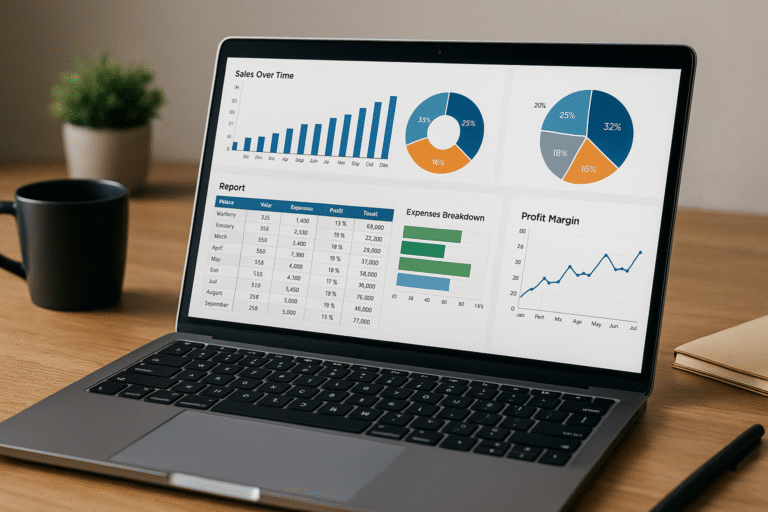
Excel report showing performance by category against expected local support Reporting

Performance by Category, Not in Total

Leakage is uneven, so a total hides it. Category by category, against what the local population should support, the gaps become visible and so do the strengths.

  • Category view rather than an overall revenue line
  • Gaps and strengths both made visible
  • Live connections to the records already being kept
  • Exception flags when a category moves out of pattern

Related: Excel reporting

Excel consultant classifying product lines by how portable the purchase is Structure

Sorting Lines by How Far People Will Travel

Bought where the customer happens to be, planned and worth a journey, or decided by range and hours. Only the third group can be influenced, and that is where to spend effort.

  • Three-way classification applied to your own lines
  • Effort directed at the lines that can actually move
  • Formula repair for references that stopped pointing anywhere
  • Performance — volatile formulas replaced with tables and pivots

Related: Excel consulting
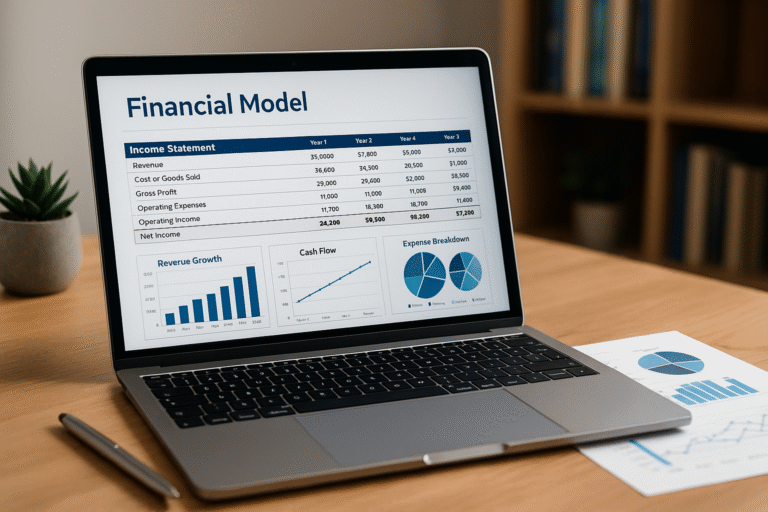
Excel model testing a range or hours change against a drive-time catchment Modeling

Testing a Change Instead of Guessing

Adding a line or an hour has a knowable cost and a measurable effect, provided the before and after are recorded against the right category and period.

  • Change tested against the category, not total revenue
  • Drive-time catchment as the denominator, not the town line
  • Scenario switching across range and hours options
  • Assumptions in one visible block, never inside formulas

Related: Excel financial modeling

Automated refresh of category sales and comparison figures in Excel Automation

Comparisons That Stay Current

The category view is only useful while it reflects now. Refreshed on a schedule, a category starting to slip shows up as a trend rather than as a bad year.

  • Scheduled refresh of category performance
  • Comparison figures brought in and kept dated
  • Import cleanup for exports that shift format between runs
  • Trend alerts on any single category

Related: Excel automation

VBA routine recalculating category comparisons after a range change Code

VBA to Rerun the Comparison

A category comparison is worth having only if it can be rerun after every change. By hand that happens annually; as a routine it happens whenever you want it.

  • Whole comparison rerun in seconds
  • Before and after periods handled consistently
  • Validated entry so a line cannot be miscategorized
  • Legacy macro repair where whoever wrote it has gone

Related: VBA and macro development

Remote Excel expert help session with an Atascadero retailer Support

Expert Help and Team Training

Sometimes there is no project, only a decision about range that has to be made before an order goes in. One call, your file on screen, and the reasoning left in writing.

  • Same-week attention when an order will not wait
  • Training on your own file rather than on sample data
  • Written handover so the comparison keeps being run
  • Retained hours where there is no in-house Excel depth

Related: Excel expert help and MS Office training

Where it starts

Eight Conversations That Begin an Atascadero Excel Project

Openings we hear from businesses competing with a short drive, and what the answer usually turns out to be.

"People shop here for some things and drive for others."

Exactly so, and which is which is the whole question. Sorting your lines by how portable the purchase is turns that into a short list worth acting on.

"Revenue is flat and I cannot tell what is slipping."

Because a total hides uneven leakage. Category by category, one or two are usually falling while the rest hold, and that is where to look.

"We added a line and I still do not know if it worked."

Judged on overall revenue nothing can be concluded. Judged against that category over the same period, it usually answers clearly.

"Should we compete on range?"

Only in the categories where range decides the journey. In the ones people buy wherever they are, extra range is cost without effect.

"Our market is the town population."

It is a drive-time catchment, which is different and direction-dependent. The municipal figure is the wrong denominator for every per-household measure.

"Extending hours felt like it helped."

Possibly it did. With the before and after recorded against the right categories, feeling becomes a figure.

"We were sold market data and it sat unused."

Common, because it arrived without a structure to compare it against. Your own category records are the half that was missing.

"The workbook has got slow and fragile."

Usually volatile functions across large ranges, or an array formula doing a pivot table's job. Rebuilt properly it is quick again and nothing is lost.

A quick check

Signs the Reporting Cannot See the Leakage

Nobody plans this work. It follows a flat year nobody could explain, or a range decision that turned out to be expensive. Earlier signals look like this:

  • Reporting is by total revenue rather than by category
  • Lines have never been classified by how far people will travel
  • A range or hours change was judged on overall revenue
  • The catchment is the town population rather than a drive time
  • No comparison figures sit beside your own performance
  • Market data was bought and never compared against anything
  • Nobody can say which categories are strongest locally
  • Changes get made and then debated rather than measured

What the blind spot costs

The misdirected effort is the main cost. Competing on range in a category people buy wherever they happen to be is spending with no available return, and the money would have worked in one of the boundary categories instead.

The untested change is the recurring one. Every range or hours decision judged on overall revenue teaches the business nothing, so the same debate happens again next year with no more evidence than it had the first time.

What happens before a quote

We look at the sales records by category alongside how decisions actually get made — who chooses the range, on what basis, and what gets reviewed afterward. The category detail is usually present and almost never read.

Frequently the finding is that a category view and a three-way classification settle the whole question, and that is what gets recommended. Where a genuine market study is the right answer rather than a spreadsheet, you will be told so. The first conversation is unpaid either way.

Work delivered

Three Builds and the Outcomes Measured

Genuine projects for real organizations, with figures supplied by the clients after the tools had settled in.

Excel budgeting template with tiered access across thirty companies

66% better
accuracy

A shared budget tool for thirty companies

At the start
A management company carried thirty businesses, each budgeted alone and combined by hand, with several people each needing a different level of access to one workbook.
What was built
A template with tiered permissions, VBA moving each approved budget into a master sheet, payroll, tax and benefits adjustable at the front, and totals loading into the accounting system.
The outcome
Double keying stopped completely. Accuracy improved 66%, the build cycle ran over ten times faster, and reforecasting during the year became realistic.

Automated report consolidating over fifty sources

40 hours
a month back

Hand-built reporting automated

At the start
Reports for management and for outside funding institutions were assembled manually, with one refresh cycle able to run to three days.
What was built
A program drawing more than fifty sources into one document in roughly five minutes, each source checkable beforehand and drafts produced for comparison.
The outcome
A task that had filled a working day now completes in minutes, returning at least forty person-hours a month from work that created nothing.

Workbook rebuilt onto native Excel tables with pivot tables and slicers

9 minutes
to 30 seconds

A workbook that had ground down

At the start
Retrieving one row from twelve hundred could take nine minutes, the result of array formulas layered on each other and years of code added unchecked.
What was built
Data rehoused on native Excel tables, pivots and slicers replacing the search logic, and the redundant array formulas and VBA removed rather than worked around.
The outcome
Thirty seconds for the same row on the same hardware. Structure had been the constraint all along, never processing power.

Who this applies to

Industries We Serve in Atascadero

The six areas JAAD Group covers, described as they appear in a town between two larger ones.

Retail and E-commerce icon

Retail and E-commerce

Inventory monitoring, sales tracking, profit calculations. Businesses where some categories hold locally and others leave for a short drive.

Finance and Accounting icon

Finance and Accounting

Cash flow management, P&L tracking, budget analysis. Owners whose flat revenue line conceals movement underneath it.

Healthcare and Insurance icon

Healthcare & Insurance

Patient record systems, policy tracking, compliance reports. Practices whose catchment is a drive time rather than a town boundary.

Real Estate and Construction icon

Real Estate & Construction

Investment models, cost forecasting, expense tracking. Trades competing with firms based in the larger towns nearby.

Manufacturing and Logistics icon

Manufacturing & Logistics

Supply chain analysis, production scheduling, vendor performance. Small producers deciding which lines are worth carrying at all.

Education and Training icon

Education & Training

Enrollment reports, course progress dashboards, grant tracking. Providers whose students could as easily travel elsewhere.

If your industry relies on Excel for financial analysis, data tracking or reporting, we can optimize and automate your workflows to save time and improve performance.

How it runs

Working With an Excel Consultant in Atascadero

Five stages. Stage one is unpaid, and a fair share of enquiries conclude there with a recommendation rather than a quotation.

  1. Say where you think the money goes

    Which categories hold and which you suspect are leaving. Sending a sales export makes the call much sharper, though it is not required.

  2. We read the records and the decisions

    Who chooses the range, on what basis, and what gets reviewed afterward. The category detail is usually present and almost never read.

  3. Scope and figure, written down

    Both agreed before construction. The records have been read by then, so vagueness about either would be a choice rather than a necessity.

  4. Built in the open

    Each working version arrives as it is finished rather than everything at once, which is what makes an early change inexpensive.

  5. Handed over in full

    The workbooks, any code behind them, a written account of how the classification and comparisons work, and time with whoever will run them.

Jeff Mattus, Owner and President of JAAD Group Excel Consulting

Who does the work

Jeff Mattus

Owner & President, JAAD Group

JAAD Group is Jeff Mattus by himself. He built the practice on more than twenty-five years of Excel and Office systems work, coming to the field through Computer Science rather than through a finance department. Where an answer has to be inferred from what the records do not contain, that is the useful instinct.

The projects have reached into finance, healthcare, technology and property. The range is why an opening call usually produces a diagnosis rather than a discovery phase: category share analysis has close relatives in performance work across industries with no retail in them.

Delivery is remote, which is how a San Luis Obispo County business works with a practice based in Nevada without that being a factor. One person takes the call, prices the job and then builds it.

Organizations we have built for

Trusted With Business-Critical Spreadsheets

CAPTRUST
Trutina
Linmore LED
Gro-Well
McGregor Benefits
The Benefits Academy
Glen Acres HOA
Health Insurance Team
SSIS
OEC
SBA
Jesse Consulting

Why a specialist

Why Atascadero Businesses Use a Dedicated Excel Consultant

Only one discipline

Excel, VBA and Office automation are the whole practice, which is why an opening read is usually right and the figure close to the final one.

Your records before bought data

Market subscriptions are sold into exactly this situation. Your own category detail is the half that was missing.

Clear about what cannot be measured

Spending that left is invisible in your records by construction. This is comparison and inference, and it is presented as such.

Effort aimed where it can work

Competing on range only pays in the categories where range decides the journey. The classification tells you which those are.

Figures the clients supplied

Each result quoted above came from the business running the tool, and all three builds appear at length earlier.

Remote, so it starts at once

Everything happens over a shared screen, so a decision before an order goes in gets attention the same day.

Questions

Frequently Asked Questions

What does Excel consulting in Atascadero usually involve?

Most often it is reporting performance by category rather than in total, so uneven leakage becomes visible, and classifying your lines by how far people will travel for them.

After that it is testing range and hours changes against the right category and period, and using a drive-time catchment as the denominator instead of the town population.

Can you actually measure what people spend elsewhere?

No, and that should be said plainly. Your records show what you sold; the spending that went up the road is invisible by construction.

What is available is comparison and inference: category performance against what comparable businesses achieve, and what changes when you alter range or hours. Used consistently that beats instinct by a wide margin.

Why classify lines by how far people will travel?

Because only one of the three groups can be influenced. Items bought wherever the customer happens to be will never justify a journey, and planned comparison purchases will always attract one.

The group in between — where a journey happens only if the local option fails on range, hours or price — is where effort and money actually change the outcome.

We added a line and cannot tell if it worked. Why not?

Because it was judged on overall revenue, which moves for a dozen reasons at once and settles nothing either way.

Judged against that specific category over a defined before-and-after period, the same change usually gives a clear answer within a quarter.

Is the town population the right market size to use?

No. The catchment is a drive time and it is direction-dependent, because households a few minutes away are inside your market for some categories and outside it for others.

Defining it that way produces a far more realistic denominator for any per-household figure the business relies on.

We bought market data and never used it. Can it be salvaged?

Usually, because the missing piece was a structure to compare it against rather than the data itself. Your own category records supply that.

Set side by side and kept dated, bought figures become a reference point rather than a report nobody opens.

How is this priced?

By scope, which is why the records get read before any figure is named and why that reading is free. A category view is small and fixed-price; a full comparison model is priced as one job.

Either way the deliverable and its price are both written down before anything is built.

You are in Nevada. Does that work for a Central Coast business?

It works without difficulty, since everything is delivered over a shared screen and that is identical at any distance.

It also means a decision that cannot wait gets looked at the same day, and no part of the invoice is travel.

The person who kept our reporting has moved on. Can you take it over?

Routinely. The file gets taken apart down to its logic, whatever is only just holding is marked, and each part mended or rebuilt according to what it needs.

What the work needs is time with whoever makes the range decisions now, because their reasoning matters as much as the formulas.

What sort of timescale?

A category view with the classification applied is often a few days. Adding tested comparisons and a drive-time catchment usually runs one to two weeks.

Whatever the size, the figure is recorded before construction rather than appearing partway through.

What stays with us at the end?

The workbooks, any code behind them, a written account of how the classification and comparisons were built, and time with whoever will keep running them.

Nothing depends on us afterward and no recurring charge keeps it alive. More help is available on request and never part of the deal.

Do those six sectors limit what you will take on?

No. They describe where enquiries have tended to come from rather than any rule about what is accepted.

A category view, a drive-time catchment, a tested range change and a clinic rota are far more alike underneath than they look.

Also serving

Excel Consulting Across California and Nevada

This is screen-share work, so a California business is served exactly as a Nevada one. Other places with their own pages:

By service: Excel reporting for the category view, Excel consulting for the classification, financial modeling for testing a change, Excel automation for keeping it current, and VBA and macro development or Excel expert help for the rest.

Atascadero is the hub here — schematic, not to scale

Send Us the Workbook

Tell us which categories you think are leaving, or attach a sales export. What comes back is a straight read on the problem and what measuring it properly would take.

949-464-7489

JAAD Group Excel Consulting · 2937 Hawksdale Dr, Las Vegas, NV 89134
Excel consulting services in Atascadero, CA and across California, delivered remotely