
Lovelock, Nevada · Pershing County
Excel Consulting Services in Lovelock, NV
Lovelock sits where the Humboldt runs out and I-80 keeps going. It is the Pershing County seat, one of the more significant alfalfa seed districts in the west, and home to a state institution that buys and reports on a scale the town's size would never suggest. Three very different kinds of record-keeping, all of them usually held in a spreadsheet. JAAD Group rebuilds those, delivered remotely.
- Contract and delivery reconciliation
- Institutional procurement records
- Daily roadside trade
- Inherited workbook repair
Three economies, three reporting problems
Seed Contracts, State Procurement and the Interstate
Very little about Lovelock's reporting looks like ordinary small-town bookkeeping. Alfalfa seed is a contracted, long-cycle crop with losses that have to be accounted for precisely. Institutional purchasing runs to public standards. And the businesses along the interstate live on numbers that change every single day.
Seed is the distinctive one. Unlike hay, seed is grown against contracted volumes, and what leaves the field is not what gets counted. Moisture, cleaning losses and grading all sit between the harvest figure and the delivered figure, and if those are not tracked as separate quantities the reconciliation at the end of the season becomes an argument rather than a calculation.
The institutional side brings public procurement discipline into a small town: purchase records, headcount reporting and budget submissions that will be read by people with authority and no context. Traceability matters more here than presentation, and the two are frequently confused.
Then there is the interstate. Fuel, food and lodging along I-80 generate figures that move daily but tend to be reviewed monthly, which means most decisions get made on numbers that are several weeks stale by the time anybody looks at them. A scheduled automated refresh closes that gap in days.
What actually goes wrong
Three Failure Modes Behind Pershing County Reporting
The reconciliation gap nobody can break down
The reconciliation problem deserves spelling out, because it is the one that costs Lovelock growers real money and is almost always caused by structure rather than by anyone's error. A harvest figure, a cleaning loss, a moisture adjustment and a delivered weight are four different quantities. If the workbook records only the first and the last, the difference between them becomes a single unexplained number, and there is no way to tell a normal season from a bad one, or a processing issue from a contract dispute. Recording all four as separate fields costs nothing at entry and turns that unexplained gap into something you can manage, and it is the single highest-value restructuring available to a seed grower.
Daily numbers on a monthly review cycle
The daily-versus-monthly gap on the interstate side is a scheduling problem more than a modelling one. Fuel margin moves with price, shrinkage accumulates quietly, and a monthly review means a problem runs for weeks before anyone sees it. The fix is rarely a better report — it is the same report arriving automatically each morning instead of being assembled when somebody has time. See Excel reporting for what that pack usually contains.
Filings assembled rather than generated
Public-side reporting has a different failure mode again. Nothing goes visibly wrong; the submissions get filed and accepted. The cost shows up as time, because each one is rebuilt from source rather than generated, and as risk, because a figure produced by hand every period is a figure that can be produced differently one period without anybody noticing.
The records already hold what is needed
What all three have in common is that the underlying records usually already contain the right information. It is held in a shape that makes the useful question expensive to ask. That is a restructuring job measured in days, and it is almost always the cheapest intervention available.
Institutional purchasing rewrites your reporting
Institutional purchasing deserves separate treatment, because its scale is disproportionate to the town and its requirements are unlike anything else here. Volumes are large, suppliers are fixed by process rather than chosen by preference, and every line has to be defensible against a procurement standard rather than against commercial judgement. Businesses supplying into that environment find their own reporting reshaped by it: pricing has to be evidenced, deliveries have to be documented at a level nobody else asks for, and a discrepancy becomes a formal matter rather than a phone call. Building for that is a different exercise from building for a commercial customer, and the difference is almost entirely structural.
Water timing decides the year
Water timing is the other factor that quietly determines outcomes here. Seed is a long-cycle crop and irrigation availability drives both the planting decision and the eventual quality grade, which means a purely financial model missing water timing is describing a business that does not exist. Where allocation and delivery dates are recorded alongside cost, the model starts producing answers a grower can act on: whether a given field is worth planting at all this year, and what a delayed delivery does to the contract position months later.
What we do
Excel Work for Lovelock Businesses
Six areas. Around Pershing County, reconciliation and automation account for most of the projects that actually get commissioned.

Reconciliation
Making Contract Reconciliation a Calculation
Where what you harvested and what you delivered are two different numbers, the space between them needs its own fields. Built properly, the season-end reconciliation stops being a negotiation about whose figure is right.
- Separate quantities for harvest, cleaning loss, moisture and delivery
- Contract terms as data rather than remembered by the person invoicing
- Variance flagged at the point it appears, not at year end
- Season comparison that shows whether this year's loss was unusual
Related: Excel consulting
Automation
Reports That Arrive Before You Do
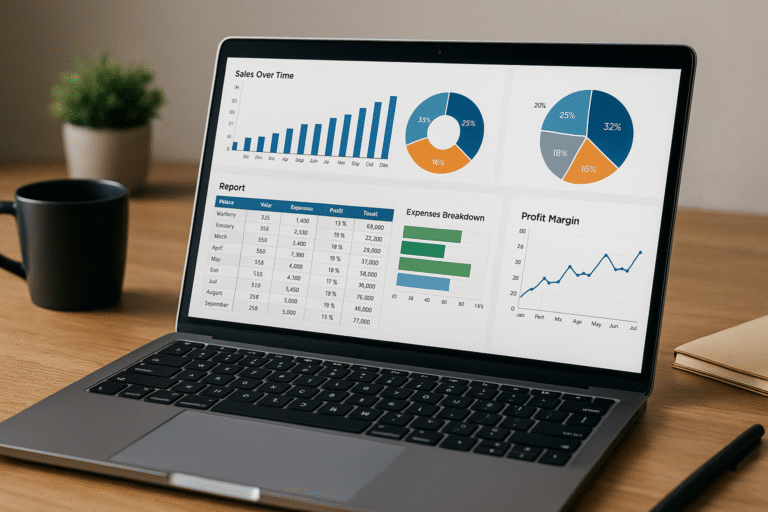
Anything reviewed monthly that actually changes daily is costing you the difference. Fuel margin, covers, occupancy and shrinkage all belong in a pack that builds itself overnight from the systems already recording them.
- Overnight refresh so the morning starts with current figures
- Shrinkage measured rather than estimated at stocktake
- Multi-site roll-up where one owner runs several operations
- Alerts on movement instead of a monthly discovery
Related: Excel automation
Compliance
Submissions Built to Be Audited
Public and institutional reporting is judged on whether a figure can be traced, not on how it is laid out. That is a structural property, and it has to be designed in rather than tidied up afterwards.
- One calculation path for every reported figure
- Assumptions in a visible block, labelled and dated
- Procurement and headcount records that reconcile to the ledger
- Repeatable output so this period matches last period's method
Related: Excel reporting

Code
VBA Where Rules Have to Be Enforced
Some rules cannot be left to whoever is entering data that day. Code puts them in the tool: valid values only, calculations that cannot be overtyped, and a process that runs the same way every time.
- Controlled entry so invalid data is refused at the point of entry
- Locked calculations that cannot be casually overwritten
- Repeatable routines for anything done every period
- Repair of inherited code nobody currently dares to open
Related: VBA and macro development
Modeling
Models That Match the Growing Cycle
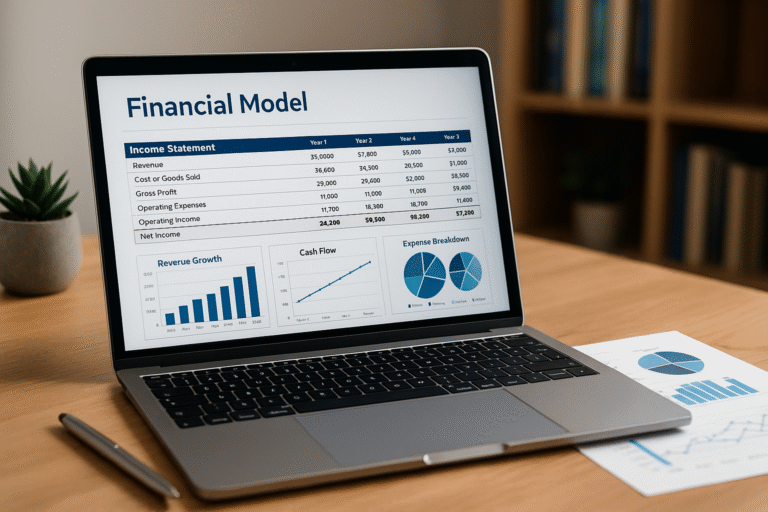
Seed farming spends heavily for months and receives once. A model built on even monthly flows describes a business that does not exist, and produces a cash position that is wrong in both directions.
- Cash timing aligned to planting, irrigation and delivery
- Contract scenarios switchable rather than saved as separate files
- Break-even by field instead of across the whole operation
- Multi-year view without rebuilding the history by hand
Related: Excel financial modeling

Support
Help Now, and Training So It Sticks
Some of this is an hour on a shared screen when something has broken. The rest is showing the two or three people who use the file why it behaves the way it does.
- Same-week attention when something has failed
- Training on your own workbook rather than a sample
- Documentation aimed at whoever comes next
- Retained hours where there is no in-house Excel depth
Related: Excel expert help and MS Office training
How these projects begin
Eight Openings We Hear Around Pershing County
Each has a fairly standard resolution, and none of them starts with buying software.
"The delivered weight never matches what we harvested."
It should not — cleaning and moisture sit in between. The problem is that the difference is recorded as one unexplained number instead of as its component parts, which makes it impossible to tell a normal loss from a real issue.
"We find out about a bad month several weeks late."
Daily figures on a monthly review cycle. Automating the refresh so the pack builds overnight usually takes days of work and changes what management can actually respond to.
"Every submission gets rebuilt from scratch."
The records almost always hold what the submission needs; they just do not carry it in a readable shape. Once they do, filing becomes a refresh rather than a week.
"Our cash position is never quite right."
Common where spending is continuous and income arrives in one or two events. A model built on level monthly flows cannot represent that, so it is wrong for most of the year in alternating directions.
"Shrinkage is a guess."
Then it is not being managed, only noticed. Measuring it at the right grain rather than at stocktake usually makes the pattern obvious inside a single month.
"Nobody wants to open the macros."
Inherited code with no documentation, doing something important. It gets read, written down, and simplified — usually with a fair amount removed, because most of it turns out to be working around a structural problem that can just be fixed.
"Our pricing has to be evidenced line by line."
Institutional supply requires the reasoning behind a price to be reconstructable, not just the price itself. That means cost build-ups recorded as data rather than calculated once and typed in, so the same question asked two years later gets the same answer.
"The model ignores when the water actually arrives."
Which makes it a financial model of a business that does not exist. Irrigation timing drives both the planting decision and the grade at delivery, so it belongs in the model as an input rather than as context somebody holds in their head.
Worth checking
Signs the Workbook Is Now the Bottleneck
Nobody plans this work. It happens after a season closes badly or a figure turns out to have been wrong for months. The earlier indicators are these:
- A gap between harvested and delivered that nobody can break down
- Daily numbers reviewed monthly, so problems run for weeks
- Each submission rebuilt from source rather than generated
- Cash forecasts that are wrong in a predictable direction every season
- Shrinkage discovered at stocktake instead of measured continuously
- Contract terms held in someone's memory rather than in the file
- Macros nobody will touch because the author is long gone
- A file that has become slow and everyone has quietly adapted to it
What it costs to leave alone
The reconciliation gap is the expensive one. Where the difference between harvest and delivery cannot be explained, every season's shortfall is absorbed rather than investigated, and a genuine processing or contract issue looks identical to normal variation.
The time cost is more visible but usually smaller. A week per filing cycle, five hours a week reassembling a report — irritating, but at least everyone can see it. The unexplained reconciliation is the one that quietly takes money.
What we look at first
The file and the routine around it, before anything is proposed. Frequently the finding is that adding two or three fields at the point of entry resolves the whole complaint, and the honest advice is to do exactly that and nothing more.
Where it is bigger than that, you get the reasoning as well as the recommendation. The consultation costs nothing and ends in a straight answer, including when that answer is that the workbook is fine as it stands.
Completed work
Three Projects and What They Measured Afterwards
Real clients, real numbers, recorded once the tools were in daily use.

66% better
budget accuracy
Budgeting for a thirty-company group
- Starting point
- Thirty companies under one management group, each preparing budgets separately, consolidated by hand, with different people needing access to different parts of the same workbook.
- The build
- A template with security levels, VBA that rolls approved budgets into a master sheet, adjustable payroll, tax rate and benefits handling, and a direct load into the group's accounting system.
- Measured after
- Budget accuracy rose 66%, the build cycle ran over ten times faster, and reforecasting during the year became something the group actually did rather than discussed.

40+ hours
back each month
Operations reporting, automated
- Starting point
- Reports assembled manually for internal management and for external funding institutions. Each update cycle consumed up to three days.
- The build
- A tool that pulls more than fifty sources into a single document in roughly five minutes, allows each source to be checked before building, and generates drafts for comparison.
- Measured after
- A job that had taken up to eight hours now runs in minutes, returning at least forty person-hours a month to other work.

Nine minutes
down to thirty seconds
Restoring a workbook that had seized up
- Starting point
- A 1,200-row file where finding a single record could take nine minutes, caused by layered array formulas and code that had accumulated unchecked over years.
- The build
- Data moved onto native Excel tables, pivot tables and slicers substituted for the search logic, and the unnecessary VBA and array formulas removed outright.
- Measured after
- Thirty seconds for the same lookup, on the same computers. The constraint had been the structure, never the hardware.
Sectors
Industries We Work Across
The six areas JAAD Group covers, framed as they turn up in Pershing County.

Manufacturing & Logistics
Supply chain analysis, production scheduling, vendor performance. Seed processing, haulage and delivery against contracted volumes, where the reconciliation is the whole game.

Finance and Accounting
Cash flow management, P&L tracking, budget analysis. County and institutional budgeting on statutory dates, plus farm cash flow that spends for months and receives once.

Retail and E-commerce
Inventory monitoring, sales tracking, profit calculations. Fuel, food and lodging on the I-80 corridor, where margins are thin enough that shrinkage has to be measured rather than estimated.

Real Estate & Construction
Investment models, cost forecasting, expense tracking. Farm ground, storage and equipment measured over seasons and decades rather than quarters.

Healthcare & Insurance
Patient record systems, policy tracking, compliance reports. Rural and institutional health administration, carried by small teams against full requirements.

Education & Training
Enrollment reports, course progress dashboards, grant tracking. District reporting for a small population, on schedules set outside the county.
If your industry relies on Excel for financial analysis, data tracking or reporting, we can optimize and automate your workflows to save time and improve performance.

The process
How a Project Runs From Here
Five stages. The first costs nothing and quite often ends without a project attached.
A conversation about the file
What it is meant to produce, and the point at which it stops doing that. Sending the workbook makes this considerably more useful but is not a precondition.
Auditing the file and the routine
Where the data comes from, who edits it, and which corrections happen every single period. Those repeated corrections are where the real fault usually lives.
A written, fixed scope
Deliverable and price agreed up front. Having already examined the file, there is no honest reason to leave the cost open.
Building where you can see it
Working versions as they emerge rather than a reveal at the end. Course corrections are inexpensive early and painful late.
Handover that outlasts us
Source code, written documentation and training for the people who will use it. A tool only its builder understands has moved the risk rather than removed it.
Who you deal with
Jeff Mattus
Owner & President, JAAD Group
The work is done by Jeff Mattus, who founded JAAD Group after twenty-five years building Excel and Office systems, on a Computer Science background rather than a finance one. The reason that combination matters is practical: tools built by engineers alone tend not to get used, and tools built by finance people alone tend to fail silently.
That experience covers finance, healthcare, technology and real estate. It means the first conversation is usually a diagnosis rather than an exploration — whatever your file is doing, some version of it has appeared before in another industry.
For a Pershing County business the useful part is continuity. The person who takes your call scopes the job and, in almost every case, builds it. Nothing is passed to an account manager or to somebody who was not in the first conversation.
Organizations we have built for
Trusted With Business-Critical Spreadsheets














Why this rather than the alternatives
What a Specialist Changes
One discipline, not twenty
Excel, VBA and Office automation are the entire practice, which is why a first-call diagnosis is usually right and the estimate close.
Repair recommended over rebuild
If restructuring will do, that is the advice — even though rebuilding would be the larger invoice.
Remote by design
Screen share and shared files. Nothing about Lovelock's location changes the service, and no part of the bill is travel.
Documented on delivery
Written explanation and training included, so the tool survives whoever currently runs it moving on.
Numbers that were measured
The outcomes above came from clients after deployment, not from a sales page.
Continuity throughout
Scoped, built and handed over by the same person. In a small office that continuity is a large part of the value.
Questions
Frequently Asked Questions
Can Excel handle seed contract reconciliation properly?
Yes, and usually better than bought software at this scale — provided the workbook records harvest, cleaning loss, moisture adjustment and delivered weight as four separate quantities rather than as a start and an end.
Most inherited farm files record two of the four. That is why the season-end difference becomes an argument: the data to explain it was never captured.
Our income arrives once a year. Can a cash model cope with that?
It has to be built for it, or it will be wrong for most of the year. Spreading income evenly across twelve months describes a business that does not exist and hides the period when cash is genuinely tight.
Building the actual timing in is a short piece of work with an immediate effect on borrowing and purchasing decisions.
We report to a state institution. Does that change how you build?
It raises the bar on traceability rather than on appearance. Every figure needs a single calculation path, assumptions need to sit somewhere a reviewer will find them, and nothing important should be hard-coded inside a formula.
The reason is straightforward: the person reading it has authority, no context, and no easy way to ask you a question.
How quickly can daily reporting be automated?
Where the data already sits in systems that can be read, a daily pack is often days rather than weeks. It is usually the fastest-paying project available, because the saving repeats every morning.
The estimate is given in writing after the audit, before any build work starts.
What does this cost?
Scope determines it, which is why the file gets looked at first and the consultation is free. A reconciliation fix or a single automated report is small and fixed-price; a larger system runs in stages.
You receive a written scope with a defined deliverable and price before anything is built.
Is remote consulting a problem for a town this size?
It is the reason it is possible. The work is looking at your file together on a shared screen, which distance does not affect.
It also means an urgent problem gets attention the same day, and none of the fee is somebody driving across Nevada.
The person who built our file has gone. Can you still work on it?
That describes a large share of our projects. The file is reverse-engineered, the fragile parts identified, and either repaired or rebuilt where repair is not sensible.
What we need is not the original author but a conversation with whoever reads the output, because deciding what the numbers should mean is the difficult part.
How long do these projects take?
A single automated report is often a matter of days. Restructuring an inherited workbook is commonly one to two weeks depending on the audit. A staged system with integrations runs across several weeks.
That timeline is committed in writing before work begins.
What do we own at the end?
Everything: the workbooks, the macro source code, written documentation, and training for the people using it.
There is no lock-in and nothing requires a subscription to keep working. Ongoing support is available and always optional.
We supply an institution and every price has to be justified. Can Excel do that?
It can, provided the cost build-up is stored as data rather than performed once and typed in as a result. The requirement is that the same question, asked two years later by somebody else, produces the same answer.
That is a structural build: inputs recorded, calculation visible, assumptions dated. It is not more work at entry, it is different work at design time.
Can irrigation timing go into a financial model?
It should. Where water availability drives the planting decision and the eventual grade, a model built on cost alone is missing the variable that decides the year.
In practice that means recording allocation and delivery dates alongside the financial figures, so the model can answer whether a field is worth planting given this season's timing rather than last season's average.
Our stocktake numbers never match the system. Where does that come from?
Usually from measuring at the wrong moment rather than from theft or error. Shrinkage accumulates continuously and gets discovered periodically, so by the time it is visible there is no way to attribute it to a period, a shift or a product.
Recording at a finer grain does not add work if it is captured automatically, and it usually makes the pattern obvious within a single month.
Do you only work in the industries listed above?
No. Those are where most of the work has been, but the constraint is the problem rather than the sector. If it is a spreadsheet problem, it is in scope.
Seed contracts, institutional procurement, a fuel margin report, a clinic rota — structurally these are the same piece of work.
Also serving
Excel Consulting Across Nevada
Because delivery is remote, location makes no difference to the work. Other Nevada towns with pages of their own:
Looking for a particular service? See Excel automation, VBA and macro development, Excel reporting, financial modeling, Excel consulting or Excel expert help.
Lovelock is the hub here — schematic, not to scale
Let Us See the File
Send the workbook or describe what it is failing to do. You will get a direct assessment of the cause and the effort to fix it, before anything is committed.
949-464-7489JAAD Group Excel Consulting · 2937 Hawksdale Dr, Las Vegas, NV 89134
Working remotely with Lovelock and businesses across Nevada