
Henderson, Nevada · Clark County
Excel Consulting Services in Henderson, NV
Henderson is Nevada's second-largest city and, unusually for this state, it does not run on tourism. Hospital networks, a chemical and light-manufacturing corridor left over from the wartime magnesium plant, corporate operations relocating from higher-cost states, and thousands of professional practices across Green Valley and Water Street. JAAD Group provides Excel consulting in Henderson across all of it.
- Multi-entity consolidation
- Compliance reporting calendars
- Job costing at volume
- Workbook restructuring
A second city with second-city problems
Why Henderson Businesses Run More Entities Than Their Spreadsheets Expect
The recurring theme in Henderson is multiplicity. More sites, more entities, more reporting lines than the workbook was designed around. A city of this size produces organizations that grew by adding rather than by scaling, and the spreadsheet almost always grew the same way — one more tab per addition.
Healthcare is the largest employer group and produces the most fragile files. Staffing rosters built around shift patterns, payer-mix analysis, and compliance and grant reporting on dates set by funders rather than by finance. The calendar is not negotiable, so the workbook gets patched around it year after year instead of fixed.
The older industrial corridor east of Water Street brings production scheduling, materials costing and vendor scorecards, typically spread across systems that describe the same movement in three different vocabularies and get reconciled by hand each week.
And the corporate relocations arrive with something specific: a finance function designed for a larger head office, now operated by a fraction of the staff. Models that assumed a team of six being maintained by one analyst is where errors start appearing quietly.
The structural pattern
What Excel Consulting in Henderson Usually Involves
Growth by addition produces the tab-per-entity workbook
The tab-per-entity workbook is the defining Henderson artefact. An organization acquires a second site, a second clinic, a second entity, and the sensible immediate response is to copy the existing sheet and adjust it. That is correct for two. At six it becomes difficult, at twelve it becomes a job nobody wants, and by then the consolidated view — the only view leadership actually asks for — requires a day of manual assembly every time it is requested. The fix is not a new system. It is a data layer underneath, with the familiar per-entity views generated on top, so nothing changes for the people entering data and everything changes for the person trying to total it.
Acquisitions arrive with their own chart of accounts
Healthcare adds a second dimension: the reporting calendar belongs to somebody else. Payer deadlines, grant reporting dates and compliance windows are fixed externally, which means the workbook has to be ready rather than rebuildable. Where a return is assembled from source each period there is no slack when the deadline lands badly, and the work happens under pressure with predictable consequences. Building those returns as generated output rather than assembled output is standard Excel automation, and it converts an annual crisis into a refresh.
Compliance calendars are set by people who are not in the room
The relocation pattern deserves separate attention because it is specific to cities like this one. An operation moves to Henderson partly for cost, and the finance function that arrives is smaller than the one that built the models it inherited. Those models frequently assume review steps, cross-checks and specialist knowledge that no longer exist in the building. They keep producing output, which is the dangerous part — nothing announces that the assumptions are now unverified. Simplifying deliberately, so the model matches the team that has to run it, is usually more valuable than adding capability.
Relocated finance functions inherit models built for bigger teams
Construction across the master-planned communities produces its own version of multiplicity. Cadence, Inspirada and the rest generate large numbers of essentially similar jobs, and the natural response is a file per job. Each file is fine; the portfolio is invisible. The same structural fix applies as in Fernley's trades businesses, though the scale here is considerably larger.
Master-planned construction multiplies the same job
Professional practices around Water Street and Green Valley face the mirror image: a template copied per client until nobody can answer a question across the whole book. Utilisation, realisation and fee forecasting all sit inside files that were never intended to be totalled, and the partner asking how the practice is performing gets an answer assembled by hand.
Water Street practices need totals across clients
In each of these the raw material is already being captured. Henderson organizations are not short of data. What is missing is a layer underneath that lets the same records answer both the detailed question and the aggregate one, and building that is a matter of days rather than a systems programme.
What we do
Excel Consulting Services in Henderson, NV — The Six Areas
Most Henderson engagements begin with consolidation or automation, because that is where multiplicity does the most damage.

Consolidation
Consolidating the Tab-Per-Entity Workbook
A data layer underneath, with the familiar per-site or per-entity views generated on top. Nothing changes for the people entering data; the consolidated view stops being a day's work.
- One data layer with per-entity views preserved above it
- Consolidated totals as a pivot rather than a project
- New entities added without copying another sheet
- Comparable history once entity becomes a column
Related: Excel consulting
Automation
Returns That Are Ready Rather Than Rebuildable
Where the deadline belongs to a payer or a funder, the return has to be waiting rather than assembled. That is a scheduling and structure problem, and it is usually quick to solve.
- Compliance and grant returns generated from your own records
- Scheduled refresh so the pack exists before the deadline
- Multi-source consolidation across clinical and finance systems
- Validation on build so errors surface before submission
Related: Excel automation
Modeling
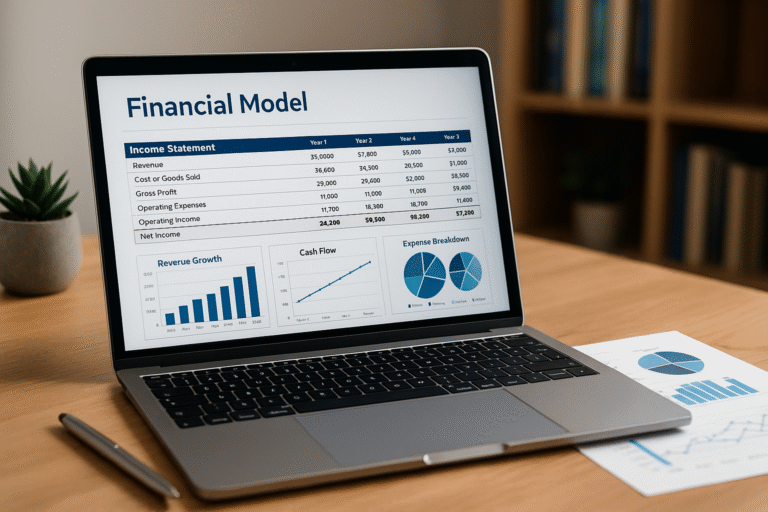
Models Sized for the Team That Runs Them
A model inherited from a larger organization assumes reviewers who are no longer there. Deliberately simplifying it, so it matches the people maintaining it, is usually worth more than adding capability.
- Assumptions in one visible block, labelled and dated
- Review steps removed that no longer have anyone to perform them
- Scenario switching instead of parallel saved versions
- Multi-entity consolidation that reconciles automatically
Related: Excel financial modeling

Code
VBA Where Consistency Cannot Be Optional
Across many entities, categorization that depends on judgement will drift. Code enforces it at the point of entry so the consolidated view stays meaningful.
- Permitted values only, refused at entry
- Entity and cost coding applied consistently by the tool
- Deterministic routines for anything run every period
- Legacy macro repair where the author has left
Related: VBA and macro development
Reporting
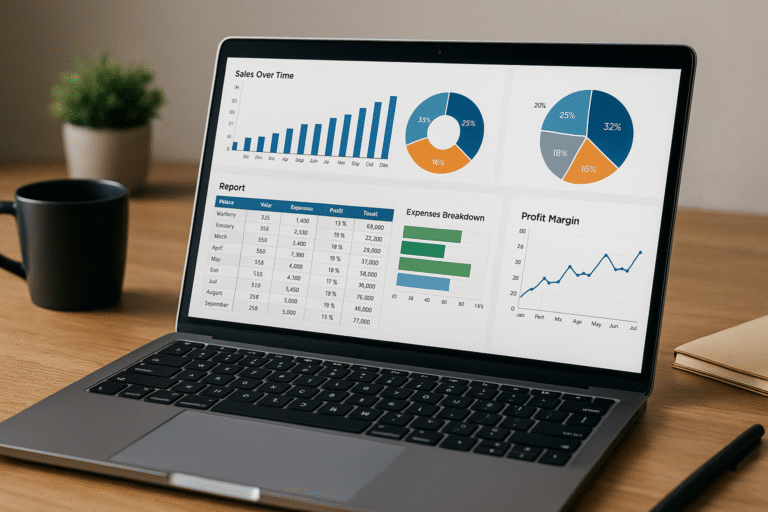
Reporting Across Sites and Entities
The question leadership asks is almost always the aggregate one, and the aggregate is almost always the view that takes longest to produce. Fixing that ordering is most of the value.
- Portfolio views across every entity at once
- Drill-down to the site or clinic behind a number
- Live connections to the systems holding source data
- Exceptions flagged rather than absorbed into totals
Related: Excel reporting

Support
Expert Help and Team Training
Sometimes it is an hour on a shared screen because a return is due and something broke. Sometimes it is bringing a smaller finance team up to speed on a model they inherited rather than built.
- Same-week attention when something has failed
- Training on your own models, not on generic material
- Written handover so tools survive staff changes
- Retained hours for teams without in-house Excel depth
Related: Excel expert help and MS Office training
How projects start
Eight Conversations That Begin an Excel Consulting Project in Henderson
Each has a fairly standard resolution, and in most cases it is structural rather than a question of new software.
"Twelve entities, twelve tabs, and consolidation takes a day."
The classic growth-by-addition pattern. A data layer underneath with the per-entity views kept on top makes the consolidated question a pivot table and changes nothing for the people entering data.
"The reporting deadline belongs to the payer, not to us."
Then the return has to be ready rather than rebuildable. Generated output removes the pressure entirely; assembled output guarantees it recurs every period.
"We inherited a model built by a much bigger team."
And it still produces output, which is the risk. Simplifying it to match the people who now maintain it is usually more valuable than preserving capability nobody can verify.
"Every job has its own file and nobody can total them."
Common across the master-planned developments. Each file works; the portfolio is invisible. One data layer solves both without changing anyone's habits.
"A file per client, and no view across the practice."
The professional-services version of the same problem. The familiar per-client format stays; what changes is that it is generated from one source rather than maintained separately.
"Cost coding means different things in different entities."
Which makes consolidation misleading rather than merely slow. Enforcing permitted values at entry stops the drift, and mapping the historical codes restores comparability.
"Each acquisition came with its own chart of accounts."
And the mapping between them is currently in somebody's head. Making that translation an explicit, stored table rather than a manual step removes both the bottleneck and the risk that consolidation quietly changes meaning between periods.
"Overhead means something different in each entity."
Which makes the consolidated margin figure unreliable in a way nobody can quantify. Agreeing one definition and mapping the historical data to it is usually a week's work and restores comparability across the group.
A quick check
Signs a Henderson Organization Has Outgrown Its Workbook
Multiplicity problems are gradual, which is why they are usually noticed during a board request or an audit rather than in normal operation:
- Adding an entity means copying a sheet and adjusting it by hand
- The consolidated view takes a day and is therefore rarely produced
- A compliance return is assembled from source every single period
- A model is maintained by fewer people than it was designed for
- Cost codes mean different things in different parts of the organization
- The aggregate question is the slowest one to answer
- One analyst understands the whole chain and nothing is documented
- New systems have been priced before a restructure was considered
What multiplicity costs
The visible cost is time: a day per consolidation, a week per compliance cycle. In an organization with a dozen entities that is a substantial share of a finance function's capacity, spent on assembly rather than on anything that improves a decision.
The less visible cost is confidence. When consolidation is manual, small inconsistencies between entities never surface, and the aggregate figure carries a margin of error nobody can quantify. That margin only becomes visible during an audit or a transaction, which are the two worst moments to discover it.
What we look at first
The workbook and the routine around it, before anything is proposed. In multi-entity organizations the finding is very often that the per-entity logic is sound and only the layer underneath is missing, which is a days-long build rather than the systems project people arrive expecting.
Where the honest conclusion is that the current setup is adequate, that is what you will hear. The consultation costs nothing and produces an assessment rather than a proposal.
Delivered work
Three Projects and the Numbers Clients Measured
Real client work, including one multi-entity consolidation closely comparable to what Henderson organizations typically need.

66% better
accuracy
Consolidating thirty entities
- The situation
- A management company responsible for thirty companies, each budgeting independently, consolidated by hand, with different people needing access to different parts of one workbook without seeing the rest.
- What was built
- A budget template with security tiers, VBA rolling each approved budget into a master sheet, interactive payroll, tax and benefits handling, and a direct load into the accounting software.
- The outcome
- Manual consolidation left the process entirely. Accuracy improved 66%, the cycle ran more than ten times faster, and mid-year reforecasting became routine rather than aspirational.

40 hours
back monthly
Reporting to external institutions, automated
- The situation
- Operations reports maintained by hand for internal management and for external funding institutions, where one update cycle consumed up to three days.
- What was built
- A program combining more than fifty sources into a single document in around five minutes, with each source inspectable beforehand and drafts produced for side-by-side comparison.
- The outcome
- An eight-hour job became minutes, returning at least forty person-hours every month to work other than assembly.

Nine minutes
to thirty seconds
A workbook that had become unusable
- The situation
- Retrieving one record from a 1,200-row file took up to nine minutes, the result of layered array formulas and code accumulated across years without review.
- What was built
- Data moved onto native Excel tables, pivot tables with slicers replacing the search logic, and the redundant VBA and array formulas removed rather than optimised around.
- The outcome
- Thirty seconds on unchanged hardware. The limitation had been structural rather than computational throughout.
Who we work with
Industries We Serve in Henderson
JAAD Group's six areas, described as they appear across Nevada's second-largest city.

Healthcare & Insurance
Patient record systems, policy tracking, compliance reports. The largest employer group here, and the one whose reporting calendar is set by funders and regulators rather than internally.

Manufacturing & Logistics
Supply chain analysis, production scheduling, vendor performance. The industrial corridor east of Water Street, where the same movement is described differently by three systems.

Finance and Accounting
Cash flow management, P&L tracking, budget analysis. Multi-entity consolidation is the recurring requirement, frequently for teams smaller than the models they inherited.

Real Estate & Construction
Investment models, cost forecasting, expense tracking. Master-planned development generating large numbers of similar jobs that nobody can total without manual assembly.

Retail and E-commerce
Inventory monitoring, sales tracking, profit calculations. Multi-site retail carrying stock across locations with a single set of books behind it.

Education & Training
Enrollment reports, course progress dashboards, grant tracking. Training providers and grant-funded programmes reporting against several funding sources simultaneously.
If your industry relies on Excel for financial analysis, data tracking or reporting, we can optimize and automate your workflows to save time and improve performance.

How it runs
Working With an Excel Consultant in Henderson
Five stages. The first is free and sometimes concludes that the existing setup is adequate.
Describe what it should produce
Particularly the aggregate question, since that is usually the one taking longest. Sending the workbook makes the conversation considerably more useful.
Audit the file and the routine
Which entities feed it, who reconciles what, and the corrections repeated every cycle. Those repeated corrections are usually where the fault sits.
A written, fixed scope
Deliverable and price agreed before building. The file has already been examined, so leaving the cost open would be a way of transferring risk to you.
Build in visible stages
Working versions as they emerge. In an organization with reporting deadlines it matters that part of the build can be adopted before the whole is finished.
A handover that holds
Source code, written explanation and training. Where a finance team is smaller than the models it runs, documentation is the deliverable rather than an extra.
Who does the work
Jeff Mattus
Owner & President, JAAD Group
JAAD Group is Jeff Mattus, who founded the practice after more than twenty-five years building Excel and Office systems, from a Computer Science background rather than an accounting one. For multi-entity work that combination is the point: consolidation is a data-structure problem long before it is an accounting one, and treating it as the latter is why so many of these workbooks end up where they do.
The work spans finance, healthcare, technology and real estate — which is close to the exact mix Henderson produces. A consolidation problem in a clinic group has the same shape as one in a contractor's job costing, and recognising that quickly is most of what a first call is for.
The practical point for a Henderson organization is access. One person answers, scopes and builds — that is the arrangement rather than a coincidence. No account manager sits in between and nothing is handed to somebody who was not in the first conversation.
Organizations we have built for
Trusted With Business-Critical Spreadsheets













Why a specialist
Why Henderson Organizations Use a Dedicated Excel Consultant
One discipline only
Excel, VBA and Office automation are the whole practice, which is why the first-call diagnosis is usually accurate.
Consolidation treated as structure
Multi-entity problems are data-layer problems. Treating them as accounting problems is how they got this way.
Restructure before rebuild
Where the per-entity logic is sound, that work is kept and only the layer underneath is built — the smaller job.
Sized for the team you have
Particularly where a model was inherited from a larger organization. Simplifying deliberately is often worth more than adding capability.
Documented on handover
Written explanation, source code and training included, so a smaller finance function can actually maintain what it runs.
Measured outcomes
The figures above were recorded by clients in use, and each project is described in full further up this page.
Questions
Frequently Asked Questions
We have a tab per entity and consolidation takes a day. What is the fix?
A data layer underneath, with the per-entity views generated on top. The people entering data carry on exactly as before; what changes is that entity becomes a column rather than a sheet name.
Once that is true, the consolidated view is a pivot table and adding a thirteenth entity is a row rather than a copied sheet.
Our compliance deadlines are set externally. Can that pressure be removed?
Largely, yes. The pressure comes from the return being assembled from source each period rather than generated from records you already keep.
Once the underlying data carries the fields the return needs, producing it becomes a refresh. The deadline does not move, but the work stops landing in the same week.
We inherited financial models from a much larger organization. Should we replace them?
Usually simplify rather than replace. Those models generally assume review steps and specialist checks that no longer exist in the building, and they keep producing output regardless, which is what makes it risky.
Reducing them to match the team that maintains them is normally more valuable than preserving capability nobody is in a position to verify.
Can you work across several systems at once?
In most cases. Power Query reads most databases, APIs and structured exports, and VBA covers what it cannot reach, which matters where clinical, operational and finance systems all describe the same activity differently.
Any source that resists automated reading is identified at audit, not uncovered later at your expense.
We grew by acquisition and every entity codes things differently. Where do we start?
With the mapping, because it almost certainly exists already as something one person applies by hand at consolidation. Turning that into a stored translation table is the first step and usually the highest-value one.
Once it is explicit, you can see where definitions genuinely differ and decide which to standardise, rather than discovering it during an audit.
Can historical data be made comparable after a definition changes?
Usually yes, through a mapping applied to the older periods rather than by re-entering anything. The work is agreeing what the old categories meant, which is a conversation rather than a build.
It is worth doing at the same time as the forward fix, because year-on-year comparison is normally the reason the inconsistency was noticed in the first place.
How much does Excel consulting in Henderson cost?
Scope determines it, which is why the file gets looked at first and why the consultation is free. A single consolidation or automated return is fixed-price; a staged multi-entity build is priced across stages.
You receive a written scope with a defined deliverable and price before any building begins.
Do you work on site in Henderson?
Almost all of this is delivered remotely, which is a deliberate choice rather than a limitation. Reviewing your workbook together on a shared screen is identical regardless of location, and it means an urgent problem gets attention the same day.
It also means no part of the invoice is travel time.
The analyst who built our model has left. Can you take it on?
That is a substantial share of the work. The model is read back to first principles, the brittle sections isolated, and then either shored up or replaced depending on which is honest.
There is no need for the person who wrote it to still be available. What is required is a conversation with whoever reads the output, because agreeing what the numbers should mean is the genuinely difficult part.
How long does a multi-entity consolidation take?
Commonly one to two weeks depending on how many entities there are and how consistently they have been coded. A single automated return is often days. A staged build with integrations runs across several weeks.
That estimate is committed in writing before build work starts.
What do we take away once it is delivered?
The workbooks, the macro source code, written documentation of how everything operates, and training for the people who will run it.
Nothing is locked to us and no subscription is needed for it to keep working. Ongoing support is available and entirely optional.
Can you help outside the six industries listed?
No. Those are simply where most of the work has sat. The constraint is the nature of the problem rather than the sector — if it is a spreadsheet problem, it is in scope.
A clinic roster, a job costing portfolio, a grant return, a multi-site inventory: structurally these are the same piece of work.
Also serving
Excel Consulting Across Nevada
Because the service is delivered remotely, where your office sits has no bearing on it. Other Nevada locations with pages of their own:
Looking for a specific service? See Excel automation, VBA and macro development, Excel reporting, financial modeling, Excel consulting or Excel expert help.
Henderson is the hub here — schematic, not to scale
Send Us the Workbook
Describe the problem or attach the file. You will get a straight assessment of what is wrong and what putting it right involves, before anything is agreed.
949-464-7489JAAD Group Excel Consulting · 2937 Hawksdale Dr, Las Vegas, NV 89134
Excel consulting services in Henderson, NV and across the valley, delivered remotely