
Excel consulting for American Canyon warehousing and distributionCall 949-464-7489

American Canyon, California · Napa County

Excel Consulting Services in American Canyon, CA

A lot of what sits in a building here is not waiting to be shipped next week. It is being held, sometimes for years, while it becomes worth more or waits for its market. That makes almost everything a standard inventory report measures irrelevant, because turnover is not the question. JAAD Group provides Excel consulting in American Canyon for operations where stock ages rather than turns.

  • Cost per pallet-month
  • Carrying cost against value
  • Space yield by lot
  • Automation and VBA
25+Years building Excel and Office systems for businesses
40+Person-hours a month returned on one reporting rebuild
1700Faster record retrieval after a workbook was restructured
66Improvement in budgeting accuracy across thirty entities

Stock that waits on purpose

Turnover Is the Wrong Question When Inventory Is Meant to Sit

Every piece of inventory advice assumes stock sitting still is a problem. Here it is frequently the entire business model: goods are held deliberately, for long periods, and the operation is paid for holding them well. None of the standard measures describe that, and most of the workbooks we see are still built around them.

What replaces turnover is time-weighted cost. A pallet occupying a position for three years has consumed thirty-six pallet-months of a finite resource, and that resource has a cost whether anybody has calculated it or not. Expressed per pallet-month, space becomes comparable across lots, customers and years in a way floor area alone never allows.

The second question is whether the holding is earning. For goods held on behalf of somebody else, that is a straightforward rate question. For goods held on your own account, it means setting the carrying cost against whatever the holding is expected to achieve, and carrying cost is the part almost nobody computes properly.

The third is that long holding periods expose a record-keeping weakness. A lot that arrives, sits for years, moves position twice and leaves in parts needs its history intact, and spreadsheets built for weekly turnover simply do not keep that.

A pallet in one position for three years has used thirty-six pallet-months of a finite resource. Floor area alone cannot see that.

What the work is really about

What Excel Consulting in American Canyon Usually Involves

Cost per pallet-month replaces turnover

The first build is a cost per pallet-month, and it is the figure that makes everything else possible. It comes from the total cost of operating the space — rent or depreciation, utilities, labor, insurance, equipment, maintenance — divided by the pallet-months actually available, which is positions multiplied by the period. Once it exists, any lot can be costed for exactly as long as it sat, and lots can be compared honestly regardless of size or duration. Businesses that have only ever looked at floor area and turnover are usually surprised by how uneven the picture is, and by which long-standing arrangements are not covering their own cost. That is the central piece of Excel consulting work here.

Carrying cost is the number nobody computes

Second, carrying cost on goods held for your own account needs computing rather than assuming. It is the space cost from above, plus the cost of the capital tied up for the holding period, plus insurance against value, plus whatever shrinkage or deterioration is realistic for the product. Set against what the holding is expected to achieve, that gives an answer to the only question that matters: is waiting worth it, and for how much longer. A business holding on instinct is making an investment decision every month without pricing it, which over a multi-year holding period is a large amount of money left unexamined. It is a short piece of financial modeling with a long reach.

A lot needs a history, not a current position

Third, long holding periods demand that a lot keeps a history rather than only a current state. Most stock records answer 'where is it now' and overwrite everything else, which is adequate when goods turn in a fortnight and useless over three years. What is needed is a movement log: arrived, moved, split, sampled, partially released, each with a date. That log is what allows a lot's true cost to be reconstructed later, and it is what any serious question — from a customer, an auditor or an insurer — will eventually require. Building it is unglamorous and it is the thing most often missing.

Partial releases break most stock records

Fourth, partial releases are where most spreadsheets quietly break. A lot that leaves in six separate shipments over two years has to keep its identity while its quantity changes, and a record built around a single quantity field cannot do that without somebody adjusting it by hand each time. Those manual adjustments are where the discrepancies come from, and they are nearly impossible to unpick afterward because the previous values were overwritten. Structuring quantity as a series of movements rather than as a number fixes the whole category of problem, and a small amount of VBA makes recording a movement fast enough that it actually happens.

Space is finite, so yield per position matters

Fifth, because positions are finite, the operation is really selling space-time rather than space, and that reframes the commercial question. A customer paying well per pallet but occupying premium positions for years may be worth less than one paying modestly and turning through. Reporting yield per position per month, by customer and by lot, makes those comparisons available, and it is usually the analysis that changes which business the operation chooses to take on next.

This is a records problem rather than a purchase

None of this needs software bought. The arrival records, the movement notes, the cost ledger and the customer agreements all exist; what is missing is a structure that holds time as a dimension and treats quantity as a history. That is days of work, and an hour of Excel expert help will usually establish how much of it you need.

What gets built

Excel Consulting Services in American Canyon, CA — The Six Areas

Six kinds of work. For an operation holding goods long term, the first two account for most of what gets commissioned.

Excel consultant building a cost per pallet-month from total space cost Structure

A Cost Per Pallet-Month

Total cost of operating the space divided by the pallet-months actually available. After that any lot can be costed for exactly as long as it sat, whatever its size.

  • Pallet-months as the unit rather than floor area
  • Lots comparable regardless of size or duration
  • Formula repair for references that stopped pointing anywhere
  • Performance — volatile formulas replaced with tables and pivots

Related: Excel consulting
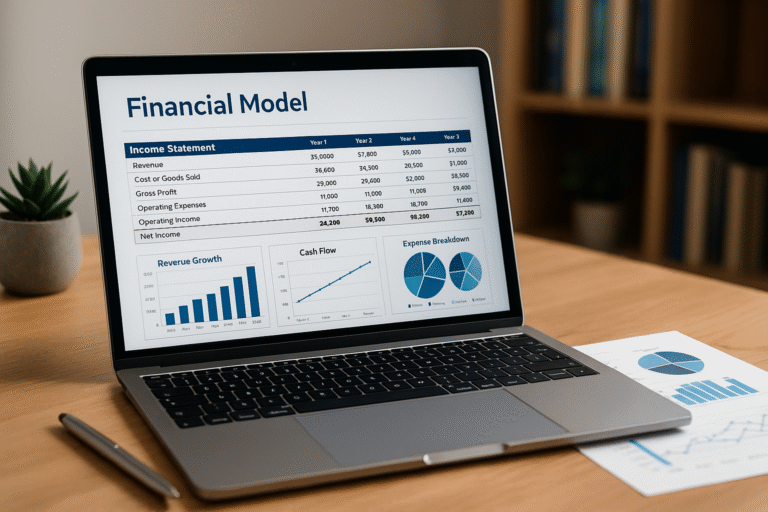
Excel model computing carrying cost against expected holding gain Modeling

Carrying Cost, Properly Computed

Space, capital tied up, insurance against value and realistic shrinkage, set against what the holding is expected to achieve. The answer to whether waiting is still worth it.

  • Full carrying cost rather than a space charge alone
  • Holding period tested against expected gain
  • Scenario switching across release timings
  • Assumptions in one visible block, never inside formulas

Related: Excel financial modeling

VBA movement log recording arrivals splits and partial releases Code

Quantity as a History, Not a Number

Arrived, moved, split, sampled, partially released, each with a date. A single quantity field cannot survive a lot that leaves in six shipments over two years.

  • Movement log instead of an overwritten quantity
  • Fast entry so recording a movement actually happens
  • Validated entry so a lot cannot be misidentified
  • Legacy macro repair where whoever wrote it has gone

Related: VBA and macro development
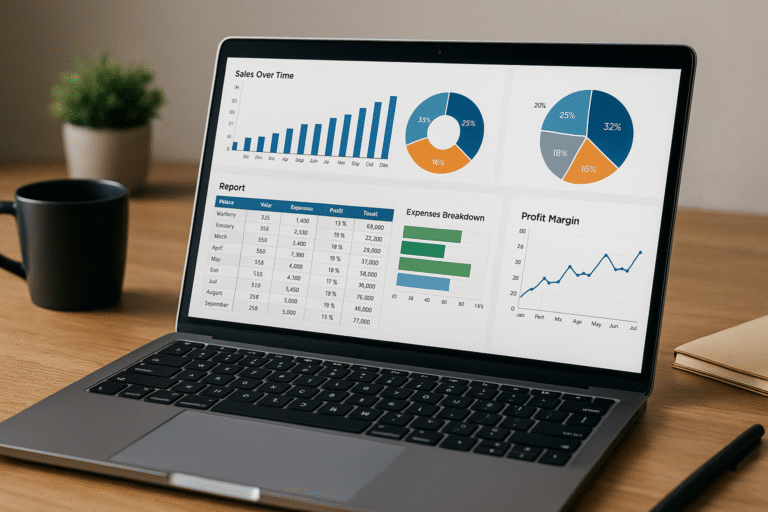
Excel report showing yield per storage position per month by customer Reporting

Yield Per Position, Per Month

What each position earns per month, by customer and by lot. A customer paying well but holding premium positions for years may be worth less than one turning through.

  • Yield per position by customer and by lot
  • Long-standing arrangements tested against their own cost
  • Live connections to the records already being kept
  • Exception flags when a lot stops covering its cost

Related: Excel reporting

Automated import of arrival release and cost records into Excel Automation

Records That Survive the Holding Period

Arrivals, releases and cost entries arrive from different places over years. Imported on a schedule, a lot's full history stays reconstructable long after the fact.

  • Scheduled imports across arrivals, releases and costs
  • History retained rather than overwritten
  • Import cleanup for documents that change format over years
  • Running totals so a drift in occupancy shows up early

Related: Excel automation

Remote Excel expert help session with a Napa County distribution operator Support

Expert Help and Team Training

Often there is no project, only a reconciliation that will not balance because a lot left in pieces. A single call, your file on screen, and a written note of the fix.

  • Same-week attention when a count will not balance
  • Training on your own file rather than on sample data
  • Written handover so the log keeps being kept
  • Retained hours where there is no in-house Excel depth

Related: Excel expert help and MS Office training

Where it starts

Eight Conversations That Begin an American Canyon Excel Project

Openings we hear from operations holding goods long term, and what the answer usually turns out to be.

"Turnover reports tell us nothing."

Of course they do not, when stock is meant to sit. Cost per pallet-month is the measure that fits, and it makes lots of any size and duration comparable.

"We do not know what holding this costs us."

Space, capital tied up, insurance against value and realistic shrinkage. Computed together and set against the expected gain, waiting becomes a decision rather than a habit.

"A lot left in six shipments and now nothing balances."

Because quantity was a single field that got adjusted by hand each time. Recorded as a series of movements, that whole class of discrepancy disappears.

"We cannot reconstruct what happened to a lot three years ago."

Most stock records answer where it is now and overwrite the rest. A movement log with dates is what makes a later question answerable at all.

"One long-standing customer may not be paying enough."

Very possibly, and yield per position per month will show it. Premium positions held for years are expensive in a way a monthly invoice disguises.

"Our cost per square foot looks fine."

Floor area ignores time, which is the dimension that actually matters here. The same space earns very differently depending on how long each position is occupied.

"Only one person knows how the records work."

A structural dependency rather than a staffing gap, and worse over long holding periods. Documentation and validation keep the log being kept correctly.

"The workbook has slowed to a crawl."

Usually volatile functions across very large ranges, or an array formula doing a pivot table's job. Reconstructed properly it is immediate again with nothing lost.

A quick check

Signs a Long-Hold Operation Has Outgrown Its Records

Nobody plans this work. It follows a count that would not balance, or a customer question about a lot nobody could trace. Earlier signals look like this:

  • Reporting is built on turnover for stock that is meant to sit
  • No cost per pallet-month exists anywhere
  • Carrying cost is assumed rather than computed
  • Quantity is a single field that gets adjusted by hand
  • A lot's history is overwritten each time it moves
  • Yield per position has never been reported
  • Partial releases are reconciled by somebody's memory
  • Cost per square foot is the only space measure in use

What the missing dimension costs

The unpriced holding is the largest one. Goods held on your own account for years represent an investment decision taken again every month, and a business that has never computed its carrying cost has never actually made that decision.

The lost history costs when somebody asks. A lot that cannot be traced through its moves, splits and partial releases is a problem with a customer, an insurer or an auditor, and reconstructing it after the fact from overwritten records is usually impossible rather than merely slow.

What happens before a quote

We look at the records against how goods actually move — what gets written when something arrives, splits or leaves, and what gets fixed afterward. The manual adjustments are nearly always where the discrepancies originate.

Frequently the answer is that a movement log and a pallet-month cost settle the whole question, and that is the recommendation. Where part of this genuinely needs a warehouse system rather than a spreadsheet, you will be told so plainly. That first conversation costs nothing.

Work delivered

Three Finished Builds and What They Returned

Real projects for real organizations, with the figures as the clients measured them.

Excel budgeting template with tiered access across thirty companies

66% better
accuracy

A budget tool for thirty companies

Before
Thirty businesses under one management company, budgeted separately and combined by hand, with several people each needing a different level of access to one file.
Built
A template with layered permissions, VBA lifting each approved budget into a master sheet, payroll, tax and benefits adjustable at the front, and totals loading into the accounting system.
After
Double keying left the process. Accuracy rose 66%, the build cycle ran more than ten times faster, and mid-year reforecasting became practical.

Automated report assembled from more than fifty sources

40 hours
a month back

Manual reporting replaced

Before
Management reporting and submissions to outside funding institutions were built by hand, with one refresh cycle running to three days.
Built
A program gathering over fifty sources into one document in about five minutes, each source checkable first and drafts produced for comparison.
After
A full day's task now runs in minutes, returning forty person-hours or more each month from effort that produced nothing new.

Workbook rebuilt onto native Excel tables with pivot tables and slicers

9 minutes
to 30 seconds

A file that had seized up

Before
Finding one row among twelve hundred could take nine minutes, caused by array formulas stacked on each other and years of unreviewed code.
Built
The data rehoused on native Excel tables, pivots and slicers taking over the lookup logic, and surplus array formulas and VBA removed rather than tolerated.
After
The same row on the same machine in thirty seconds. The arrangement had been the limit, never the hardware.

Who this applies to

Industries We Serve in American Canyon

The six areas JAAD Group covers, described as they appear at the foot of the valley.

Manufacturing and Logistics icon

Manufacturing & Logistics

Supply chain analysis, production scheduling, vendor performance. Storage and distribution where goods are held for years rather than weeks.

Retail and E-commerce icon

Retail and E-commerce

Inventory monitoring, sales tracking, profit calculations. Stock whose value changes while it waits, and whose lots leave in pieces.

Finance and Accounting icon

Finance and Accounting

Cash flow management, P&L tracking, budget analysis. Operations with significant capital tied up for multi-year holding periods.

Real Estate and Construction icon

Real Estate & Construction

Investment models, cost forecasting, expense tracking. Industrial space whose yield depends on time occupied rather than area let.

Healthcare and Insurance icon

Healthcare & Insurance

Patient record systems, policy tracking, compliance reports. Practices and agencies serving a fast-growing residential base.

Education and Training icon

Education & Training

Enrollment reports, course progress dashboards, grant tracking. Providers reporting on a funder's or an institution's format.

If your industry relies on Excel for financial analysis, data tracking or reporting, we can optimize and automate your workflows to save time and improve performance.

How it runs

Working With an Excel Consultant in American Canyon

Five stages. The first is free, and plenty of enquiries end there with advice rather than a quote.

  1. Say which figure is missing

    The number you cannot currently get out of the records. Sending an export makes the call considerably sharper, though it is not required.

  2. We follow how goods actually move

    What gets written when something arrives, splits or leaves, and what gets corrected afterward. The manual corrections are where discrepancies begin.

  3. Scope and figure, written first

    Both settled before construction. The records have been read by then, so vagueness about either would be a choice rather than a necessity.

  4. Built where you can see it

    Each working version reaches you as it is finished rather than everything at the end, which is what makes an early change cheap.

  5. Handed over in full

    The workbooks, any code behind them, a written account of how the movement log works, and time with whoever will keep it.

Jeff Mattus, Owner and President of JAAD Group Excel Consulting

Who does the work

Jeff Mattus

Owner & President, JAAD Group

JAAD Group is Jeff Mattus, on his own. More than twenty-five years of building Excel and Office systems went into the practice, and he came to the field through Computer Science rather than through accountancy. Where a quantity has to become a history without breaking anything downstream, that is the useful background.

The work has covered finance, healthcare, technology and property. That spread is why an opening call usually ends in a diagnosis rather than a discovery phase: a movement log has close relatives in audit-trail problems across industries that store nothing at all.

Everything is delivered remotely, which is how a Napa County operation works with a practice based in Nevada without that mattering. One person answers, prices the job and then builds it.

Organizations we have built for

Trusted With Business-Critical Spreadsheets

CAPTRUST
Trutina
Linmore LED
Gro-Well
McGregor Benefits
The Benefits Academy
Glen Acres HOA
Health Insurance Team
SSIS
OEC
SBA
Jesse Consulting

Why a specialist

Why American Canyon Operations Use a Dedicated Excel Consultant

One discipline, nothing else

Excel, VBA and Office automation are the whole practice, which is why an opening read is usually right and the figure close to the final one.

Time as a dimension

Floor area and turnover cannot describe stock that is meant to sit. Pallet-months can, and that one change reframes everything.

Built to survive years

A record that overwrites itself is fine over a fortnight and useless over three years, which is exactly the period that matters here.

Honest about the boundary

Where this genuinely needs a warehouse management system rather than a spreadsheet, that is what you will be told.

Numbers the clients measured

Each result quoted above came from the organization using the tool, and all three builds appear at length earlier.

Remote, so it starts at once

Everything happens over a shared screen, so a count that will not balance gets attention the same day.

Questions

Frequently Asked Questions

What does Excel consulting in American Canyon usually involve?

Most often it is building a cost per pallet-month so goods held for long periods can be costed properly, and turning quantity from a single field into a movement history.

After that it is carrying cost on goods held for your own account, and yield per position per month by customer and by lot.

Why is turnover the wrong measure for us?

Because it assumes stock sitting still is a failure, and here holding is frequently the service being sold. A high-turnover report on a long-hold operation measures nothing useful.

Time-weighted cost replaces it. A pallet in one position for three years has consumed thirty-six pallet-months of a finite resource, and that is the figure that makes lots comparable.

How is cost per pallet-month calculated?

Total cost of operating the space — rent or depreciation, utilities, labor, insurance, equipment, maintenance — divided by the pallet-months actually available, which is positions multiplied by the period.

Once it exists, any lot can be costed for exactly as long as it sat, and long-standing arrangements can be tested against their own cost for the first time.

What goes into carrying cost?

The space cost, the cost of capital tied up for the holding period, insurance against value, and a realistic allowance for shrinkage or deterioration in that product.

Set against what the holding is expected to achieve, it answers whether waiting is still worth it. Held on instinct, that investment decision is being retaken every month without a price on it.

A lot left in several shipments and our records broke. Why?

Because quantity was stored as one number and adjusted by hand on each release, which overwrites what was there before and leaves nothing to reconcile against.

Recorded as a series of dated movements instead, the lot keeps its identity while its quantity changes, and the whole category of discrepancy stops occurring.

Can we reconstruct a lot's history from three years ago?

Only if something recorded the movements at the time. Most stock systems answer where an item is now and overwrite everything else, which is adequate over a fortnight and not over years.

Going forward a movement log fixes it. Going backward depends entirely on what survived, and that is worth finding out before somebody asks.

How is the work priced?

By scope, which is why the records get read before any figure is named and why that reading is free. A pallet-month cost is small and fixed-price; a movement log rebuild is priced as one job.

Whichever it is, the deliverable and its cost are written down before anything is built.

Do you need to visit the warehouse?

No. The work is done over a shared screen, which is identical at any distance and means a problem gets looked at the day it appears rather than when a visit suits.

It also keeps travel off the invoice, which on a short engagement is a meaningful share of it.

At what point do we need a proper warehouse system instead?

When the operation needs real-time location tracking, scanning at the point of movement, or integration with customer systems. Those are genuine reasons and you will hear them said plainly.

Short of that, the costing and history questions this page describes are spreadsheet work, and doing them well often removes the urgency people arrive with.

How long does a project take?

A pallet-month cost with yield reporting is often a few days. Converting quantity into a movement history usually runs one to two weeks depending on what records exist.

Whatever the size, that figure is committed in writing before building starts rather than emerging as the work goes along.

What do we own at the end?

The workbooks, any code behind them, a written account of how the movement log and the costing work, and time with whoever will keep it up.

None of it depends on us afterward and there is nothing to subscribe to. Later help is on offer and never part of the deal.

Is your work limited to those six industries?

No. That list reflects where enquiries have historically originated rather than a filter on what gets taken on.

A pallet-month cost, a movement log, a carrying cost model and a clinic rota are considerably more alike underneath than they appear.

Also serving

Excel Consulting Across California and Nevada

Delivery is by shared screen, so a California operation is served exactly as a Nevada one is. Other places with their own pages:

Straight to a service: Excel consulting for the pallet-month cost, financial modeling for carrying cost, VBA and macro development for the movement log, Excel reporting for yield per position, and Excel automation or Excel expert help for the rest.

American Canyon is the hub here — schematic, not to scale

Send Us the Workbook

Tell us which figure the records will not give you, or attach an export. What comes back is a straight read on the problem and on what fixing it would take, with nothing committed.

949-464-7489

JAAD Group Excel Consulting · 2937 Hawksdale Dr, Las Vegas, NV 89134
Excel consulting services in American Canyon, CA and across California, delivered remotely