
Excel consulting for Alameda businessesCall 949-464-7489

Alameda, California · Alameda County

Excel Consulting Services in Alameda, CA

Alameda has an unusual amount of redeveloped industrial and commercial space, and with it an unusual number of leases that do not look like anybody's template. Percentage rent, shared-service charges, escalations landing on scattered dates, annual reconciliations nobody checks. Occupancy cost here is a calculation rather than a line. JAAD Group provides Excel consulting in Alameda for the workbooks that have to carry it.

  • Lease and occupancy models
  • Shared-charge reconciliation
  • Escalation calendars
  • Delivery window costing
25+Years building Excel and Office systems for businesses
40+Person-hours a month returned on one reporting rebuild
1700Faster record retrieval after a workbook was restructured
66Improvement in budgeting accuracy across thirty entities

Leases that fit no template

When Rent Is Not a Number You Can Just Type In

Most businesses can budget occupancy as twelve equal payments and be close enough. A tenant in converted industrial space often cannot. Rent may move with turnover, shared charges may be estimated and reconciled later, escalations may hit on an anniversary unrelated to the fiscal year, and more than one of those may be true at once.

The result is a cost that behaves like a variable while being budgeted like a fixed one. That is the worst of both: it is large enough to matter and unpredictable enough to blow a quarter, and because it sits in a single line nobody interrogates, the variance is explained after the fact rather than anticipated.

Shared-service and common-area charges deserve particular attention because they usually arrive as an estimate, get paid for a year, and are then reconciled against actuals. A tenant is normally entitled to see how that figure was arrived at. Checking it needs the lease terms in a form somebody can actually compute from, which is precisely what most tenants do not have.

On top of all that, this is an island. Deliveries, contractors and staff all arrive across a small number of crossings, which makes timing a real cost rather than a logistical footnote, and makes a missed window more expensive here than it would be a few miles inland.

Occupancy behaves like a variable and gets budgeted like a fixed cost. It is big enough to matter and unpredictable enough to ruin a quarter.

What the work is really about

What Excel Consulting in Alameda Usually Involves

The lease has to become a calculation

The first piece of work is to turn the lease from a document into a model. Every term that affects what gets paid — base rent, any turnover percentage and the threshold it applies above, the share of common costs and how that share is calculated, escalation basis and date, and whatever caps or floors exist — becomes an input the workbook can compute from. That sounds like a large exercise and is usually an afternoon per lease. What it buys is the ability to forecast occupancy cost rather than discover it, and to check an invoice against the agreement instead of assuming it is right. This is ordinary Excel consulting work with an unusually direct payback.

Percentage rent makes occupancy move with trade

Second, where rent moves with turnover the relationship needs to be explicit in the forecast, because it changes the shape of the whole cost base. A business paying a percentage above a threshold has a cost that is flat up to a point and then rises with every additional sale, which means its margin on incremental trade is not what the gross margin suggests. That is a genuinely important thing to know before chasing volume, and it is invisible while rent sits as a fixed monthly figure. Modeled properly it also shows how close the business currently runs to the threshold, which is often closer than anyone had realized. That is a short piece of financial modeling.

Shared charges are for checking, not just paying

Third, the shared-charge reconciliation is where real money tends to be found, and it goes unchecked almost everywhere because checking it requires work nobody has time for. The charge is estimated, paid monthly for a year, then trued up against actual costs with the tenant's share recalculated. Whether that share was calculated on the basis the lease specifies, and whether the costs included are the ones the lease permits, are fair questions. Being able to ask them needs the terms in computable form and the history of what was charged kept as a record rather than as a folder of letters. What this is not is legal advice — a disputed charge belongs with your attorney; the spreadsheet's job is to produce the arithmetic that supports the conversation.

Escalations land on dates nobody tracks

Fourth, escalation dates deserve to be on a calendar the business actually looks at. In a portfolio of leases, or even two or three, anniversaries fall at scattered points through the year, and an increase that was agreed years ago arrives as a surprise because nobody was tracking it. Holding the dates and bases together, with the next increase calculated in advance, converts a recurring unpleasant surprise into a known figure in a forecast. It costs very little and removes an entire category of avoidable variance.

An island puts a window on every delivery

Fifth, the island itself puts a timing cost on things that elsewhere would be routine. Freight, contractors and staff all arrive over limited crossings, which means a delivery window missed is not simply inconvenient but expensive, and scheduling around predictable congestion is worth real money. Where a business can measure how often windows are missed and what it costs when they are, the case for changing a delivery slot or a shift start stops being an argument and becomes arithmetic. Capturing that is a small amount of structured Excel reporting.

The gap here is structure, not software

None of this requires buying anything. The leases, the invoices, the reconciliation statements and the delivery records all exist; what is missing is a structure that makes the lease computable and keeps the charge history as data. That is days of work, and an hour of Excel expert help will usually establish how much of it applies to you.

What gets built

Excel Consulting Services in Alameda, CA — The Six Areas

Six kinds of work. For a tenant on a non-standard lease the first two account for most of what gets commissioned.

Excel consultant turning lease terms into computable inputs Structure

Turning the Lease Into a Calculation

Base rent, turnover percentage and threshold, share of common costs and its basis, escalation date and basis, caps and floors — all as inputs the workbook can compute from.

  • Every term as an input rather than a paragraph
  • Invoices checkable against the agreement
  • Formula repair for references that stopped pointing anywhere
  • Performance — volatile formulas replaced with tables and pivots

Related: Excel consulting
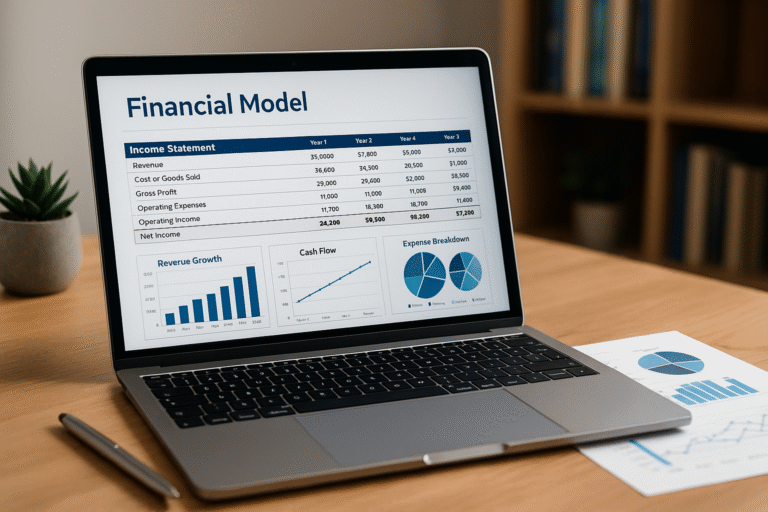
Excel model showing percentage rent rising above a turnover threshold Modeling

Occupancy Cost That Moves With Trade

Where rent steps above a turnover threshold, the margin on incremental sales is not what the gross margin suggests. The model shows that, and how close you run to the threshold.

  • Percentage rent modeled with its threshold explicit
  • Incremental margin after occupancy, not before
  • Scenario switching across turnover levels
  • Assumptions in one visible block, never inside formulas

Related: Excel financial modeling
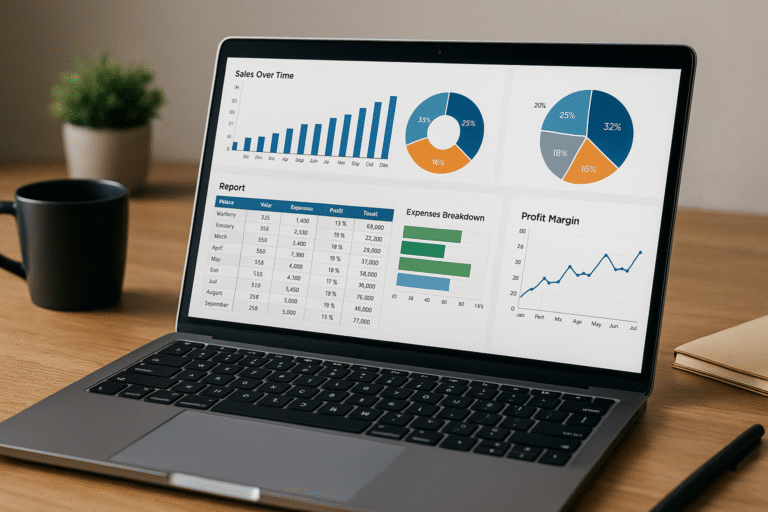
Excel report tracking shared charges and escalation dates across leases Reporting

Charge History and an Escalation Calendar

What was estimated, what was charged, what the reconciliation concluded, and when the next increase lands. Kept as data rather than as a folder of letters.

  • Charge history by year and by category
  • Escalation calendar with the next increase precalculated
  • Reconciliation comparison against the lease basis
  • Exception flags when a category moves out of pattern

Related: Excel reporting

Automated import of landlord statements and delivery records in Excel Automation

Statements and Records Brought In

Landlord statements, turnover certificates and delivery logs arrive on different schedules in different shapes. Imported automatically, the occupancy picture stays current.

  • Scheduled imports for statements and turnover figures
  • Import cleanup for documents that never match the last ones
  • Delivery window records captured consistently
  • Running totals so a drift in charges surfaces early

Related: Excel automation

VBA routine recalculating rent across several leases at once Code

VBA to Recalculate Every Lease at Once

With more than one lease, recomputing after a turnover figure or an index change is slow by hand and inconsistent between whoever does it. As a routine it takes seconds.

  • Recalculation as a routine across the whole portfolio
  • Identical treatment of each lease every time
  • Validated entry so a term cannot be saved incomplete
  • Legacy macro repair where whoever wrote it has gone

Related: VBA and macro development

Remote Excel expert help session reviewing a lease reconciliation Support

Expert Help and Team Training

Often there is no project, only a reconciliation statement that has to be answered within a deadline. One call, your own file shared across, and the reasoning written down.

  • Same-week attention when a deadline will not wait
  • Training on your own file rather than on sample data
  • Written handover so the tool outlives a staff change
  • Retained hours where there is no in-house Excel depth

Related: Excel expert help and MS Office training

Where it starts

Eight Conversations That Begin an Alameda Excel Project

Openings we hear from tenants on non-standard leases, and what the answer usually turns out to be.

"Occupancy cost surprises us most years."

Because it behaves like a variable and is budgeted like a fixed line. Turning the lease terms into computable inputs lets it be forecast rather than discovered.

"Our rent moves with turnover and we have never modeled it."

Which means the margin on extra sales is not what the gross margin suggests. The model shows that, and usually shows the threshold is closer than anyone thought.

"The shared charge arrives and we just pay it."

Most tenants do, because checking needs the terms in computable form. With that in place the arithmetic supporting a fair question becomes available.

"An increase landed that we had agreed years ago."

Nobody was tracking the anniversary. Dates and bases held together, with the next increase precalculated, turn that into a known figure in the forecast.

"We have three leases and they are all different."

Which is normal in converted space and exactly why recalculating by hand is inconsistent. As a routine every lease gets treated the same way each time.

"A missed delivery window costs us more than it should."

On an island it does. Measuring how often windows are missed and what it costs turns a scheduling argument into arithmetic.

"Only one person understands the lease arrangements."

A structural dependency rather than a staffing gap. Terms recorded as data and documented keep working through a departure.

"The workbook has got slow and awkward."

Usually volatile functions across large ranges, or an array formula doing a pivot table's job. Rebuilt properly it is quick again and nothing anybody relies on is lost.

A quick check

Signs a Tenant Has Outgrown Its Occupancy Reporting

Nobody plans this work. It follows a reconciliation that landed badly, or an escalation nobody had budgeted for. Earlier signals look like this:

  • The lease is a document and nowhere a calculation
  • Occupancy is twelve equal payments in the budget
  • Percentage rent is not modeled at all
  • Shared charges are paid without being checked
  • No calendar holds the escalation dates
  • Charge history lives in a folder of letters rather than as data
  • Missed delivery windows are never counted or costed
  • One person holds the lease knowledge, and everybody knows it

What the unchecked line costs

The shared charge is where the money usually is. Estimated, paid for a year and reconciled afterward, it is the one significant cost most tenants never test against the agreement, and a question that is never asked is never answered in your favor.

The threshold is the subtler one. A business running just under a turnover threshold and chasing volume can find that its incremental margin is materially worse than it believed, and the decision to push for growth was made on the wrong number.

What happens before a quote

We read the lease terms alongside the file and the last reconciliation — what is being charged, on what basis, and whether that basis matches what was agreed. Most of what is needed is already in a drawer and has never been turned into arithmetic.

Frequently the finding is that making one lease computable answers the whole question, and that is the recommendation. Where a disputed charge genuinely belongs with an attorney rather than a spreadsheet, you will be told so. The opening conversation is unpaid in either case.

Work delivered

Three Builds and What They Produced

Genuine projects for real organizations. The figures came from the clients once the tools had been in regular use.

Excel budgeting template with tiered access across thirty companies

66% better
accuracy

A budgeting tool for thirty companies

Where it started
Thirty separate businesses under one management company, each budgeted alone and combined afterward by hand, with several people needing different levels of access to a single file.
What got built
A template with layered permissions, VBA lifting each approved budget into a master sheet, payroll, tax and benefits adjustable at the front, and totals loading straight into the accounting system.
What changed
Double entry left the process completely. Accuracy rose by 66%, the build cycle ran over ten times faster, and reforecasting part-way through the year became practical.

Automated report drawing on more than fifty sources

40 hours
a month back

Hand-built reporting replaced

Where it started
Management reporting and submissions to outside funding institutions were assembled by hand, with one refresh cycle running as long as three days.
What got built
A program pulling over fifty sources into one document in about five minutes, each source checkable beforehand and drafts produced for comparison.
What changed
A full working day's task now runs in minutes, handing back forty person-hours or more each month from effort that produced nothing new.

Workbook rebuilt onto native Excel tables with pivot tables and slicers

9 minutes
to 30 seconds

A workbook that had ground to a halt

Where it started
Finding a single row among twelve hundred could take nine minutes, caused by array formulas piled on each other and years of unreviewed code.
What got built
The data rehoused on native Excel tables, pivots and slicers taking over the search logic, and the surplus array formulas and VBA removed rather than tolerated.
What changed
Thirty seconds for the same row on the same machine. The arrangement had been the constraint throughout, not the hardware.

Who this applies to

Industries We Serve in Alameda

The six areas JAAD Group covers, described as they appear in a city of converted industrial space.

Real Estate and Construction icon

Real Estate & Construction

Investment models, cost forecasting, expense tracking. Leases, shared charges and reconciliations in redeveloped commercial space.

Manufacturing and Logistics icon

Manufacturing & Logistics

Supply chain analysis, production scheduling, vendor performance. Producers and distributors working around limited crossings and delivery windows.

Retail and E-commerce icon

Retail and E-commerce

Inventory monitoring, sales tracking, profit calculations. Tenants whose rent moves with turnover above a threshold.

Finance and Accounting icon

Finance and Accounting

Cash flow management, P&L tracking, budget analysis. Businesses budgeting a variable occupancy cost as though it were fixed.

Healthcare and Insurance icon

Healthcare & Insurance

Patient record systems, policy tracking, compliance reports. Practices and agencies occupying converted or shared premises.

Education and Training icon

Education & Training

Enrollment reports, course progress dashboards, grant tracking. Providers reporting to funders and institutions on an outside format.

If your industry relies on Excel for financial analysis, data tracking or reporting, we can optimize and automate your workflows to save time and improve performance.

How it runs

Working With an Excel Consultant in Alameda

Five stages. The opening one is unpaid, and a good number of enquiries conclude there with advice rather than a quotation.

  1. Say what the figures cannot tell you

    The question the current reporting will not answer. Sending the lease and the last reconciliation makes the call considerably sharper, though it is not required.

  2. We read the lease and the statements

    What is being charged, on what basis, and whether that basis matches what was agreed. Most of what is needed is in a drawer and has never been turned into arithmetic.

  3. Scope and figure, on paper

    Both settled before construction. The documents have been read by then, so vagueness about either would be a decision rather than an unavoidable fact.

  4. Construction in view

    Each working version arrives as it is finished rather than everything at the end, which is what makes steering it early inexpensive.

  5. Handed over complete

    The workbooks, any code behind them, a written account of how each lease was modeled, and time with whoever will maintain it.

Jeff Mattus, Owner and President of JAAD Group Excel Consulting

Who does the work

Jeff Mattus

Owner & President, JAAD Group

JAAD Group is Jeff Mattus, working alone. He put the practice together across more than twenty-five years of Excel and Office systems work, having come into the field through Computer Science rather than through accountancy. Where an agreement has to become a calculation somebody can check, that is the useful background.

The projects have reached into finance, healthcare, technology and property. The range is why an opening call generally produces a diagnosis rather than a discovery phase: a lease model has close relatives in contract and allocation work across industries that lease nothing unusual at all.

The service is delivered remotely, which is how an Alameda County business works with a practice based in Nevada without that mattering. One person takes the call, prices the job and then builds it.

Organizations we have built for

Trusted With Business-Critical Spreadsheets

CAPTRUST
Trutina
Linmore LED
Gro-Well
McGregor Benefits
The Benefits Academy
Glen Acres HOA
Health Insurance Team
SSIS
OEC
SBA
Jesse Consulting

Why a specialist

Why Alameda Businesses Use a Dedicated Excel Consultant

Only one discipline

Excel, VBA and Office automation are the whole practice, which is why an opening read is usually right and the figure close to the final one.

Make it computable before buying

Property software is sold hard to tenants. The lease, the statements and the history you need are already in your own files.

Built so an invoice can be checked

A charge that cannot be recomputed against the agreement is a charge nobody ever questions.

Clear about where we stop

A disputed charge belongs with your attorney. Producing the arithmetic that supports the conversation is ours.

Numbers the clients reported

Each outcome quoted above came from the organization running the tool, and all three builds are described at length earlier.

Remote, so it starts at once

Everything happens over a shared screen, so a reconciliation with a deadline gets attention the same day.

Questions

Frequently Asked Questions

What does Excel consulting in Alameda usually involve?

Most often it is turning a lease from a document into a model, so occupancy cost can be forecast and an invoice can be checked against what was agreed.

After that it is percentage rent modeling, a charge history kept as data, and an escalation calendar with the next increase already calculated.

How long does it take to model a lease?

Usually an afternoon per lease, which surprises people. The terms that matter are a short list: base rent, any turnover percentage and its threshold, the share of common costs and its basis, escalation date and basis, and any caps.

What it buys is forecasting instead of discovery, and the ability to recompute an invoice rather than assume it is right.

Why does percentage rent change how we think about growth?

Because above the threshold every additional sale carries rent with it, so the margin on incremental trade is lower than the gross margin implies.

That is worth knowing before committing to a push for volume, and the model also shows how close you currently run to the threshold, which is often closer than expected.

Should we be checking the shared-service charge?

It is normally the largest cost that nobody tests. It is estimated, paid for a year, then reconciled against actuals with your share recalculated.

Whether the share was computed on the basis the lease specifies, and whether the costs included are permitted, are fair questions — but asking them needs the terms in computable form and the history kept as data.

Can you tell us whether a charge is wrong?

We can produce the arithmetic: what the lease basis would give, what was actually charged, and where the difference sits. That is usually what the conversation needs.

Whether to dispute it, and on what grounds, is a question for your attorney. Nothing here is legal advice and it is not intended to replace it.

We keep getting caught by escalations. Is that fixable?

Easily. The dates are known in advance and the bases are in the agreements; what is missing is a calendar anybody looks at.

Holding dates and bases together with the next increase precalculated turns an annual unpleasant surprise into a line in the forecast.

What will this cost?

Scope decides it, which is why the lease and statements are read before a figure is named and why that reading is free. Modeling one lease is small and fixed-price; a portfolio is priced as one job.

In both cases the deliverable and its price are recorded before construction begins.

You are based in Nevada. Does that matter for an Alameda business?

Not in practice, because the work is remote by design. Going through a lease and a workbook together on a shared screen is identical at any distance.

It also means a reconciliation with a deadline is looked at the same day, and no part of the invoice is travel time.

The person who handled our leases has left. Can you pick it up?

Routinely, and it is a common reason for the call. The terms get read back out of the agreements and turned into inputs, so the knowledge stops living in one person.

What helps most is time with whoever deals with the landlord now, because the practical conventions matter as much as the written terms.

How long does a project run?

A single lease modeled with a charge history is often a few days. A portfolio with an escalation calendar and reconciliation comparison usually runs one to two weeks.

However large the job, the figure goes on paper before construction rather than surfacing partway through.

What do we keep at the end?

The workbooks, any code behind them, a written account of how each lease was modeled and on what basis, and time with whoever will maintain it.

Nothing is tied to this practice and no recurring charge keeps it running. Later help is available and never a condition.

Do those six sectors limit what you take on?

No. They describe where enquiries have tended to come from rather than any rule, and what settles it is the shape of the problem.

A lease model, a charge reconciliation, an escalation calendar and a clinic rota are far more alike underneath than they appear from outside.

Also serving

Excel Consulting Across California and Nevada

Delivery is by screen share, so an East Bay business is served exactly as a Nevada one is. Other places with their own pages:

By service: Excel consulting for the lease model, financial modeling for percentage rent, Excel reporting for charge history and escalations, Excel automation for statement imports, and VBA and macro development or Excel expert help for the rest.

Alameda is the hub here — schematic, not to scale

Send Us the Workbook

Tell us what the figures will not answer, or attach the lease and the last reconciliation. You get a flat read on the problem and what sorting it out would take, with nothing agreed at that stage.

949-464-7489

JAAD Group Excel Consulting · 2937 Hawksdale Dr, Las Vegas, NV 89134
Excel consulting services in Alameda, CA and across California, delivered remotely