
Albany, California · Alameda County
Excel Consulting Services in Albany, CA
Albany is about a mile and a half across. A business based here will have staff living in one city, customers spread across three more, a supplier in a fourth and almost certainly a landlord charging East Bay rent. Every one of those boundaries shows up as a line in a spreadsheet somebody maintains by hand. JAAD Group provides Excel consulting in Albany for exactly those files.
- Multi-jurisdiction payroll
- Revenue per square foot
- Local filing and license tracking
- Automation and VBA
A small city with many borders
When Every Boundary Becomes a Column Somebody Maintains
In a large city a business can operate for years without its paperwork noticing a city line. In a city of this size the lines are unavoidable. Work happens in several jurisdictions, people live in several more, and each of those facts carries its own registration, rate or reporting requirement that has to be tracked somewhere.
Almost always that somewhere is a spreadsheet, and almost always it is organized by whatever order things were discovered in rather than by any structure. A column appears when a new requirement is noticed, a note gets added beside it, and two years later the file is a record of the business's administrative history rather than a usable tool.
The second pressure is the cost of space. East Bay rent per square foot means the floor area a business occupies is one of its largest fixed commitments, and yet very few local workbooks report anything per square foot. Revenue, margin and labor are all reported against time, and the most expensive constraint is left out.
The third is scale. A business with eight or fifteen people has no one whose job is to check any of this, which means errors persist until something external finds them. In a high-cost, high-compliance environment that is an expensive way to discover a mistake.
What the work is really about
What Excel Consulting in Albany Usually Comes Down To
Several jurisdictions, one undocumented spreadsheet
The first job is usually to replace an accumulated file with a structured one, and the distinction matters. An accumulated file has a column for every requirement somebody remembered, in discovery order, with the rules applied by hand each period. A structured file has one table of obligations — what is due, to whom, on what basis, on what date — and generates each period's working from it. The second kind can be handed to a new bookkeeper; the first kind cannot be handed to anybody. Building it is less work than people expect, because the knowledge already exists and simply has never been written down anywhere other than in the arrangement of the columns. That is ordinary Excel consulting work with an immediate effect on how replaceable the process is.
The most expensive constraint is square feet
Second, the reporting needs a square-foot dimension. Where rent is among the largest fixed costs, the question of whether a product line, a service or a piece of equipment earns its floor space is a real one, and it cannot be answered from a report organized by month. Allocating floor area to activity and reporting contribution per square foot is not an exotic analysis; it is a dimension added to data the business already has. It routinely changes what gets stocked, what gets displayed and whether a second location is a good idea, because for the first time the comparison is being made against the constraint that actually binds. This is a short piece of financial modeling with an unusually direct payback.
Nobody here is checking the numbers
Third, because there is nobody whose job is to review the figures, the workbook has to review itself. In a larger organization that function exists even when nobody has the title, and it catches the transposed digit, the formula dragged one row short, the total that quietly stopped including the newest column. Without it the error survives until an outside party finds it, which in a high-compliance environment is the most expensive possible way to find out. Validation at the point of entry, totals that cross-check one another, and a short set of checks that run every time the file opens will catch most of what a second reader would. None of it is sophisticated and all of it is routinely absent.
A deadline calendar that lives in somebody's memory
Fourth, deadlines deserve to be data rather than recollection. A business operating across several jurisdictions has a calendar of obligations that is genuinely complicated, and in a small company it typically lives in one person's head supported by email reminders. Holding it as a table — obligation, authority, basis, due date, status — and reporting what is open costs very little and removes an entire category of risk. It also makes the process survivable when that person is on vacation, which is the real test of whether anything has been fixed. Keeping it current from the source records rather than by retyping is a modest piece of Excel automation.
Margin by product or service, not by month
Fifth, profitability needs to be reported by what the business sells rather than only by period. A small operation with several lines will usually find that the monthly total is being held up by two of them and dragged by one, and in a market with this cost base that matters more than it would elsewhere, because there is no cheap floor space to absorb a weak line. Attributing revenue and direct cost at the level of a product or service is a structural change to the records rather than new data collection, and the first report it produces is usually the one that changes a decision.
None of this is solved by buying software
What none of this needs is new software. The payroll detail, the sales records, the lease terms and the obligation list all exist already, held in a shape that makes the important questions laborious and the risky ones invisible. Restructuring is days of work rather than a procurement exercise, and an hour of Excel expert help will usually settle which of the two you are facing.
What gets built
Excel Consulting Services in Albany, CA — The Six Areas
Six kinds of work. For a small business operating across several jurisdictions, the first two cover most of what gets commissioned.

Structure
A Structured File Instead of an Accumulated One
One table of obligations — what is due, to whom, on what basis, when — with each period generated from it. The difference is that a structured file can be handed to somebody else.
- One obligations table replacing a column per discovery
- Rules stored, not applied from memory each period
- Formula repair for totals that stopped including the last column
- Performance — volatile formulas replaced with tables and pivots
Related: Excel consulting
Modeling
Reporting Against the Constraint That Binds
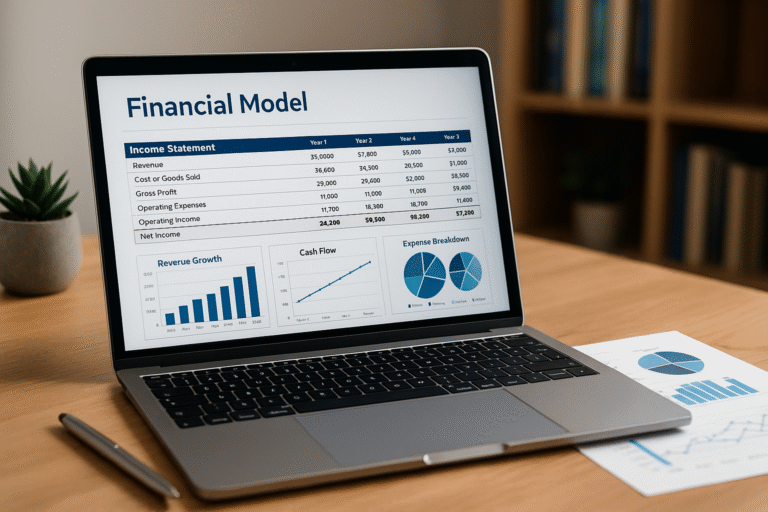
Where rent is among the largest fixed costs, contribution per square foot answers questions a monthly report cannot. Floor area allocated to activity, using data the business already has.
- Contribution per square foot alongside the usual measures
- Line-level margin by product or service
- Scenario switching for a second site or a changed layout
- Assumptions in one visible block, never inside formulas
Related: Excel financial modeling
Automation
A Deadline Calendar That Maintains Itself
Obligation, authority, basis, due date, status — held as a table and refreshed from source records rather than retyped. It removes a category of risk and survives a vacation.
- Obligations as data rather than as recollection
- Status reporting on what is currently open
- Scheduled refresh from payroll and sales records
- Import cleanup for exports that shift format between runs
Related: Excel automation

Code
VBA That Checks the File for You
Where nobody's job is reviewing the numbers, the workbook has to do it. Entry that refuses bad values, totals that cross-check, and tests that run every time the file opens.
- Entry validation so a wrong value is refused at the keyboard
- Cross-checking totals that complain when they disagree
- Opening tests so a broken formula announces itself
- Legacy macro repair where whoever wrote it is long gone
Related: VBA and macro development
Reporting
Margin by What You Sell
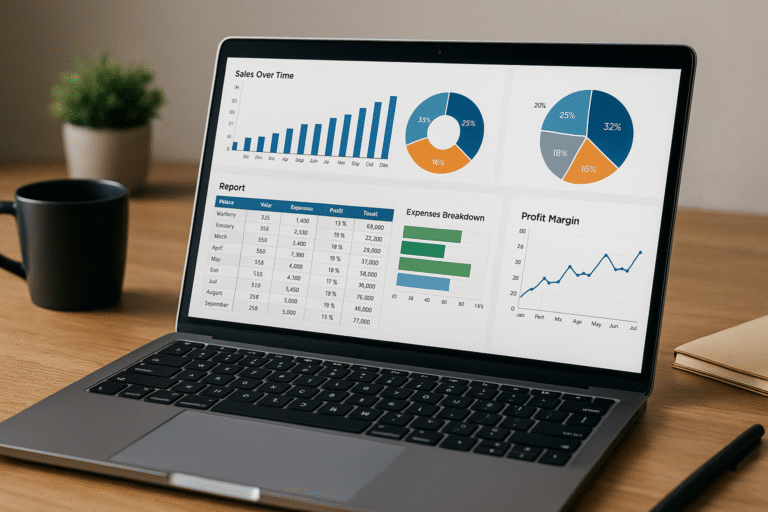
A monthly total hides which lines carry the business and which are carried. Attributing revenue and direct cost at line level is a records change rather than new data collection.
- Margin by product or service, not only by period
- Like-for-like comparison across equivalent periods
- Live connections to the systems already holding the data
- Exception flags rather than a total nobody questions
Related: Excel reporting

Support
Expert Help and Team Training
Frequently there is no project at all, only a file that stopped adding up the week something is due. Shared screen, your own workbook, and the explanation stays behind with the fix.
- Same-week attention when something has broken now
- Training on your own file rather than on sample data
- Written handover so the tool survives a staff change
- Retained hours where there is no in-house Excel depth
Related: Excel expert help and MS Office training
Where it starts
Eight Conversations That Begin an Albany Excel Project
Openings we hear from small businesses in this position, and what the answer usually turns out to be.
"Nobody but me can run the payroll file."
Because the rules are applied from memory rather than stored. One obligations table with the basis recorded against each line turns an unhandoverable process into a handoverable one.
"We added a column every time we found a new requirement."
Which makes the file a record of what you discovered rather than a tool for operating. Restructuring around obligations rather than around history is usually a few days of work.
"I have no idea whether that shelf pays for itself."
You cannot know from a monthly report. Allocating floor area to activity and reporting contribution per square foot answers it against the cost that actually binds.
"Something was wrong for months and an outside party found it."
The predictable outcome where nobody's job is checking. Validation at entry and totals that cross-check each other catch most of what a second reader would.
"The deadline calendar is in my head."
Then it is a risk rather than a process. Held as a table with authority, basis, date and status, it becomes something that works while you are away.
"One product line might be losing money."
Probably, and the monthly total is hiding it. Attributing revenue and direct cost at line level is a records change rather than a new data collection exercise.
"Staff live in several different cities."
Which is ordinary here and does mean the payroll workbook has more dimensions than a standard template expects. Storing the basis rather than the answer is what makes it maintainable.
"The workbook has got slow and fragile."
Usually structural — volatile functions across large ranges, or an array formula doing a pivot table's job. Rebuilt properly it is quick again and nothing anybody uses is lost.
A quick check
Signs an Albany Business Needs Its Workbook Rebuilt
Nobody schedules this. It happens the week something is due, or after an outside party finds a figure that has been wrong for two quarters. The earlier signals look like this:
- Only one person can run the file and the rules are in their head
- A column was added for every requirement as it was discovered
- Nothing reports per square foot in a business paying East Bay rent
- No total cross-checks another, so an error stays silent
- The deadline calendar is memory plus email reminders
- Margin is known monthly and not by what you sell
- Figures get corrected after they go out often enough to be expected
- You have been quoted for software without anyone auditing the file
What the current setup costs
The unhandoverable file is the expensive one, and the cost arrives all at once. A process that only one person can run is fine until the week they cannot run it, and in a business of this size that week is not hypothetical over a few years.
The missing square-foot view costs continuously and quietly. Every decision about what to stock, display or discontinue is being made without reference to the largest fixed cost in the business, which means some of those decisions are simply guesses.
What happens before a quote
The workbook gets examined alongside the week around it — who opens it, what gets retyped, and which steps depend on remembering something first. In a small business those remembered steps are nearly always where the fault sits.
Often the honest answer is that restructuring the obligations table settles the whole complaint and nothing further is needed. Where the file genuinely has outgrown what a spreadsheet should carry, you will be told that instead, and the first conversation is free either way.
Work delivered
Three Builds and the Figures the Clients Measured
Genuine projects for real organizations. Each number below came from the client after the tool had been running for a while.

66% better
accuracy
A budgeting tool spanning thirty companies
- Before
- Thirty separate businesses under one management company, each budgeted independently and consolidated by hand afterward, with several people needing different levels of access to a single workbook.
- Built
- A budgeting template with access tiers, VBA rolling each approved budget into a master sheet, adjustable payroll, tax and benefits inputs, and a direct load into the accounting system.
- After
- Hand entry disappeared from the process. Budgeting accuracy rose 66%, the build cycle ran more than ten times faster, and reforecasting during the year became something they could actually do.

40 hours
a month back
Operations reporting taken off manual
- Before
- Reports for internal management and for outside funding institutions were maintained by hand, and one update cycle could take three days.
- Built
- A program pulling more than fifty sources into a single document in roughly five minutes, with every source checkable beforehand and drafts produced for comparison.
- After
- An eight-hour job now finishes in minutes, handing back at least forty person-hours a month from work that created nothing new.

9 minutes
to 30 seconds
A file that had become unusable
- Before
- Finding one record inside a 1,200-row workbook could take up to nine minutes, the product of stacked array formulas and years of code added without review.
- Built
- Data moved onto native Excel tables, pivot tables with slicers replaced the lookup logic, and the redundant VBA and array formulas were taken out rather than worked around.
- After
- The same lookup takes thirty seconds on the same hardware. Structure had been the limit all along, not the machine.
Who this applies to
Industries We Serve in Albany
The six areas JAAD Group covers, described as they appear in a small, dense East Bay city.

Retail and E-commerce
Inventory monitoring, sales tracking, profit calculations. Businesses where floor area is among the largest fixed costs and nothing reports against it.

Finance and Accounting
Cash flow management, P&L tracking, budget analysis. Small companies whose payroll and filing obligations span several jurisdictions at once.

Healthcare & Insurance
Patient record systems, policy tracking, compliance reports. Practices and agencies with no administrative layer to catch an error.

Real Estate & Construction
Investment models, cost forecasting, expense tracking. Trades and small contractors working across several city lines in a single week.

Education & Training
Enrollment reports, course progress dashboards, grant tracking. Programs and tutors reporting on a funder's or an institution's format.

Manufacturing & Logistics
Supply chain analysis, production scheduling, vendor performance. Small producers and suppliers operating out of expensive square footage.
If your industry relies on Excel for financial analysis, data tracking or reporting, we can optimize and automate your workflows to save time and improve performance.

How it runs
Working With an Excel Consultant in Albany
Five stages. Nothing is charged for stage one, and a decent share of jobs stop there with a recommendation instead of a quote.
Tell us what the file is for
What it has to produce and where it started letting you down. Attaching the file sharpens that conversation a lot, but it is not a precondition.
We look at the file and the working week
Who touches it, what gets keyed in twice, and which stages only work if somebody recalls a prior step. At this size those recalled stages are nearly always the weak point.
Both numbers agreed first
Deliverable and cost are settled before construction. The workbook has been examined by then, so leaving either vague would be a choice.
Construction happens in view
Each usable version reaches you as it is finished instead of everything landing at once. That is what makes an early change of mind cheap and a late one expensive.
A complete handover
You receive the file, the code behind it, a written account of its workings and time with the people who will operate it. Something only its maker can run has not reduced a risk, only relabelled it.
Who does the work
Jeff Mattus
Owner & President, JAAD Group
JAAD Group is Jeff Mattus, who started the practice after more than twenty-five years building Excel and Office systems, coming to it from Computer Science rather than accounting. For a file that has quietly become a company's only system of record, that background is what separates what has to be rebuilt from what merely looks alarming.
Those engagements have reached into finance, healthcare, technology and property. That range is why a first call usually ends in a diagnosis instead of a discovery phase — a multi-jurisdiction payroll workbook has close relatives in consolidation problems many times its size.
The service is delivered remotely, which is why a business in the East Bay works with a practice based in Nevada without any of that mattering. You deal with one person: whoever takes the first call scopes the work and then does it.
Organizations we have built for
Trusted With Business-Critical Spreadsheets














Why a specialist
Why Albany Businesses Use a Dedicated Excel Consultant
One discipline only
Excel, VBA and Office automation are the whole practice, which is why the diagnosis on a first call is usually right and the estimate close to the final figure.
Mend it before you buy
Small firms get pointed at software designed for organizations with a whole accounts team. Where the existing file can be put right instead, that is the advice you will get.
Built to check itself
Where nobody's job is reviewing the numbers, validation and cross-checks have to live inside the workbook rather than in a person.
Documented at handover
Written explanation, source code and training are part of delivery, so the process stops depending on one person being available.
Figures from the clients themselves
The numbers quoted above came back from the businesses running those tools, and all three builds are set out at length higher up.
Remote, so location is irrelevant
Screen share rather than scheduling. An urgent problem gets attention the same day and no part of the fee is travel.
Questions
Frequently Asked Questions
What does Excel consulting in Albany usually involve?
Most often it is turning an accumulated payroll or compliance file into a structured one, so the rules are stored rather than applied from memory each period. After that it is square-foot reporting and line-level margin.
The records themselves are usually accurate. What changes is the structure, which is what currently makes the file impossible to hand to anybody else.
Our staff live in several cities. Does that complicate the payroll file?
It adds dimensions a standard template does not expect, which is why these files tend to grow a column at a time rather than being designed.
The fix is to store the basis rather than the answer: one table saying what applies to whom and why, with each period generated from it. That is what makes it maintainable by somebody new.
Why would reporting per square foot matter to us?
Because in this market floor area is likely one of your largest fixed costs, and nothing in a monthly report is measured against it.
Allocating area to activity and reporting contribution per square foot answers whether a line, a shelf or a piece of equipment earns its space. It frequently changes a stocking or layout decision immediately.
There is nobody here to double-check anything. What helps?
Moving the checking into the workbook. Validation at the point of entry stops the class of error a rushed afternoon produces, and totals that cross-check each other catch most of the rest.
A short set of tests that run whenever the file opens will flag a formula that stopped including the newest column, which is the error most likely to survive unnoticed.
Can the compliance calendar be automated?
The tracking can, and that is most of the value. Obligation, authority, basis, due date and status held as a table gives you a report of what is open instead of a memory supported by reminders.
What is owed and to whom remains a question for your accountant. Our part is making sure nothing is missed and the underlying figures are ready in the right shape.
One of our product lines might be unprofitable. Can a spreadsheet tell us?
Usually within a period of data, once revenue and direct cost are attributed at line level rather than rolled into a monthly total.
In a market with this cost base it matters more than it would elsewhere, because there is no cheap floor space available to absorb a line that is not working.
How is this priced?
By scope, which is why the file is examined before any number is discussed and why that examination is free. A repair or a single automated check is small and fixed-price; a full restructure is priced as one piece of work.
Whichever it is, both the thing being built and its cost go on paper first.
You are based in Nevada. Does that matter for an Albany business?
Not in practice. The work is delivered remotely by design, and reviewing a workbook together on a shared screen is the same experience whether the other party is across the bay or across a state line.
It also means no part of the invoice is travel, which on a small engagement is a real share of the cost.
The person who set up our file has left. Is it recoverable?
Usually, yes. We take it apart down to its logic, mark the sections that are only just holding together, and then mend or rebuild each according to what it genuinely needs.
The author is not what is missing. Access to the people who read the output is, because deciding what each number is supposed to stand for is where the effort actually goes.
How long does this take?
Restructuring an obligations table is often a few days. A full rebuild of a file doing payroll, compliance and sales reporting at once usually runs one to two weeks depending on the audit.
However large the job, that number is written down before construction rather than surfacing partway through.
What do we end up with?
The workbook itself, any macro source code, written documentation of how it operates, and training for the people who will use it.
Nothing is tied to this practice and no recurring payment keeps it running. Later assistance is on offer and entirely up to you.
Is your work confined to those six sectors?
Not at all. That list reflects where enquiries have historically originated, not a filter. What matters is whether the thing in front of us is a spreadsheet problem.
A payroll obligations table, a square-foot margin report, a deadline tracker and a clinic rota have far more in common underneath than they look from outside.
Also serving
Excel Consulting Across California and Nevada
Everything is delivered by screen share, so a California business works with us exactly as a Nevada one does. Other places with their own pages:
By service: Excel consulting for the restructure, financial modeling for square-foot and line margin, Excel automation for the deadline tracker, VBA and macro development for entry checks, and Excel reporting or Excel expert help for the rest.
Albany is the hub here — schematic, not to scale
Send Us the Workbook
Describe the problem, or attach the file. You get an unvarnished account of the fault and of the work it would take to clear it, and nothing is signed at that point.
949-464-7489JAAD Group Excel Consulting · 2937 Hawksdale Dr, Las Vegas, NV 89134
Excel consulting services in Albany, CA and across California, delivered remotely