
Carson City, Nevada · State capital
Excel Consulting Services in Carson City, NV
Carson City runs on a two-year clock. The Legislature sits in regular session only every other year, agency budgets are built for twenty-four months at a time, and the firms that serve them inherit that rhythm whether or not they planned for it. Nearly every spreadsheet in town, meanwhile, is structured around twelve months. JAAD Group provides Excel consulting in Carson City for the gap between those two facts.
- Biennial budget models
- Session-cycle forecasting
- Vendor and contract reporting
- Public-record grade workbooks
The capital's timing problem
A Two-Year Cycle Running Through One-Year Spreadsheets
Most towns have a seasonal problem. Carson City has a structural one. The planning horizon that actually governs money here is twenty-four months long, arrives in a concentrated burst, then goes quiet for the better part of two years — and it is being tracked in workbooks laid out twelve columns wide.
The consequence is a permanent translation exercise. A biennial figure has to be split into annual ones for internal purposes and then reassembled into biennial ones for submission, usually by hand, usually by whoever has done it before. Every one of those conversions is a chance for a definition to shift quietly between versions.
Around the agencies sits a professional economy that keeps the same clock without having chosen it. Contractors, consultancies, legal and technical firms and suppliers all see workload and revenue shaped by where in the cycle the state currently is, and most of them forecast as though the year were the unit.
Then there is everything a capital has regardless of politics: healthcare, retail, trades, manufacturing and a tourism flow moving between here and Lake Tahoe. Those businesses have ordinary reporting needs — but they sit in a labour market and a customer base that both move on the two-year rhythm.
Underneath the projects
What Excel Consulting in Carson City Usually Comes Down To
Two-year budgets held in one-year spreadsheets
The biennial split is the first thing worth fixing, because it is the cause of so much else. A budget agreed for twenty-four months has to be reported against in shorter periods, tracked against actuals that arrive monthly, and then reconciled back at the end of the cycle. Handled well, that is a single dataset with a period column and views built over it. Handled the way it usually is — a workbook per year, a workbook for the biennium, and somebody bridging the three — it produces exactly the drift you would expect. Definitions change between versions, an adjustment gets applied in one file and not another, and the discrepancy surfaces eighteen months later when nobody remembers the reasoning. Restructuring it is unglamorous Excel consulting work with a very high return.
In session, an answer is needed in hours rather than weeks
The second pressure is about response time, and it is peculiar to a capital. Out of session, a question about a number can wait a week. In session, the same question arrives with a hearing attached and needs an answer the same afternoon, sourced and defensible. A workbook that requires assembly before it can answer anything is fine for twenty months and useless for four. That difference drives a specific design decision: the file has to be able to produce a traced answer on demand, with the calculation path visible, rather than needing an analyst to rebuild the derivation each time somebody asks. In practice that means reporting built for interrogation rather than for presentation.
Vendors inherit the cycle without modelling it
Third, the private firms serving all of this generally forecast on a twelve-month basis while their actual demand follows the state's twenty-four-month one. The effect is predictable and rarely modelled: a strong year followed by a quieter one reads as decline rather than as the cycle behaving normally, which leads to hiring and capacity decisions made against the wrong signal. Building the cycle into the forecast as an explicit driver — rather than smoothing it into an average growth rate — is a modest piece of financial modeling that changes what the numbers appear to be saying.
Figures written for a reader who is looking for a problem
Fourth, the standard of construction has to be higher here than in most places, because a large share of what gets produced can end up in front of somebody actively looking for an error. That is not a reason for anxiety, but it is a reason for discipline. It means one calculation path per figure rather than three that happen to agree, assumptions written where a reviewer will find them instead of buried inside a formula, and no hard-coded adjustment sitting quietly in a cell where it will outlive the reason it was entered. Those are ordinary engineering habits; they are simply enforced more strictly when the audience is external and unsympathetic.
One organisation keeping city and county books at once
Fifth, Carson City is a consolidated municipality — city and county functions in one organisation — and the organisations that work with it inherit a reporting structure that does not look like anywhere else in the state. Categories that would sit in two separate sets of books elsewhere sit in one here, which is simpler in principle and awkward in practice when a template, a grant format or a state return assumes the usual separation. Mapping between the local structure and whatever external format is being asked for is a recurring job, and like every other mapping on this page it works far better as a stored table than as something a person applies from memory.
None of this calls for replacing anything
None of that requires new software, and it is worth saying so plainly because the reflex in a well-funded environment is to procure rather than to restructure. The records already exist and are usually accurate. What is wrong is the shape they are held in, which makes the important questions expensive and the deadline-driven ones frightening. Reshaping is days of work rather than quarters, and a single hour of Excel expert help is often enough to establish which of the two you are really facing.
What gets built
Excel Consulting Services in Carson City, NV — The Six Areas
Six kinds of work. In the capital the first three account for most of what actually gets commissioned.

Structure
Restructuring Around the Cycle You Actually Run On
A budget agreed for two years and reported in months needs one dataset with a period dimension, not three workbooks and a person bridging them. The existing logic normally survives; only the shape changes.
- One dataset, many periods — month, year and biennium from the same records
- Version drift eliminated by removing the parallel copies
- Formula repair for references that stopped pointing anywhere
- Performance — volatile formulas replaced with tables and pivots
Related: Excel consulting
Reporting
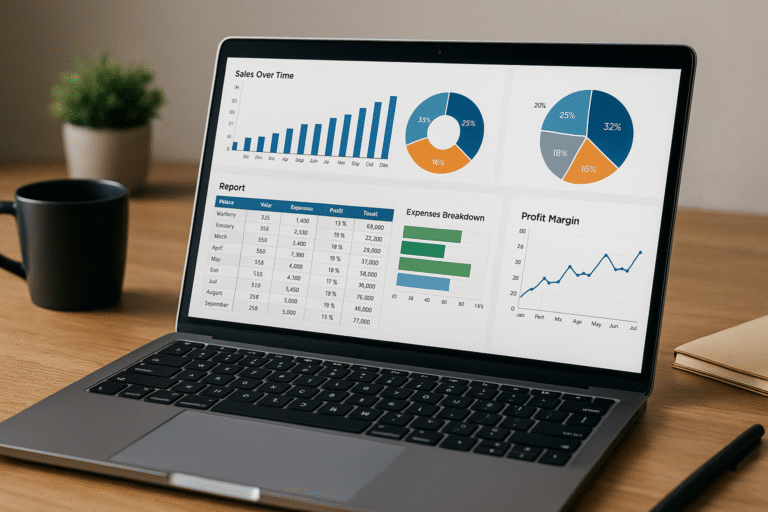
Reports Built to Be Interrogated
When a figure may be questioned the same day it is published, the report has to carry its own derivation. Every number should be traceable to source without anybody rebuilding the calculation by hand.
- Traceable figures with the calculation path visible
- Same-day answers without an assembly step first
- Board, council and committee formats for outside readers
- Exception flags so a mismatch announces itself early
Related: Excel reporting
Automation
Recurring Submissions That Assemble Themselves
Anything produced on a fixed date from the same sources every cycle should be generated rather than rebuilt. The inputs are stable; only the values move, which is precisely what automation is for.
- Scheduled submissions assembled from your own records
- Multi-source consolidation when data arrives in several formats
- Refresh from source rather than from a saved download
- Import cleanup for exports that shift shape between runs
Related: Excel automation

Code
VBA and Macro Development
Where several people work in one budgeting tool, code is what makes the process deterministic: forms that reject bad entries, routines that behave identically whoever runs them, and access that differs by role.
- Entry forms validating at the point of typing
- Role-based access within a single shared workbook
- Legacy macro repair where the author has moved on
- Add-ins so a shared tool updates in one place
Related: VBA and macro development
Modeling
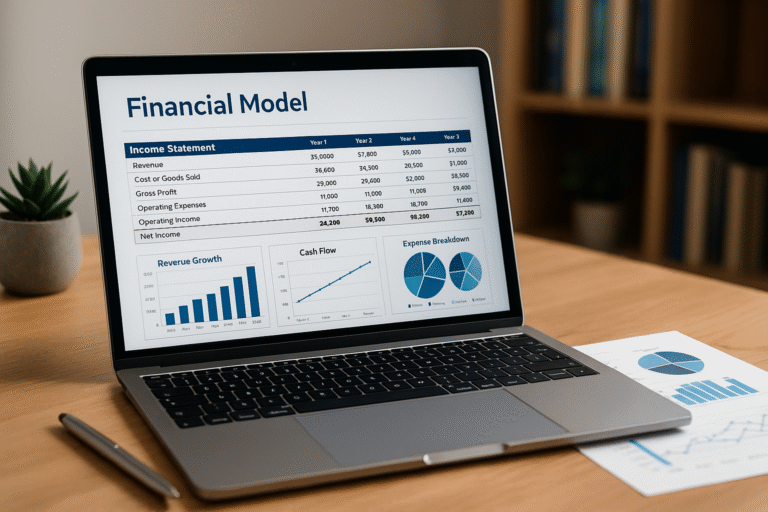
Forecasting on a Two-Year Rhythm
A firm whose demand follows the state's cycle should not be forecasting on a straight line. Modelled properly, a quiet year reads as the cycle working rather than as the business failing.
- Cycle as an explicit driver, not smoothed into an average
- Scenario switching instead of a folder of saved variants
- Capacity planning across the peak and the trough
- Assumptions in one visible block for anyone reviewing
Related: Excel financial modeling

Support
Expert Help and Team Training
Sometimes there is no project, only a report returning the wrong figure the morning it is due. A shared screen, work done on your own file, and the reasoning left behind along with the fix.
- Same-week attention when something has broken
- Training on your own workbooks rather than sample files
- Written handover so tools survive staff turnover
- Retained hours where there is no in-house Excel depth
Related: Excel expert help and MS Office training
Where it starts
Eight Conversations That Begin a Carson City Excel Project
Familiar openings, and roughly what the answer turns out to be in each case.
"Our budget is for two years and our spreadsheet is for one."
The defining local problem. One dataset with a period column produces the annual view, the biennial view and the monthly tracking from the same records, and the manual bridging between three files disappears.
"During session we cannot answer questions fast enough."
Because the workbook needs assembling before it can answer anything. Built so each figure carries its own derivation, the same question is answered in minutes with the source visible.
"A good year followed by a quiet one looks like decline."
It usually is not — it is the cycle. Modelled as an explicit driver rather than averaged away, the pattern becomes something you plan capacity around instead of reacting to.
"Two versions of the same figure disagree."
Almost always parallel copies drifting apart, with an adjustment applied to one and not the other. Removing the duplication removes the class of problem rather than this instance of it.
"Our structure does not fit the template we are given."
Common where city and county functions sit in one organisation. An explicit mapping table between your structure and the requested format is far safer than somebody reapplying it from memory each time.
"This has to hold up if somebody goes looking."
Then it needs one calculation path per figure, assumptions written where a reviewer will find them, and nothing hard-coded inside a formula. Those are build standards rather than formatting choices.
"Only one person understands the budget file."
A structural risk rather than a staffing one. Documentation and automation are the answer, so that the reporting keeps working through leave, illness and a resignation.
"The workbook has become slow enough to plan around."
Usually volatile functions applied across enormous ranges, or array formulas doing a pivot table's job. Rebuilt properly it returns to instant with nothing removed that anyone uses.
A quick check
Signs a Carson City Organisation Has Outgrown Its Workbook
This work is rarely scheduled. It happens after a difficult hearing, a failed reconciliation, or a departure that took the only working knowledge with it. The earlier warnings look like this:
- The same figure exists in three files and they no longer agree
- Annual and biennial views are reconciled by hand every cycle
- A question during session takes a day to answer properly
- Nobody can trace a published number back to its source quickly
- Forecasts treat a quiet year as failure rather than as the cycle
- An external template is remapped from memory each time it is due
- The file is slow enough that people schedule around opening it
- One person is the process, and everyone quietly knows it
What the current arrangement costs
Reconciling parallel copies is the obvious cost. Two days a cycle sounds small until you count the checking that surrounds it, the queries it generates and the corrections issued afterwards — and all of that time comes from the person whose judgement you actually need on the substance.
The larger exposure is the answer given under time pressure. A figure produced quickly from a file nobody can trace is a figure that may need correcting in public later, and the cost of that is not measured in hours.
What we do before proposing anything
The workbook gets examined alongside the routine around it: who edits it, what is corrected every cycle, and which steps live only in somebody's head. Those recurring corrections mark the real fault far more reliably than the formula people point to first.
Often the conclusion is that a day or two of restructuring resolves the whole complaint, and the honest advice is to do that and stop there. Where Excel has genuinely been pushed past what it should carry, you will hear that instead. The consultation is free in both cases.
Work delivered
Three Projects and What Changed Afterwards
Real builds for real organisations. The figures were recorded by the clients themselves once the tools were in day-to-day use.

Accuracy
up 66%
A shared budgeting tool for thirty entities
- Starting position
- Thirty companies under one management group, each budgeting on its own and consolidated manually afterwards, with different people needing different levels of access to the same file.
- What was delivered
- A budgeting template with access tiers, VBA rolling each approved budget into a master sheet, adjustable payroll, tax and benefits inputs, and a direct load into the accounting system.
- Measured result
- Manual entry was removed from the process altogether. Budgeting accuracy improved 66%, the build cycle ran over ten times faster, and reforecasting part-way through the year became practical.

40 hours
a month back
Manual operations reporting replaced
- Starting position
- Reports for internal management and for outside funding institutions were assembled entirely by hand, with a single update cycle stretching to three days.
- What was delivered
- A program pulling more than fifty sources into one document in about five minutes, with every source inspectable before assembly and draft versions produced for comparison.
- Measured result
- An eight-hour task now completes in minutes, returning at least forty person-hours each month from work that created nothing new.

Nine minutes
to thirty seconds
A workbook that had stopped being usable
- Starting position
- Retrieving one record from a 1,200-row workbook could take as long as nine minutes, caused by layered array formulas and code accumulated over years without review.
- What was delivered
- Data moved onto native Excel tables, pivot tables with slicers replacing the lookup logic, and the redundant VBA and array formulas taken out rather than worked around.
- Measured result
- Thirty seconds for the identical lookup on identical hardware. Structure had been the constraint throughout, never the machine.
Who this applies to
Industries We Serve in Carson City
The six areas JAAD Group covers, described as they appear in the capital.

Finance and Accounting
Cash flow management, P&L tracking, budget analysis. Finance functions running a two-year commitment through twelve-month reporting structures.

Education & Training
Enrollment reports, course progress dashboards, grant tracking. Programmes reporting to funders whose periods and categories never match the internal ones.

Healthcare & Insurance
Patient record systems, policy tracking, compliance reports. Clinical and benefits organisations whose reporting is shaped by bodies outside the building.

Real Estate & Construction
Investment models, cost forecasting, expense tracking. Contractors working to procurement calendars rather than to ordinary commercial ones.

Manufacturing & Logistics
Supply chain analysis, production scheduling, vendor performance. The precision manufacturing base around the capital and the suppliers feeding it.

Retail and E-commerce
Inventory monitoring, sales tracking, profit calculations. Trade shaped by session weeks, tourism moving toward Tahoe, and a small resident population.
If your industry relies on Excel for financial analysis, data tracking or reporting, we can optimize and automate your workflows to save time and improve performance.

How it works
Engaging an Excel Consultant in Carson City
Five stages. The first is free, and a reasonable share of them finish there with advice rather than a proposal.
Say what the file should answer
The question it is meant to settle, and the point at which it stopped settling it. Sending the workbook makes the conversation far more useful, though it is not required to have one.
Audit the workbook and the routine
Sources, editors, and everything corrected every cycle. Those repeated corrections are where the underlying fault normally sits, rather than in the formula that gets blamed.
Fixed scope, in writing
The deliverable and the price agreed before construction. The file has already been examined by that point, so neither needs to remain open.
Build where you can watch it
Working versions as they emerge rather than a single delivery at the end. A change requested in week one is trivial; the same change in week four is not.
Hand over completely
Workbooks, source code, written documentation and training for the people who will run it. A tool only its builder understands has relocated the risk, not removed it.
Who you are dealing with
Jeff Mattus
Owner & President, JAAD Group
JAAD Group is Jeff Mattus, who set the practice up after more than twenty-five years building Excel and Office systems, coming to it from Computer Science rather than accountancy. Where a workbook has to withstand outside examination, that background matters: the questions are about construction and traceability rather than about presentation.
The work has covered finance, healthcare, technology and real estate. That breadth is why a first call generally produces a diagnosis instead of a discovery phase — a biennial budget problem in Carson City has close relatives in sectors that look nothing like government.
For an organisation here, the practical point is that there is no layer in between. Whoever answers the first call scopes the job and then carries it out, so nothing has to be explained twice to two different people.
Organisations we have built for
Trusted With Business-Critical Spreadsheets














Why a specialist
Why Carson City Organisations Use a Dedicated Excel Consultant
A single discipline
Excel, VBA and Office automation are the whole of the practice, which is why a first-call diagnosis is usually accurate and the estimate close to the final number.
Restructure ahead of rebuild
Where a file can be reshaped rather than replaced, that is what gets recommended — and it is the cheaper of the two by a wide margin.
Built to be examined
One calculation path per figure, assumptions visible, nothing hard-coded out of sight. That standard matters more here than almost anywhere.
Handed over documented
Source code, written explanation and training come with delivery, so the tool outlives the person who commissioned it.
Outcomes that were measured
The results above were recorded by clients in live use, and each project is described in full further up this page.
Remote and quick to start
Screen share rather than scheduling, so an urgent problem gets looked at the same day and no part of the fee is travel time.
Questions
Frequently Asked Questions
What does Excel consulting in Carson City usually involve?
More often than anywhere else in Nevada, it involves reconciling a two-year planning cycle with twelve-month reporting. After that it is automating a recurring submission, restructuring a file that grew past its design, or repairing something its author left behind.
The common feature is that the records already exist and are usually correct. What changes is the shape they sit in, so the questions that matter stop being expensive to answer.
Can one workbook handle both annual and biennial reporting?
It should, and building it that way removes most of the reconciliation work. One dataset with a period dimension produces the monthly tracking, the annual view and the biennial total from identical records.
The alternative — separate files bridged by hand — is exactly how two versions of the same figure end up disagreeing eighteen months later.
During session we get asked for numbers with no notice. Can a spreadsheet cope with that?
Only if it was built for it. A workbook that needs assembling before it can answer anything is perfectly adequate out of session and a serious liability in it.
The design change is making every published figure carry its own derivation, so the answer and its source come out together rather than being reconstructed under pressure.
Our demand follows the state cycle. How should we forecast?
With the cycle as an explicit driver rather than averaged into a growth rate. Averaging is what makes a normal quiet year look like a downturn and prompts decisions that the next busy period contradicts.
Built properly, the forecast tells you what capacity the trough needs and what the peak will require, which is a planning question rather than a reporting one.
We are a consolidated city and county. Do templates built for others still work?
Often not directly, and that is the source of a recurring mapping job. External formats generally assume the usual separation, so somebody translates your structure into theirs each time it is due.
That translation should be a stored table with its exceptions listed, not something reapplied from memory. It is a short piece of work that removes an annual source of error.
Our reports may be read by people looking for mistakes. Does that change how you build?
It raises the standard rather than changing the method. One calculation path per figure instead of several that happen to agree, assumptions written where a reviewer will look, and no hard-coded adjustment tucked inside a formula.
Those are ordinary engineering habits. They are simply enforced more strictly when the reader is external and cannot ask you a follow-up question.
What does an Excel consultant charge?
It depends entirely on scope, which is why the file gets examined first and why that examination costs nothing. A formula audit or one automated submission is small and fixed-price; a staged build is priced stage by stage.
In every case the deliverable and the price are settled in writing before any building starts.
Do you work on site in Carson City?
The service is delivered remotely by design rather than by necessity. Reviewing a workbook together on a shared screen works identically at any distance, and it means an urgent problem gets attention the day it appears.
It also keeps travel time off the invoice entirely, which for a small engagement can be a meaningful share of the cost.
Nobody here understands the budget file any more. Is it recoverable?
Usually, yes. The workbook is read back to first principles, the fragile sections identified, and each one repaired or replaced depending on which is honestly warranted.
The original author is not the missing ingredient. Time with whoever relies on the output is, because agreeing what each figure is meant to represent is the part that takes genuine thought.
How long does a project run?
One automated submission is often a matter of days. Restructuring a workbook that outgrew its design usually runs one to two weeks depending on what the audit turns up. A staged build across several sources runs over several weeks.
Whatever the size, that estimate is committed in writing before building starts rather than emerging as the work goes along.
What do we get at handover?
The workbooks, the macro source code, written documentation of how it all operates, and training for the people who will use it routinely.
None of it is locked to us and no subscription keeps it alive. Continuing support exists and is always optional.
Are those six industries the limit of what you take on?
No — they are simply where most of the work has come from. The determining factor is the nature of the problem rather than the sector, so if it is a spreadsheet problem it is in scope.
A biennial budget model, a grant return, an inventory tool and a clinic rota are far more alike underneath than they look from outside.
Also serving
Excel Consulting Across Nevada
The work is remote, so distance changes nothing about what gets delivered. Other Nevada towns with pages of their own:
Looking for a particular service? See Excel automation, VBA and macro development, Excel reporting, financial modeling, Excel consulting or Excel expert help.
Carson City is the hub here — schematic, not to scale
Send Us the Workbook
Describe what has gone wrong, or attach the file itself. You will get a straight assessment of the problem and of what correcting it involves, before anything is committed.
949-464-7489JAAD Group Excel Consulting · 2937 Hawksdale Dr, Las Vegas, NV 89134
Excel consulting services in Carson City, NV and across the state, delivered remotely