
Excel support for Churchill County businessesCall 949-464-7489

Fallon, Nevada · Churchill County

Excel Consulting Services in Fallon, NV

Fallon supports three economies that share a town and nothing else. A naval air station with the contracting standards that come attached to it. Some of the most productive irrigated farmland in Nevada, worked against water allocations rather than acreage. And a geothermal industry running assets with twenty-year horizons. JAAD Group builds the spreadsheets underneath all three, delivered remotely.

  • Audit-ready cost accounting
  • Water-allocation costing
  • Long-life asset models
  • Workbook restructuring
25+Years of Excel and Office development behind this work
40+Person-hours recovered monthly on a single reporting rebuild
1700Faster record retrieval after one workbook was restructured
66Better budgeting accuracy across a thirty-entity consolidation

Three economies, one town

Defence Standards, Water Rights and Twenty-Year Assets

What makes Fallon unusual is not that it has several industries — most towns do. It is that all three of its main ones demand records built to be examined by an outsider, and each defines the thing being measured differently. Contract cost, acre-feet of water, and plant availability over decades.

Defence contracting sets the strictest standard. Cost accounting has to hold consistent labour and cost categorisation across periods, and the documentation has to survive an audit years after filing. A workbook that merely balances is not sufficient; it has to be able to show its reasoning to somebody who was never in the room.

Agriculture here is defined by the Newlands Project, which means water is the binding constraint rather than land. That changes the unit of account. Yield and cost per acre-foot answer questions that yield per acre cannot, and very few inherited farm workbooks are structured to produce it.

Geothermal generation operates on the longest horizon of the three: plant availability, maintenance planning and financial models running twenty years out, where a single unlabelled assumption compounds quietly for a decade before anybody questions it — which is why financial modeling discipline matters more here than presentation.

Where water is the constraint, cost per acre-foot is the number that decides things — not cost per acre.

Where the records fail

Six Ways Churchill County Reporting Comes Apart

Measuring acreage when water is the constraint

The water point is worth expanding because it is the one most often got wrong, and getting it wrong is expensive rather than merely untidy. A field's return per acre and its return per acre-foot can rank differently, and where allocation is the limiting factor the second ranking is the one that should drive planting decisions. Producing it requires water use to be recorded against field and crop at the point of use, not apportioned across the whole operation afterwards. That is a structural choice made once, and retro-fitting it onto years of existing records is several times the work of building it in.

Figures that are right but cannot be evidenced

On the contracting side the recurring problem is not accuracy but evidence. The figures are usually right; what is missing is the ability to demonstrate why they are right to somebody auditing three years later. Assumptions living inside formulas, categorisation that shifted quietly between periods, and adjustments made by hand each cycle are all invisible while things go well and indefensible when they do not. Enforcing categorisation at entry is a VBA job rather than a policy one.

Twenty-year models that can only be trusted

Long-horizon energy models fail in a third way again. Nothing breaks; the model keeps producing output. But a twenty-year projection whose assumptions are scattered through the formulas cannot be reviewed, only trusted, and a model that can only be trusted is not doing its job. Pulling the assumptions into one labelled, dated block converts it back into something a board or a lender can interrogate. The same principle drives our reporting builds.

The data is already being collected

Underneath all three sits the same practical reality: the required information is usually already being collected. It is being stored in a shape that makes the important question expensive to answer. Restructuring that is a matter of days and is almost always the cheapest useful step available before anyone considers replacing systems.

Allocation is three numbers, not one

Allocation itself is more complicated than a single number, and workbooks that treat it as one tend to mislead. Rights carry different priorities, transfers and temporary arrangements change what is actually available in a given year, and the figure on paper is not always the figure delivered. A model that holds one annual allocation constant produces confident planting advice built on an assumption nobody checked. Recording entitlement, adjustment and actual delivery as three separate quantities takes marginally longer at entry and removes an entire category of expensive surprise.

Staff turn over faster than the workbook does

There is also a workforce pattern around the air station that shapes the reporting more than people expect. Contractor personnel turn over on posting cycles rather than employment cycles, which means the person who built a cost workbook is frequently gone within two years and the person inheriting it has no institutional memory to draw on. In that environment documentation is not administrative tidiness, it is continuity. A workbook that cannot explain itself to a newcomer will be quietly rebuilt from scratch by each successive holder, and every rebuild is an opportunity for the categorisation to drift again.

Areas of work

Excel Consulting for Fallon Businesses

Six services. In Churchill County, structure and traceability drive most of what gets commissioned.

Excel consultant restructuring a workbook so every figure is traceable Evidence

Making a Workbook Defensible

Where the output will be audited, the requirement is not tidiness but traceability. Every reported figure needs one path back to source, and every assumption needs to be findable by somebody who was not there when it was made.

  • Single calculation path for each reported figure
  • Assumptions in a labelled block, dated and visible
  • Consistent categorisation that holds across reporting periods
  • Manual adjustments eliminated or recorded as data rather than habit

Related: Excel consulting
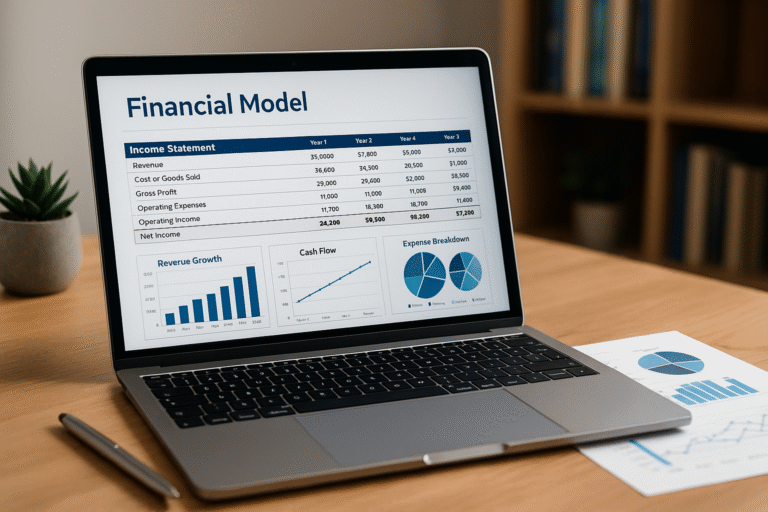
Excel model costing yield per acre-foot of water Costing

Costing Against Water, Not Acreage

When allocation is the limiting input, the standard farm template measures the wrong thing. Restructuring so water is recorded against field and crop at the point of use changes which decisions look sensible.

  • Yield and cost per acre-foot alongside the conventional measures
  • Allocation tracked at point of use rather than apportioned later
  • Crop comparison on the constraint that actually binds
  • Season scenarios for wet and dry years, switchable

Related: Excel financial modeling

Automating a recurring contract cost report in Excel Automation

Automating the Recurring Returns

Contract cost reports, compliance submissions and operational packs get rebuilt every period in most offices. The inputs do not change, which is precisely the condition under which automation is worth doing.

  • Period returns generated from your own records
  • Multi-source consolidation where data arrives in different shapes
  • Scheduled refresh so the pack is ready before it is requested
  • Validation on build so a bad figure does not leave the office

Related: Excel automation
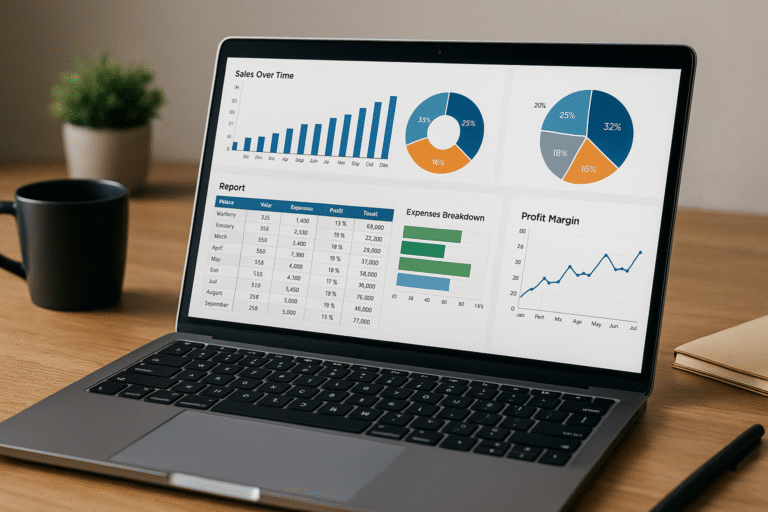
Availability and maintenance reporting dashboard for a generation asset Reporting

Availability and Operations Reporting

Long-life assets need reporting that answers the same questions consistently for years. Availability, maintenance and output, presented so this quarter can be compared with one from five years ago without rebuilding anything.

  • Availability and output tracked on a stable definition
  • Maintenance planning against asset life rather than the calendar
  • Comparable history that does not need reconstructing
  • Exceptions flagged instead of buried in a summary

Related: Excel reporting

Custom Excel application with validation built in VBA Code

VBA Where the Rules Must Hold

Categorisation that has to stay consistent cannot depend on whoever is doing data entry that week. Code enforces it: permitted values only, protected calculations, and routines that behave identically every run.

  • Entry validation so miscategorised costs are refused at source
  • Protected logic that cannot be casually overwritten
  • Deterministic routines for anything performed every period
  • Legacy code repair where the original author has gone

Related: VBA and macro development

Remote Excel help session on a shared screen Support

Immediate Help and Practical Training

Sometimes the requirement is an hour on a shared screen because something failed the morning a return is due. Sometimes it is teaching the team why their own file behaves as it does.

  • Urgent same-week sessions when something has broken
  • Training on your workbooks, not on generic examples
  • Written handover so knowledge survives staff turnover
  • Retained hours for teams without in-house Excel depth

Related: Excel expert help and MS Office training

Common starting points

Eight Problems We Are Asked About in Churchill County

Each of these has a standard resolution, and in most cases it is structural rather than technological.

"Our workbook has to survive an audit."

That is a design requirement, not a formatting one. Assumptions move into one visible block, every figure gets a single calculation path, and categorisation is enforced at entry so it cannot drift between periods.

"Water is our real constraint but we measure acres."

Then the model is answering a question you are not asking. Recording allocation against field and crop at the point of use makes cost and yield per acre-foot available, and it frequently reorders which crops look worth growing.

"The twenty-year model works but nobody can check it."

Assumptions scattered through formulas make a projection unreviewable. Consolidating them into one dated block turns a model that must be trusted into one that can be questioned, which is what a board actually needs.

"Cost categories have drifted over the years."

Almost inevitable when categorisation depends on judgement at entry. Enforcing permitted values in the tool stops the drift, and mapping the historical categories makes the older data comparable again.

"The compliance pack takes a week of somebody's time."

Because it is being assembled rather than generated. Once the underlying records carry the fields the pack needs, producing it becomes a refresh and the week comes back.

"Only one person knows how any of it fits together."

A concentration risk rather than a staffing one. Documentation and automation reduce it far more cheaply than hiring, and they keep the reporting running when that person is unavailable.

"Our allocation on paper is not what we actually received."

Because entitlement, adjustment and delivery are three different quantities and most workbooks store one. Separating them makes the shortfall visible while there is still time to respond, rather than at the end of a season.

"Whoever built this left two years ago, and so did their replacement."

Common where staffing follows posting cycles. The answer is a workbook that explains itself, because otherwise each new holder rebuilds it and the categorisation drifts a little further every time.

Worth reviewing

Signs the Records Will Not Hold Up

These rarely announce themselves. They surface during an audit, a lender review or a bad season, which is the most expensive moment to discover them:

  • Assumptions live inside formulas rather than in one visible block
  • Cost categories have shifted between periods without anyone recording why
  • Water use is apportioned afterwards instead of recorded at point of use
  • Manual adjustments happen every cycle, always the same ones
  • Long-range models can only be trusted, never checked
  • Comparing to five years ago means rebuilding the comparison
  • One person understands the whole chain and nothing is written down
  • Nobody will open the macros because their author has moved on

Why this matters more here

In most businesses a weak spreadsheet costs time. Where contracts are audited and allocations are regulated, it can cost considerably more than that, because the question arrives long after the people involved have moved on and the file has to answer on its own.

The pattern is consistent: nothing appears wrong for years, and then a single review asks a question the workbook was never built to answer. At that point the cost is not the fix, it is the reconstruction.

Where we start

With the file and the routine around it, before proposing anything. Often the finding is that a short restructuring, plus enforcing categorisation at entry, resolves the entire exposure.

If the honest conclusion is that the workbook is fine, you will hear that too. The consultation is free and ends with an assessment rather than a proposal.

Work delivered

Three Projects and the Numbers That Followed

Genuine client work. Each figure below was measured by the client once the tool was in regular use.

Excel budgeting template with tiered access for thirty companies

66% improvement
in accuracy

Consolidated budgeting for thirty entities

The problem
A management company responsible for thirty companies needed one budgeting tool with several levels of access, so different people could work in it without seeing or altering each other's figures.
The solution
A budget template with security tiers, VBA rolling approved figures into a master sheet, interactive payroll, tax rate and benefits handling, and a direct load into the accounting software.
The outcome
Manual data entry was replaced entirely. Accuracy improved by 66%, implementation ran more than ten times faster, and continuous reforecasting became practical for the first time.

Report consolidating over fifty sources into one document automatically

40 person-hours
saved monthly

Rebuilding an operations reporting cycle

The problem
Operations reports maintained by hand, used both internally and by external funding institutions, with a single update cycle taking as long as three days.
The solution
An Excel program combining more than fifty data sources into one document within five minutes, allowing sources to be inspected first and draft reports to be produced for comparison.
The outcome
Update time dropped from up to eight hours to minutes, saving at least forty person-hours every month.

Excel file restructured onto tables with pivot tables and slicers

Nine minutes
to thirty seconds

A workbook that had ground to a halt

The problem
Finding a specific record in a 1,200-row document was taking up to nine minutes, the result of array formulas and inefficient code layered over several years.
The solution
The data was restructured onto Excel's table features, pivot tables with slicers replaced the lookup logic, and redundant VBA and array formulas were removed rather than optimised.
The outcome
Retrieval fell to thirty seconds on identical hardware — the bottleneck had been structural throughout.

Sectors we cover

Industries We Serve

JAAD Group's six areas, described as they present themselves around Fallon.

Manufacturing and Logistics icon

Manufacturing & Logistics

Supply chain analysis, production scheduling, vendor performance. Geothermal operations and agricultural processing, both running assets and cycles measured in years rather than months.

Finance and Accounting icon

Finance and Accounting

Cash flow management, P&L tracking, budget analysis. Contract cost accounting that has to hold consistent categorisation and survive review long after filing.

Real Estate and Construction icon

Real Estate & Construction

Investment models, cost forecasting, expense tracking. Land, water rights and the buildings attached, where the allocation frequently matters more than the acreage.

Education and Training icon

Education & Training

Enrollment reports, course progress dashboards, grant tracking. Training providers and publicly funded programmes serving both the base and the farming community.

Healthcare and Insurance icon

Healthcare & Insurance

Patient record systems, policy tracking, compliance reports. Rural healthcare and benefits administration produced to deadlines set outside the organization.

Retail and E-commerce icon

Retail and E-commerce

Inventory monitoring, sales tracking, profit calculations. Agricultural supply and town retail, working to demand that follows the growing year.

If your industry relies on Excel for financial analysis, data tracking or reporting, we can optimize and automate your workflows to save time and improve performance.

How we work

Five Stages From Call to Handover

The first stage is free and reasonably often concludes that no project is needed.

  1. Describe the problem

    What the workbook is meant to demonstrate and where it stops managing it. Sending the file makes this far more productive, though it is not required to start.

  2. Audit the file and the process

    Sources, editors, and the adjustments made every single period. Those repeated adjustments are usually where the underlying fault sits.

  3. Written scope and fixed price

    Agreed before building. The file has already been examined, so there is no legitimate reason for the cost to stay open-ended.

  4. Staged, visible build

    Working versions along the way rather than a single delivery. Corrections cost little in the first week and a great deal in the last.

  5. Documented handover

    Source code, written explanation and training for the people using it. Anything only its author can maintain has relocated the risk rather than removed it.

Jeff Mattus, Owner and President of JAAD Group

The person doing the work

Jeff Mattus

Owner & President, JAAD Group

JAAD Group was founded by Jeff Mattus on a Computer Science background and more than twenty-five years of building Excel and Office systems for businesses. In work that has to stand up to outside review, that engineering discipline is the relevant part: structure, traceability and repeatability are habits rather than afterthoughts.

The experience spans finance, healthcare, technology and real estate. That breadth is why a first conversation usually produces a diagnosis — a problem that feels particular to your operation has generally shown up elsewhere in a different industry's vocabulary.

For a Churchill County business the practical consequence is direct access. The person who answers is the person who scopes the work and, in nearly every case, carries it out. No account manager sits in between and nothing is handed to somebody who missed the first call.

Organizations we have built for

Trusted With Business-Critical Spreadsheets

CAPTRUST
Trutina
Linmore LED
Gro-Well
McGregor Benefits
The Benefits Academy
Glen Acres HOA
Health Insurance Team
SSIS
OEC
SBA
Jesse Consulting

Why a specialist

What Changes When Excel Is the Whole Practice

A single discipline

Excel, VBA and Office automation are the entire business, which is why the diagnosis on a first call is usually accurate.

Repair before replacement

Where restructuring will solve it, that is the recommendation — despite a rebuild being the larger piece of work.

Built for review

In audited environments the deliverable has to explain itself. That is designed in from the start rather than added at the end.

Location-independent

Screen share and shared files, so Fallon receives the same attention as anywhere else and no fee covers travel.

Measured, not claimed

The outcomes above were recorded by clients in use, and each project is described in full further up this page.

One person throughout

Scoping, building and handover by the same individual, which matters most where the work has to be explained years later.

Questions

Frequently Asked Questions

We hold defence contracts. Can you build to those requirements?

We build the spreadsheet structure that supports them: traceable calculations, documented and dated assumptions, and consistent labour and cost categorisation enforced at entry so it cannot drift between periods.

Your compliance advisor owns the interpretation of the requirements themselves. Our part is making sure the workbook can evidence whatever position they take.

Can you produce yield and cost per acre-foot rather than per acre?

Yes, and where the Newlands allocation is the binding constraint it is usually the more useful measure. Ranking fields by return per acre can point one way while return per acre-foot points another.

It requires water use to be recorded against field and crop at the point of use rather than apportioned afterwards. That is a one-time structural change, and considerably cheaper to do before the records grow than after.

Our twenty-year model works. Why change it?

The question is not whether it produces output but whether anybody can check it. A projection whose assumptions sit inside formulas can only be trusted, and a model that can only be trusted is not doing the job a board needs it to do.

Consolidating assumptions into one labelled, dated block usually takes a few days and makes the model reviewable without changing a single result.

Our cost categories have drifted over the years. Is that fixable?

Yes, in two parts. Going forward, permitted values get enforced at entry so classification stops depending on judgement in the moment. Backwards, the historical categories get mapped so older periods become comparable again.

The second part is worth doing even when only the first is strictly needed, because comparability across years is usually the reason the question came up.

What does a project cost?

Scope decides it, which is why we ask to see the file and why the consultation is free. A focused restructuring or one automated return is a small fixed-price job; a staged system with integrations is priced across stages.

A written scope with a defined deliverable and price is agreed before any build work begins.

Does remote delivery work for this kind of work?

It is how nearly all of it is done. Examining your workbook together on a shared screen is identical regardless of distance, and files are exchanged securely.

It also means urgent problems get looked at the same day, and none of the invoice is travel time across Nevada.

Can you take on a file whose author has left?

That accounts for a large share of the work. The file gets reverse-engineered, the fragile elements identified, and either repaired or rebuilt where repair does not make sense.

The original author is not needed. What is needed is a conversation with whoever reads the output, since agreeing what the figures should mean is the genuinely difficult part.

How long does this take?

A single automated return is often days. A workbook restructuring is commonly one to two weeks depending on the audit findings. A full system with security levels and an accounting integration runs across several weeks in stages.

That estimate is provided in writing before any build work starts.

What do we receive at the end?

The workbooks, the macro source code, written documentation covering how everything operates, and training for the people who will use it day to day.

Nothing is locked to us and no subscription is required for it to keep working. Ongoing support is available and entirely optional.

Should allocation, adjustment and actual delivery be tracked separately?

Yes, and it is one of the more consequential structural choices available here. A single annual figure hides transfers, priority differences and the gap between what was entitled and what arrived.

Once they are three fields rather than one, a shortfall becomes visible during the season instead of at the end of it, which is the difference between adjusting and absorbing.

Our staff turn over every couple of years. How do we stop losing the knowledge?

By putting it in the tool rather than in people. Validation at entry, one calculation path per figure, and documentation written for somebody who has never opened the file before.

The alternative is what usually happens: each new holder rebuilds the workbook their own way, and the categorisation drifts a little further with every rebuild until year-on-year comparison stops being possible.

Can you work with data that comes out of another system?

Usually. Power Query handles most databases, APIs and structured exports, and where a source is awkward, VBA covers the rest. The objective is that reports refresh from the source rather than being rebuilt from a download.

Where a system genuinely cannot be read automatically, we say so at the audit stage rather than discovering it mid-build.

Do you work outside the industries listed on this page?

Yes. Those six are simply where most of the work has sat. The constraint is the nature of the problem rather than the sector it belongs to — if it is a spreadsheet problem, it qualifies.

Contract cost accounting, an irrigation allocation, a generation availability report, a clinic rota: underneath, these are the same job.

Also serving

Excel Consulting Across Nevada

Delivery is remote, so your location has no bearing on the service. Other Nevada towns with dedicated pages:

For a specific service, see Excel automation, VBA and macro development, Excel reporting, financial modeling, Excel consulting or Excel expert help.

Fallon is the hub here — schematic, not to scale

Send Over the Workbook

Describe the problem or attach the file. You will get a straight assessment of what is wrong and what putting it right would involve, before anything is agreed.

949-464-7489

JAAD Group Excel Consulting · 2937 Hawksdale Dr, Las Vegas, NV 89134
Working remotely with Fallon and businesses across Nevada