
Excel consulting for Rhodes Ranch and the southwest valleyCall 949-464-7489

Rhodes Ranch, Nevada · Southwest Las Vegas Valley

Excel Consulting Services in Rhodes Ranch, NV

In a master-planned community the important numbers are not quarterly ones. A reserve plan runs thirty years, assessments have to reconcile to every individual unit, and the contractors working inside the gates have a cost structure shaped by density rather than by distance. JAAD Group provides Excel consulting in Rhodes Ranch for the spreadsheets carrying all of it.

  • Reserve and component planning
  • Assessment reconciliation
  • Route and schedule costing
  • Rental portfolio models
25+Years building Excel and Office systems for organizations
40+Person-hours a month returned on one reporting rebuild
1700Faster record retrieval after a workbook was restructured
66Improvement in budgeting accuracy across thirty entities

A thirty-year planning horizon

Where the Spreadsheet Has to Think in Decades

Most businesses plan a year ahead and treat five years as ambitious. A community like this one has to plan for the replacement of roofs, roads, pools and equipment that will fail twenty-five years from now, and has to collect for it today. Almost no general-purpose workbook is built for that.

The reason it is hard is not the arithmetic. It is that a long-horizon plan depends on an inventory — every component, its installed date, its expected life, its replacement cost — and inventories decay. A plan built once and copied forward each year slowly stops describing the property, because the list underneath it was never maintained alongside the numbers on top.

The second recurring issue is the unit. Assessments have to tie back to individual addresses every single period, and the reconciliation between what was billed, what was collected and what remains outstanding is frequently assembled by hand from two or three sources that were never designed to agree.

Then there is the service economy that operates inside a community like this: landscaping, pools, HVAC, roofing and property management, all working at very high job density. That sounds easy and produces its own distinct costing problem, because the binding constraint stops being travel and becomes access and scheduling.

A reserve plan is only as good as the component list under it, and the list is the part nobody updates.

What the work is actually about

What Excel Consulting in Rhodes Ranch Usually Involves

A reserve plan is a thirty-year model, not a budget line

Begin with the reserve plan, because it is the piece of work with the longest consequences. Done properly it is two linked things: a component inventory and a funding model. The inventory lists each asset with its installation date, its expected useful life and a current replacement cost; the model takes that list and produces a year-by-year funding requirement. The failure mode is almost never in the model. It is that the inventory stops being maintained — a component gets replaced early, a cost estimate goes stale, something new gets added to the property and never to the list — so the funding figure continues to be calculated precisely from a description of the property that is three years out of date. Structuring the two so the inventory is the single source and the plan is generated from it, rather than maintained beside it, is the central piece of financial modeling work here.

Assessments have to reconcile to the unit every period

The second theme is reconciliation at unit level, and it is the one that consumes the most ordinary hours. Billed, collected and outstanding have to agree for every address, every period, and in most setups those three facts live in different places: a billing list, a bank or lockbox file, and a running record of who is behind. Assembled by hand, the reconciliation works but leaves no trail, which means a dispute six months later cannot be answered from the records. Built as one dataset keyed to the unit, with the three sources brought in and compared automatically, the same reconciliation becomes a refresh and every figure keeps its derivation. That is straightforward Excel automation with an unusually clear payback.

High job density changes which cost drives the price

Third, the contractors working inside a community like this have a costing problem that is the exact inverse of the one a rural operator faces. Here the jobs are dense — twenty stops within a few hundred yards — so drive time barely matters. What matters instead is access and scheduling: gate entry, permitted hours, which properties can be done in sequence, and how much of a technician's day is spent waiting rather than working. A model that costs by distance will therefore report excellent economics for routes that are in fact expensive, because the real cost is idle time, and idle time is not in the spreadsheet. Capturing time on site against time in the day is a small change that frequently reorders which contracts look worth having.

Delinquency belongs in the forecast, not in a footnote

Fourth, delinquency deserves to be treated as a forecasting input rather than as a disclosure at the bottom of a report. Any community has some proportion of assessments paid late or not at all, and that proportion is reasonably stable and therefore predictable. A budget built on full collection and a note about arrears underneath is not conservative, it is simply wrong by a knowable amount. Building an expected collection rate into the plan, with aging tracked by unit so the figure is grounded in the property's own history, produces a funding requirement that holds up. It also makes the cost of a tolerant collection policy visible, which is a board conversation that benefits enormously from a number.

Long-term and short-term rentals are two businesses

Fifth, owners in a community like this often hold both long-term tenancies and short-term rentals, and the two are genuinely different businesses sharing one spreadsheet. A long-term unit has stable monthly revenue and low transaction cost; a short-term one has variable nightly revenue, high turnover cost, cleaning and management fees, and occupancy that moves with the season. Averaged into a single portfolio total, they produce a yield figure that describes neither. Split at the record level, with a combined view retained for the lender, it usually becomes obvious which units suit which model — and that is a decision an owner can act on immediately. The same structural fix helps owners across Henderson and the rest of the valley.

The gap here is structure rather than software

What every one of these shares is that nothing here calls for new software. The component list, the billing records, the job times and the rental figures all already exist somewhere; they are simply held in shapes that make the long-horizon questions expensive and the period reconciliation manual. Restructuring is days of work rather than a procurement exercise, and an hour of Excel expert help will usually settle which of the two is in front of you.

What gets built

Excel Consulting Services in Rhodes Ranch, NV — The Six Areas

Six kinds of work. Where a community association is involved, the first two account for nearly everything commissioned.

Excel reserve funding model generated from a component inventory Modeling

Reserve Plans Generated, Not Maintained

One component inventory as the single source, with the thirty-year funding requirement calculated from it. The usual failure is a sound model running on a component list nobody has updated in three years.

  • Component inventory with install date, life and replacement cost
  • Funding plan generated from the list rather than kept beside it
  • Scenario switching for cost inflation and early replacement
  • Assumptions in one visible block, never inside formulas

Related: Excel financial modeling

Automated assessment reconciliation keyed to individual units Automation

Assessment Reconciliation by Unit

Billed, collected and outstanding brought together automatically and compared for every address. Done by hand it works and leaves no trail; built properly every figure keeps its derivation.

  • One dataset keyed to the unit rather than three separate lists
  • Scheduled refresh so the period reconciliation is ready, not assembled
  • Aging by unit with the history retained
  • Import cleanup for bank and lockbox files that shift format

Related: Excel automation

Excel consultant restructuring a rental portfolio workbook Structure

Separating Businesses That Share a Workbook

Long-term and short-term units averaged into one total give a yield figure that describes neither. Split at record level, with a combined view kept for the lender, the right model per unit becomes obvious.

  • Split at the record, combined only in the view
  • Turnover and management cost carried per unit, not as overhead
  • Formula repair for references that stopped pointing anywhere
  • Performance — volatile formulas replaced with tables and pivots

Related: Excel consulting
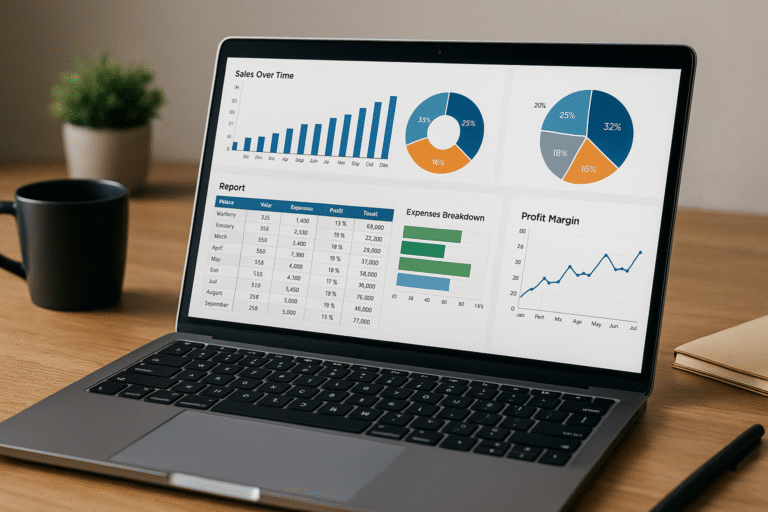
Excel reporting pack prepared for a community association board Reporting

Reporting a Board Can Interrogate

Where figures are presented to a board or to owners, each one has to carry its own derivation. A number that cannot be traced in the meeting becomes a number that gets argued about instead of acted on.

  • Traceable figures with the calculation path visible
  • Period packs in a format an outside reader can follow
  • Collection rate and aging reported rather than footnoted
  • Exception flags so a variance announces itself early

Related: Excel reporting

VBA tool for scheduling service work inside a gated community Code

VBA for Scheduling and Entry

Where route order, access windows and on-site time all have to be captured consistently, code is what stops the data depending on who filled it in. Forms that validate, routines that run identically.

  • Entry forms capturing on-site time against time in the day
  • Repeatable routines for anything run every period
  • Legacy macro repair where the author has moved on
  • Add-ins so one shared tool updates in a single place

Related: VBA and macro development

Remote Excel expert help session reviewing a reserve workbook Support

Expert Help and Team Training

Sometimes there is no project, only a figure that has to be defended at a meeting on Thursday. A call, your own workbook on screen, and a note of why it behaved that way left with you.

  • Same-week attention when something has to be explained now
  • Training on your own workbooks rather than sample files
  • Written handover so tools survive a change of manager
  • Retained hours where there is no in-house Excel depth

Related: Excel expert help and MS Office training

Where it starts

Eight Conversations That Begin a Rhodes Ranch Excel Project

Common openings, and what the answer tends to be once the workbook has been examined.

"The reserve plan has not matched the property for years."

Almost always because the component list stopped being maintained while the model kept calculating. Generating the plan from the inventory, rather than keeping the two side by side, fixes it permanently.

"Reconciling assessments takes two days every period."

Because billed, collected and outstanding live in three places. One dataset keyed to the unit, with the sources brought in automatically, turns two days into a refresh.

"A dispute from last year cannot be answered from our records."

The consequence of a reconciliation done by hand, which produces the right answer and leaves no trail. Built properly each figure keeps its own derivation.

"Our routes look efficient and the margin says otherwise."

Because the cost model is built on distance and the real cost is waiting. Capturing on-site time against time in the day usually reorders which contracts are worth holding.

"The budget assumes everybody pays."

Which is not conservative, just wrong by a knowable amount. An expected collection rate grounded in the property's own aging history gives a funding figure that holds.

"Our rentals are all in one spreadsheet and the yield looks odd."

Long-term and short-term units averaged together produce a figure that describes neither. Split at the record level, it becomes clear which units suit which model.

"Only one person can produce the board pack."

A structural dependency rather than a staffing one. Documentation and automation keep the reporting running through vacation, illness and a change of manager.

"The workbook takes a long time to open."

Usually volatile functions across very large ranges, or an array formula doing a pivot table's job. Rebuilt properly it is immediate again with nothing anybody uses removed.

A quick check

Signs an Association or Owner Has Outgrown Its Workbook

This work rarely gets scheduled. It follows a contested figure at a meeting, a reserve study that did not match the file, or a manager leaving with the only working knowledge. Earlier signals look like this:

  • The component list has not been updated since the last reserve study
  • The funding plan is maintained beside the inventory rather than generated from it
  • Period reconciliation is assembled by hand from several sources
  • A figure from last year cannot be traced back through the records
  • The budget assumes full collection with arrears noted underneath
  • Route costing is based on distance in a neighborhood where distance is trivial
  • Long-term and short-term units share one average
  • One person produces the board pack, and everybody knows it

What the current setup costs

The stale component list is the expensive one, and it is expensive quietly. A funding requirement calculated precisely from an out-of-date description of the property is wrong in a direction nobody has measured, and the discovery usually arrives as a special assessment rather than as a correction.

The reconciliation cost is easier to see. Two days a period is roughly a month a year of skilled time spent producing a figure that already existed in three places, and because the work leaves no trail, the same effort has to be repeated to answer any question about it later.

What happens before any quote

The workbook is examined together with the routine around it — who maintains it, what gets corrected every period, and which steps exist only in somebody's head. Those repeated corrections mark the real fault far better than the formula that first attracts blame.

Often the conclusion is that restructuring the inventory and the plan settles the entire complaint, and the honest advice is to do that and stop. Where Excel genuinely has been pushed past what it should carry, you will hear that instead. No charge attaches to reaching that conclusion.

Work delivered

Three Projects and the Results Recorded

Real builds for real organizations. The numbers came from the organizations themselves, once each tool had been running for a while.

Excel budgeting template with tiered access across thirty companies

66% better
accuracy

A budgeting tool across thirty entities

The position
A management company responsible for thirty separate businesses budgeted each independently and consolidated by hand, while several people needed different levels of access to one workbook.
The build
A budgeting template with security tiers, VBA rolling each approved budget into a master sheet, adjustable payroll, tax and benefits inputs, and a direct load into the accounting system.
The result
Manual entry left the process entirely. Budgeting accuracy improved 66%, the build cycle ran more than ten times faster, and reforecasting part-way through the year became realistic.

Automated report consolidating more than fifty data sources

40 hours
a month back

Manual operations reporting replaced

The position
Reports for internal management and for external funding institutions were maintained by hand, with one update cycle running as long as three days.
The build
A program drawing more than fifty sources into a single document in about five minutes, with each source inspectable beforehand and drafts produced for comparison.
The result
An eight-hour task now finishes in minutes, returning at least forty person-hours each month from work that produced nothing new.

Workbook rebuilt onto native Excel tables with pivot tables and slicers

Nine minutes
to thirty seconds

A workbook that had stopped performing

The position
Retrieving one record from a 1,200-row workbook could take as long as nine minutes, the result of layered array formulas and years of code added without review.
The build
Data moved onto native Excel tables, pivot tables with slicers replacing the lookup logic, and the redundant VBA and array formulas removed rather than worked around.
The result
Thirty seconds for the identical retrieval on identical hardware. The constraint had always been structure rather than processing power.

Who this applies to

Industries We Serve in Rhodes Ranch

The six areas JAAD Group covers, described as they appear in a master-planned community.

Real Estate and Construction icon

Real Estate & Construction

Investment models, cost forecasting, expense tracking. Reserve plans, rental portfolios and the contractors maintaining the property itself.

Finance and Accounting icon

Finance and Accounting

Cash flow management, P&L tracking, budget analysis. Assessment reconciliation at unit level and budgets that have to hold for decades.

Manufacturing and Logistics icon

Manufacturing & Logistics

Supply chain analysis, production scheduling, vendor performance. Service routes where access and scheduling bind long before distance does.

Retail and E-commerce icon

Retail and E-commerce

Inventory monitoring, sales tracking, profit calculations. Clubhouse, pro shop and amenity operations with their own seasonal pattern.

Healthcare and Insurance icon

Healthcare & Insurance

Patient record systems, policy tracking, compliance reports. Practices and agencies serving the southwest valley's residential communities.

Education and Training icon

Education & Training

Enrollment reports, course progress dashboards, grant tracking. Programs and clubs reporting on their own membership and participation.

If your industry relies on Excel for financial analysis, data tracking or reporting, we can optimize and automate your workflows to save time and improve performance.

How it runs

Working With an Excel Consultant in Rhodes Ranch

Five stages. The first costs nothing, and a reasonable number of them end there with advice rather than a proposal.

  1. Say what the file has to answer

    The question it is meant to settle, and the point at which it stopped settling it. Sending the workbook makes the conversation considerably more useful, though it is not a condition of having one.

  2. Audit the workbook and the cycle

    Sources, maintainers, and everything corrected every period. Those repeated corrections usually sit directly on top of the underlying fault.

  3. A written scope with a price

    Settled in writing first. The workbook has been read by then, which is exactly why neither the deliverable nor the number needs to stay vague.

  4. Build where you can see it

    Working versions as they emerge rather than a single delivery at the end. A change requested early costs very little; the same change late costs a great deal.

  5. Hand over completely

    At the end you take the workbooks, the macro source, a written account of how it works, and training for whoever will maintain it.

Jeff Mattus, Owner and President of JAAD Group Excel Consulting

Who does the work

Jeff Mattus

Owner & President, JAAD Group

Behind JAAD Group is Jeff Mattus. He established the practice after twenty-five-plus years building Excel and Office systems, having arrived at it from Computer Science rather than from an accounting seat. For a model expected to survive thirty years and then be defended out loud in a meeting, that is what keeps the structure traceable.

The work has covered finance, healthcare, technology and real estate, and that breadth is why a first conversation usually ends in a diagnosis rather than a discovery phase. A reserve funding model has close structural relatives in asset planning across industries that look nothing like property.

The practical point is that there is nobody in between. Whoever takes the first call scopes the work and then carries it out, so no part of the conversation has to happen twice.

Organizations we have built for

Trusted With Business-Critical Spreadsheets

CAPTRUST
Trutina
Linmore LED
Gro-Well
McGregor Benefits
The Benefits Academy
Glen Acres HOA
Health Insurance Team
SSIS
OEC
SBA
Jesse Consulting

Why a specialist

Why Rhodes Ranch Associations and Owners Use a Dedicated Excel Consultant

One discipline only

Excel, VBA and Office automation are the whole practice, which is why a first-call diagnosis is usually right and the estimate close to the final figure.

Rework rather than replace

If the workbook can be restructured instead of rebuilt from nothing, that is what gets proposed — partly because it costs less and partly because sound logic is worth keeping.

Built to be defended

Figures presented to a board or to owners need their derivation attached, because a number that cannot be traced gets argued about instead of acted on.

Documented at handover

Written explanation, source code and training are part of delivery, so the tool outlives a change of manager.

Numbers that came from clients

Every outcome quoted above was reported by the client using the tool, and all three of those projects are written out in full earlier on this page.

Delivered by screen share

There is no appointment to arrange, which is why something urgent gets attention the day it surfaces — and why none of the fee is spent getting here.

Questions

Frequently Asked Questions

What does Excel consulting in Rhodes Ranch usually involve?

Most often it is a reserve plan and the component inventory behind it, or the period reconciliation of assessments down to individual units. After that it is route costing and rental portfolio work.

In each case the underlying records already exist. What changes is the shape they are held in, so a thirty-year question stops being expensive and a monthly one stops being manual.

Our reserve plan no longer matches the property. Why does that happen?

Because the model and the component list are maintained separately. The model keeps calculating correctly from a description of the property that has quietly gone out of date.

The structural answer is to make the inventory the single source and generate the funding plan from it, so updating a component automatically updates everything downstream.

Can assessment reconciliation be automated down to the unit?

Yes, and it is usually the project with the clearest payback. Billed, collected and outstanding typically sit in three separate places and get brought together by hand each period.

Built as one dataset keyed to the unit, with the sources imported automatically, the reconciliation becomes a refresh and each figure keeps a trail that can answer a question months later.

Why would a dense route be less profitable than it looks?

Because the cost model is almost certainly built on distance, and in a community like this distance is trivial. The real cost is time not spent working — access, waiting, permitted hours, sequence.

Capturing on-site time against total time in the day is a small change, and it frequently reorders which contracts are genuinely worth holding.

Should delinquency be in the budget or disclosed separately?

In the budget. A plan built on full collection with arrears noted underneath is not a cautious plan, it is one that is wrong by an amount the property's own history could have told you.

An expected collection rate grounded in aging by unit produces a funding figure that holds, and it makes the cost of a lenient collection policy into a number rather than an opinion.

We hold long-term and short-term rentals together. Is that a problem?

It is if the combined average is what decisions are made from. The two have different revenue patterns, different turnover costs and different seasonality, so one yield figure describes neither.

Split at the record level with a combined view kept for a lender, it usually becomes clear which units suit which model — and that is actionable immediately.

What should we budget for this?

Scope determines it, which is why the file is examined before any number is discussed and why that look is free. A formula audit or one automated reconciliation is small and fixed-price; a reserve rebuild is priced as a whole.

Either way, what you are buying and what it costs are both written down before a single formula is built.

Do you attend meetings in person?

The work is delivered remotely by design. Going through a workbook together on a shared screen is identical at any distance, and it means a figure that has to be defended on Thursday can be looked at on Tuesday.

And no portion of the invoice is somebody's travel, which matters more on a short engagement than on a long one.

Our previous manager built the file and has left. Is it usable?

Usually, yes. The workbook gets read back to first principles, the fragile sections identified, and each one repaired or replaced depending on what is honestly warranted.

The original author is not the missing piece. Time with whoever relies on the output is, because agreeing what each figure is meant to represent is the part that takes real thought.

How quickly can this be done?

An automated reconciliation is often a few days. Rebuilding a reserve plan around a proper component inventory usually runs one to two weeks depending on the state of the list.

Whatever the size, the estimate is committed in writing before build work starts rather than emerging as the work proceeds.

What do we receive at handover?

The workbooks, the macro source code, written documentation covering how everything operates, and training for the people who will maintain it.

It is yours outright, with no subscription keeping it alive. Help after the fact exists and is never a requirement.

Do you only work inside those six industries?

No. They say where the work has tended to arrive from; they are not a filter applied to new requests. What decides scope is the nature of the problem rather than the sector it sits in.

A reserve model, a unit-level reconciliation, a route costing and a clinic rota have considerably more in common underneath than they appear to from outside.

Also serving

Excel Consulting Across the Las Vegas Valley and Nevada

This is screen-share work, which means your location changes nothing about the outcome. Other communities and cities with their own pages:

By service: financial modeling for the reserve plan, Excel automation for the period reconciliation, Excel reporting for the board pack, Excel consulting for the portfolio split, and VBA and macro development or Excel expert help for the rest.

Rhodes Ranch is the hub here — schematic, not to scale

Send Us the Workbook

Describe what has gone wrong, or attach the file. You will hear plainly what the fault is and what fixing it would involve, before you agree to anything.

949-464-7489

JAAD Group Excel Consulting · 2937 Hawksdale Dr, Las Vegas, NV 89134
Excel consulting services in Rhodes Ranch, NV and across the valley, delivered remotely