
Norfolk, Virginia · Independent city
Excel Consulting Services in Norfolk, VA
A Norfolk business can have the best order book in its history and a genuinely uncomfortable bank balance in the same month. Work here is won long before it is billed, on a schedule the customer controls, and almost nothing in a standard report measures the distance between those two points. JAAD Group provides Excel consulting in Norfolk for the businesses living in that gap.
- Backlog-to-revenue conversion
- Award-to-invoice lag
- Cash timing against the book
- Automation and VBA
Won is not billed
A Full Order Book and an Empty Month Are Not a Contradiction
In most businesses winning work and earning from it happen close enough together that one stands in for the other. Here they do not. An award can sit for months before any of it becomes billable, and the timing of that conversion is set by the customer rather than by the business holding the contract.
The result is that two perfectly accurate numbers point in opposite directions. The order book says the business is in good shape, because it is. The cash position says the opposite, because none of that book has converted yet. Neither figure is wrong and neither one on its own is enough to run on.
What is missing in between is the conversion profile: for work of this type, won at this point, how much typically becomes billable in each of the following months. That is knowable from the business's own history and almost nobody has calculated it.
Around that sits the rest of a port economy. Lead times are long, specifications change, and a great deal of the work is performed for customers who are themselves working to a schedule decided above them.
What the work is really about
What Excel Consulting in Norfolk Usually Involves
Backlog needs a conversion profile, not a total
The first build is a conversion profile for the backlog, and it replaces a number that is currently doing no work. Most businesses here can tell you what their order book is worth; very few can tell you how much of it will be billable in each of the next six months. That second figure is derivable from the first plus a few years of history: for work of a given type, awarded at a given point, what share typically became billable in month one, month two and so on. The profile is rarely tidy and it does not need to be, because what matters is the shape rather than precision. Once it exists the order book stops being a headline and starts being a forecast. That is the central piece of Excel consulting work in this city.
The lag is measurable from your own history
Building it needs two dates on every piece of work that most records do not currently carry: when it was awarded, and when the first billable activity actually happened. Neither is difficult to capture going forward, and both can usually be reconstructed for recent history from correspondence and invoices. The gap between them, grouped by work type and by customer, is the lag. Where it turns out to vary enormously, that variation is itself information — it usually points at a particular customer, a particular kind of work, or a step in the customer's own process that nobody had identified as the bottleneck.
A changed specification restarts the clock
Third, a changed specification has to be treated as a restart rather than as a continuation, because in cash terms it usually is. Work that was about to become billable and then goes back for revision has not progressed; it has returned to an earlier point in the profile. Recording revisions as events, with their own dates, keeps the forecast honest. Without that, a backlog that looks like it is converting steadily can in fact be churning, and the only symptom is a cash position that never improves however strong the order book looks.
Cash has to be forecast from the book, not from revenue
Fourth, with the profile in place, cash can be forecast from the book rather than from recent revenue, which is the forecast that actually matters in this kind of business. Recent revenue tells you about work won months ago. The book plus the profile tells you about the months ahead, and it does so far enough in advance to arrange a facility calmly rather than urgently. Laid out weekly against the fixed commitments, it answers the question that decides whether a strong year is also a survivable one. That is a contained piece of financial modeling rather than a long build.
Capacity gets committed against work that has not started
Fifth, there is a capacity question underneath all of it that most operators handle on instinct. Work that has been won but has not started still occupies planning: people are held, equipment is reserved, and other work is turned away on the strength of it. Where the conversion is slow or uncertain, that reservation has a real cost, and it is possible to be fully committed on paper while substantially underused in practice. Reporting committed capacity against actually engaged capacity makes that visible, and it occasionally shows that the business could take on more than it believes.
This is structural rather than a purchase
None of this requires buying anything. The awards, the invoices, the job records and the correspondence all exist; what is missing is two dates on each piece of work and a profile built from them. All of it amounts to a few days' work rather than a systems project, and a single hour of Excel expert help is normally enough to tell you how much of it your own records already support.
What gets built
Excel Consulting Services in Norfolk, VA — The Six Areas
Six kinds of work. For a business with a long order book, the first two account for most of what gets commissioned.

Structure
A Backlog That Forecasts Instead of Reporting
Award date and first billable activity on every piece of work, grouped by type and customer. The order book then tells you what becomes billable in each of the next six months.
- Two dates per job that most records do not carry
- Conversion profile by work type and by customer
- Formula repair for references that stopped pointing anywhere
- Performance — volatile formulas replaced with tables and pivots
Related: Excel consulting
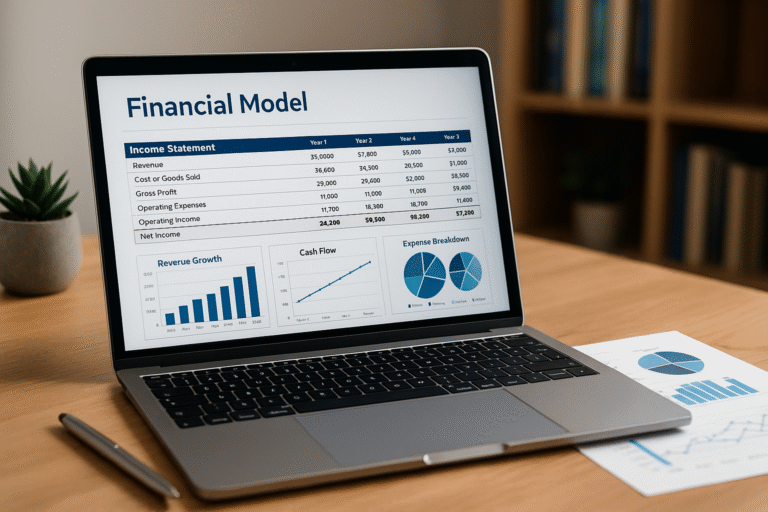
Modeling
Cash Forecast From the Book, Not From Revenue
Recent revenue describes work won months ago. The book plus the conversion profile describes the months ahead, early enough to arrange a facility calmly.
- Weekly cash built from backlog rather than from history
- Fixed commitments laid against the expected conversion
- Scenario switching for a slow or accelerated award
- Assumptions in one visible block, never inside formulas
Related: Excel financial modeling
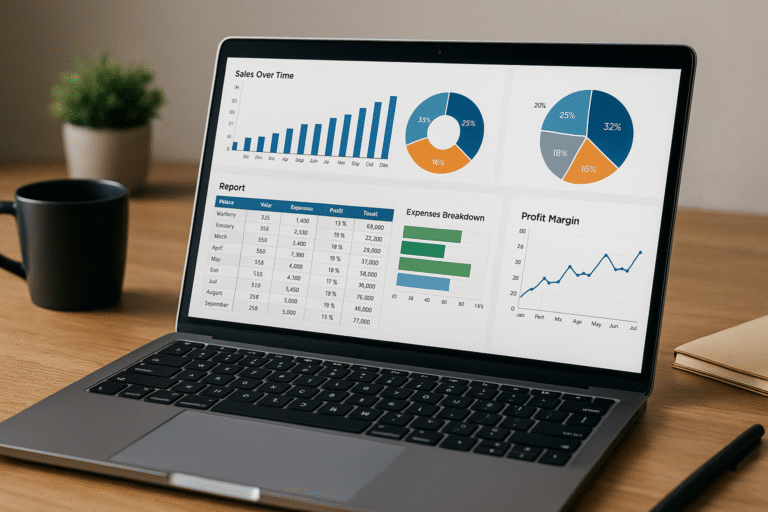
Reporting
Committed Capacity Against Engaged Capacity
Work that is won but not started still holds people and equipment. Reported side by side, it shows whether you are genuinely full or only committed on paper.
- Committed and engaged shown together, not confused
- Revisions reported as events so churn is visible
- Live connections to the systems already holding the data
- Exception flags when conversion slows against the profile
Related: Excel reporting
Automation
Keeping the Profile Current
Awards, job records and invoices arrive from different places. Brought together on a schedule, the conversion profile stays current instead of being a one-off analysis.
- Scheduled consolidation across awards, jobs and billing
- Refresh from source rather than from a saved download
- Import cleanup for exports that shift format between runs
- Running totals so a change in the lag surfaces early
Related: Excel automation

Code
VBA So the Dates Actually Get Recorded
A profile is only as good as the dates behind it. Entry that will not accept a job without its award date, and that records a revision as an event rather than an edit.
- Validated entry so an award date cannot be skipped
- Revisions logged as events, not overwritten
- Deterministic routines for anything run every period
- Legacy macro repair where whoever wrote it has gone
Related: VBA and macro development

Support
Expert Help and Team Training
Sometimes there is no project, only a cash question that has to be answered before a conversation with a lender. Half an hour with your own records open usually settles it, and what was concluded comes back to you in writing.
- Same-week attention when a meeting will not wait
- Training on your own files rather than on sample data
- Written handover so the profile keeps being maintained
- Retained hours where there is no in-house Excel depth
Related: Excel expert help and MS Office training
Where it starts
Eight Conversations That Begin a Norfolk Excel Project
Openings we hear from businesses with a long order book, and what the answer usually turns out to be.
"Our order book is strong and the bank balance is not."
Both figures are accurate and neither is enough on its own. The conversion profile between them is the piece that is missing, and it comes out of your own history.
"We cannot say when a win becomes money."
Because nothing records the award date beside the first billable activity. Two dates per job, grouped by type and customer, give you the lag.
"The backlog looks steady and cash never improves."
Often churn rather than conversion. Work that goes back for revision has returned to an earlier point, and unless revisions are logged as events the forecast cannot see it.
"One customer is always slower than the rest."
Very likely, and measurable. Grouping the lag by customer usually identifies a specific step in their process rather than a general slowness.
"We forecast cash from last quarter's revenue."
Which describes work won months ago. The book plus the profile describes the months ahead, which is the forecast that actually decides anything.
"We turned work away and then sat quiet."
Committed capacity is not engaged capacity. Reported side by side, it sometimes shows there was room after all.
"If one person is out, the forecast stops."
That is a design problem rather than a resourcing one. Written procedure and a refresh on a schedule keep the profile updating whoever happens to be at their desk.
"The file takes long enough that we batch the work."
Nearly always whole-column volatile functions, or an array formula standing in for a pivot table. Rehoused on proper tables it responds at once and loses nothing.
A quick check
Signs the Reporting Cannot See the Gap
Nobody plans this work. It follows a strong year that felt tight, or a facility arranged in a hurry. Earlier signals look like this:
- The order book is a single total with no timing attached
- Award dates are not recorded beside first billable activity
- Revisions are edits rather than logged events
- Cash is forecast from revenue rather than from the book
- The lag has never been grouped by customer or work type
- Committed and engaged capacity are treated as the same thing
- A slow month has no explanation beyond timing
- Nobody can say what becomes billable next month
What the missing profile costs
The expensive version is a facility arranged under pressure. A business that can see the conversion six months out negotiates from a position; one that discovers the gap when it arrives negotiates from need, and the difference shows up in the terms rather than in sympathy.
The quieter cost is the work turned away. Where committed capacity is confused with engaged capacity, a business declines jobs it had room for, and because the decline leaves no record the cost is never counted.
What happens before a quote
We look at the award records, the job records and the invoices together, and at where the dates stop being captured. Reconstructing recent history is usually possible from correspondence, which makes the first profile available quickly.
Frequently the finding is that two dates per job and a profile settle the whole question, and that is the recommendation. Where a decision genuinely belongs with a lender or an accountant, you will be told so. The first conversation is unpaid either way.
Work delivered
Three Builds and the Results Recorded
Real projects for real organizations, each figure as reported by the client after the tool had bedded in.

66% better
accuracy
A budget tool across thirty businesses
- At the outset
- Thirty companies under one management group, each budgeted independently and merged by hand afterward, with several people needing different levels of access to a single file.
- What we delivered
- A template carrying layered permissions, VBA lifting each approved budget into a master sheet, payroll, tax and benefits adjustable at the front, and totals loading directly into the accounting system.
- Afterward
- Keying figures twice stopped altogether. Accuracy climbed 66%, the build cycle ran more than ten times quicker, and reforecasting mid-year became something they could do.

40 hours
a month back
Reporting that had always been manual
- At the outset
- Internal management reports and submissions to outside funding institutions were built by hand, with one update cycle capable of running to three days.
- What we delivered
- A program pulling more than fifty sources into one document in roughly five minutes, letting each source be inspected first and turning out drafts for comparison.
- Afterward
- A job that had filled a working day now finishes in minutes, returning forty person-hours or more every month from effort that produced nothing new.

9 minutes
to 30 seconds
A file that had become unworkable
- At the outset
- Finding one row among twelve hundred could take as much as nine minutes, the result of array formulas piled on each other and years of code added without review.
- What we delivered
- The data rehoused on native Excel tables, pivots and slicers taking over the search logic, and the surplus array formulas and VBA taken out rather than tolerated.
- Afterward
- Thirty seconds for the same row on the same machine. What had held it back was the arrangement, never the hardware.
Who we work with
Industries We Serve in Norfolk
The six areas JAAD Group covers, described as they appear around the harbor.

Manufacturing & Logistics
Supply chain analysis, production scheduling, vendor performance. Port and marine work won long before any of it becomes billable.

Finance and Accounting
Cash flow management, P&L tracking, budget analysis. Businesses whose order book and bank balance tell two different true stories.

Real Estate & Construction
Investment models, cost forecasting, expense tracking. Contractors holding capacity against work that has not started.

Retail and E-commerce
Inventory monitoring, sales tracking, profit calculations. Trade serving a population whose employment follows the same award cycles.

Healthcare & Insurance
Patient record systems, policy tracking, compliance reports. Practices and administrators serving a large and mobile workforce.

Education & Training
Enrollment reports, course progress dashboards, grant tracking. Providers whose reporting format is dictated by whoever funds the program.
If your industry relies on Excel for financial analysis, data tracking or reporting, we can optimize and automate your workflows to save time and improve performance.

How it runs
Working With an Excel Consultant in Norfolk
Five stages. The opening one is unpaid, and plenty of enquiries conclude there with guidance rather than a quotation.
Say what you have won and what you have billed
And where the two stop matching. Sending award and invoice records makes the call considerably sharper, though it is not required.
We look at where the dates stop
What the award records hold, what the job records hold, and at which point the capture breaks down. Recent history can usually be reconstructed.
Scope and figure, documented
Both settled before construction. The records have been read by then, so vagueness about either would be a decision rather than a necessity.
Built in view
Each working version arrives as it is finished rather than everything at the end, which is what makes an early change inexpensive.
Handed over complete
The workbooks, any code behind them, a written account of how the profile was derived, and time with whoever will maintain it.
Who does the work
Jeff Mattus
Owner & President, JAAD Group
JAAD Group is one person, Jeff Mattus, who put the practice together over more than twenty-five years of Excel and Office systems work and who arrived at the field through Computer Science rather than through a finance department. Where a pattern has to be pulled out of dates nobody has been recording, that is the useful instinct.
The projects have reached into finance, healthcare, technology and property. The range is why an opening call usually ends in a diagnosis rather than a discovery phase: a backlog conversion profile has close relatives in pipeline analysis across industries with no port anywhere near them.
Delivery is remote, so a Norfolk engagement runs exactly as a local one would. Whoever takes the first call prices the job and then builds it.
Organizations we have built for
Trusted With Business-Critical Spreadsheets














Why a specialist
Why Norfolk Businesses Use a Dedicated Excel Consultant
A single discipline
Excel, VBA and Office automation are the entire practice, which is why an opening read is usually accurate and the estimate close to the final number.
Built for the lender conversation
A conversion profile and a cash forecast from the book are a far easier case to put than a strong order book and an assurance.
Reshape ahead of rebuild
Where the existing records can be extended rather than replaced, that is the advice, and it is the cheaper route by a wide margin.
Handed over documented
Written explanation, any code and training are part of delivery, so the profile keeps being maintained after the build.
Numbers the clients reported
Each outcome quoted above came from the organization running the tool, and all three builds appear at length earlier.
Remote, so it starts at once
Everything happens over a shared screen, so a cash question that will not wait gets attention the same day.
Questions
Frequently Asked Questions
What does Excel consulting in Norfolk usually involve?
Most often it is turning the order book from a total into a forecast, by building a conversion profile: for work of a given type, how much typically becomes billable in each of the following months.
After that it is forecasting cash from the book rather than from recent revenue, and separating committed capacity from capacity that is actually engaged.
How can a strong order book sit beside a difficult bank balance?
Easily, and both figures can be entirely accurate. The book describes work that has been won; the balance describes work that has been billed and paid, which is a different set.
What connects them is the conversion profile, and it is the piece almost nobody has calculated even though the history to build it already exists.
What do you need to build the profile?
Two dates on each piece of work that most records do not carry: when it was awarded, and when the first billable activity actually happened.
Going forward both are easy to capture. For recent history they can usually be reconstructed from correspondence and invoices, which means the first profile is available quickly.
Our backlog looks steady but cash never improves. Why?
Frequently churn rather than conversion. Work that goes back for revision has not progressed; in cash terms it has returned to an earlier point in the profile.
Unless revisions are logged as dated events rather than as edits to a record, the forecast cannot see that happening and the backlog total looks healthy throughout.
Can the lag be attributed to particular customers?
Usually, and it is one of the more useful outputs. Grouping the award-to-billing gap by customer and by work type almost always shows wide variation.
That variation generally points at a specific step in one customer's own process rather than at general slowness, which makes it something you can plan around.
Why separate committed capacity from engaged capacity?
Because work that is won but not started still holds people and equipment, so a business can be fully committed on paper and substantially underused in practice.
Reported side by side, that gap occasionally shows the business could have taken on work it declined, and a declined job leaves no record of its own.
What does an Excel consultant cost?
Scope decides it, which is why the records are examined before any figure is named and why that examination is free. A conversion profile is small and fixed-price; a full cash model is priced as one job.
In every case the deliverable and the price are agreed in writing before any building begins.
Do you work on site in Norfolk?
The work is delivered remotely by design rather than by limitation. Going through records together on a shared screen is identical at any distance.
It also means a cash question needed before a Friday meeting gets looked at on Tuesday, and no part of the invoice is travel.
The person who kept our order book has left. Is it recoverable?
Usually. The records get read back to first principles, the fragile parts identified, and each one repaired or replaced depending on what is honestly warranted.
What the work needs is time with whoever handles awards and billing now, because the conventions they apply matter as much as the file.
How long does a project take?
A conversion profile is often a few days once the dates can be reached or reconstructed. Adding a weekly cash model and capacity reporting usually runs one to two weeks.
Whatever the size, that estimate is committed in writing before building starts rather than emerging as the work proceeds.
What do we keep at the end?
The workbooks, any macro source code, a written account of how the profile was derived, and training for whoever will maintain it.
Nothing is locked to us and no subscription is needed to keep it running. Support afterward is available and entirely optional.
Are those six industries a limit?
No. They describe where most of the work has come from rather than what is accepted, and what decides scope is the nature of the problem rather than the sector.
A conversion profile, a cash forecast, a capacity comparison and a clinic rota are considerably more alike underneath than they look from outside.
Also serving
Excel Consulting Across Virginia
Everything is delivered over a shared screen, so your address has no bearing on the result. Other Virginia cities with their own pages:
By service: Excel consulting for the conversion profile, financial modeling for cash from the book, Excel reporting for capacity, Excel automation for keeping it current, and VBA and macro development or Excel expert help for the rest.
Norfolk is the hub here — schematic, not to scale
Send Us the Workbook
Tell us what you have won and what you have billed, or attach the records. You get a flat read on the gap and what measuring it properly would take, with nothing committed.
949-464-7489JAAD Group Excel Consulting · 2937 Hawksdale Dr, Las Vegas, NV 89134
Excel consulting services in Norfolk, VA and across Virginia, delivered remotely