
Lynchburg, Virginia · Independent city
Excel Consulting Services in Lynchburg, VA
A great many businesses here earn two unlike kinds of money: a recurring base of agreements that renew, and project work that happens once. Added together into a single monthly figure, neither one can be managed. The contract book has a value, a renewal calendar and a churn rate, and most businesses report none of them. JAAD Group provides Excel consulting in Lynchburg for operators holding both kinds of revenue.
- Recurring against one-off
- Renewal calendar
- Churn and contract book value
- Automation and VBA
Two kinds of money
One Monthly Figure, Two Businesses Inside It
Recurring revenue and project revenue behave nothing alike. One is a base you keep unless you lose it; the other is earned fresh every time. Summed into a single line, a month where the base shrank and projects were strong looks identical to a month where the base grew and projects were quiet — and those are opposite situations.
The base is the more valuable of the two and the one least often measured. It has a renewal date per agreement, a rate per agreement, a rate of loss, and therefore a forecastable value that exists whether or not anybody has calculated it.
Project revenue is worth having and it is not the same asset. It does not compound, it does not carry a renewal date, and a strong project month can mask an eroding base for the better part of a year.
What the reporting needs is to stop adding them up first. Report each separately, then the total — in that order, because the order determines what anybody can actually see.
What the work is really about
What Excel Consulting in Lynchburg Usually Involves
Separate the two before anything is totaled
The first move is to split the revenue at source and report the halves before the total. That means a flag on every invoice line saying whether it belongs to an agreement or to a one-off piece of work, which sounds trivial and is the whole foundation. Once it exists, the monthly report can show base revenue, project revenue and the sum, in that order, and two months that previously looked identical become visibly different situations. Nothing else in this build is possible without that flag, which is why it is where Excel consulting on this kind of business always starts.
Every agreement needs a renewal date in one place
Second, every agreement needs its renewal date held in one place that somebody actually looks at. In practice these dates live in the agreements themselves, scattered across folders and inboxes, which means renewals are handled when a customer raises them rather than when the business chooses to. A single table — customer, rate, start, renewal, notice period, who owns the relationship — converts renewal from an event that happens to you into a calendar you work from. It is an afternoon's work and it is routinely the single highest-return thing built here.
Churn is a rate, not an anecdote
Third, churn has to become a rate rather than a story. Most operators can name the customers they lost last year; very few can say what proportion of the base that represented, whether it is rising, or whether loss concentrates in a particular type of agreement, a particular rate band or a particular length of tenure. Those patterns are visible in the records already held, and they generally point somewhere specific — a tier that was priced too keenly, or agreements sold by somebody who has since left. Once churn is a number it can be targeted; while it is an anecdote it cannot.
The contract book has a calculable value
Fourth, the base with a churn rate and a renewal calendar has a calculable value, and that figure matters well beyond curiosity. It tells you what the business is worth in a way that a revenue multiple never will, it tells a lender something a profit figure does not, and it tells you how much the base can be invested in before the investment stops making sense. Calculating it is not elaborate: current recurring revenue, expected retention, expected rate movement, discounted sensibly. That is a contained piece of financial modeling, and it is often the first time an owner has seen their own contract book priced.
A renewal at the old rate is a quiet price cut
Fifth, there is a slow leak almost every business with a recurring base is suffering from, which is renewal at the old rate. An agreement that renews unchanged while costs have risen is a price cut nobody decided to make, and because it happens one customer at a time it never appears as a decision anywhere. Reporting each renewal against the current rate card, with the gap shown, turns that into something visible and manageable. It is a small piece of Excel reporting that frequently pays for the entire engagement inside a year.
This is structural rather than a purchase
None of this needs a system purchase. The invoices, the agreements and the customer records all exist; what is missing is one flag, one renewal table and a churn calculation. That is days of work rather than a project, and a single session of Excel expert help will usually show which parts your records can support right now.
What gets built
Excel Consulting Services in Lynchburg, VA — The Six Areas
Six kinds of work. For a business with a recurring base, the first and third tend to matter most.

Structure
The Split, Then the Renewal Table
A flag on every invoice line saying whether it belongs to an agreement or to one-off work, and every agreement's renewal date held in one place somebody looks at.
- Base and project revenue reported before the total
- One renewal table: rate, date, notice, relationship owner
- Formula repair for references that stopped pointing anywhere
- Performance — volatile formulas replaced with tables and pivots
Related: Excel consulting
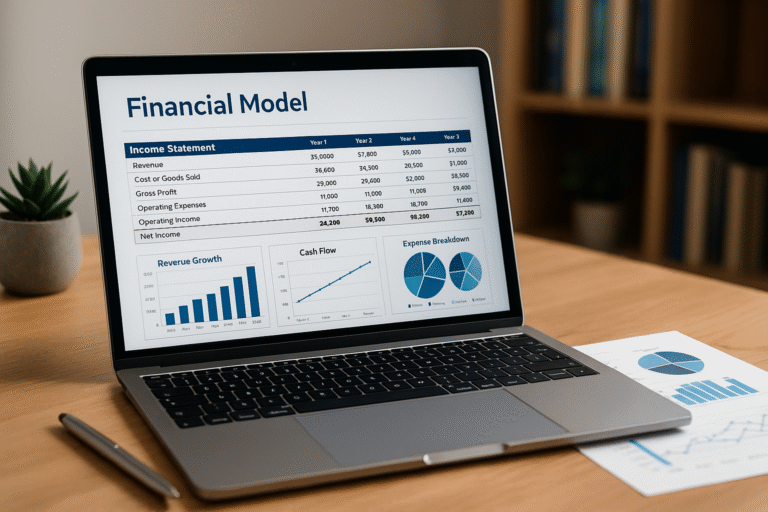
Modeling
What the Contract Book Is Actually Worth
Current recurring revenue, expected retention, expected rate movement, discounted sensibly. Often the first time an owner has seen their own base priced.
- Contract book valued rather than guessed at
- Retention and rate movement as explicit assumptions
- Scenario switching for higher churn or flat renewals
- Assumptions in one visible block, never inside formulas
Related: Excel financial modeling
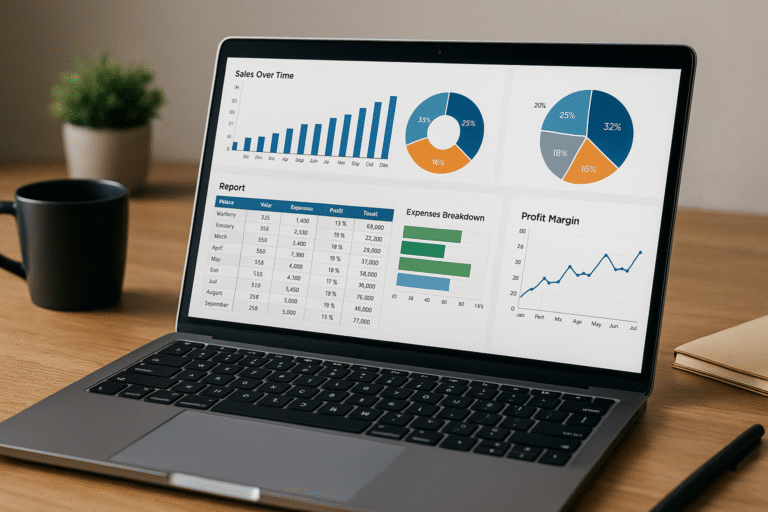
Reporting
Renewals Against the Current Rate Card
An agreement that renews unchanged while costs have risen is a price cut nobody decided to make. Shown against the rate card, the gap becomes manageable.
- Each renewal compared to the current rate
- Churn as a rate, split by tier, tenure and rate band
- Live connections to the systems already holding the data
- Exception flags when a renewal date passes unactioned
Related: Excel reporting
Automation
Renewals That Announce Themselves
A renewal calendar only works if it speaks up. Scheduled refresh and notice-period alerts so agreements are handled when you choose rather than when the customer raises them.
- Notice-period alerts ahead of each renewal date
- Refresh from source rather than from a saved download
- Import cleanup for exports that shift format between runs
- Base history so erosion shows up as a trend, not a shock
Related: Excel automation

Code
VBA So the Split Holds Over Time
The flag has to be applied on every line or the whole structure degrades. Entry that requires it, and routines that roll the base forward identically each month.
- Entry that requires the flag before it will save
- Base rolled forward by routine rather than by hand
- Deterministic routines for anything run every period
- Legacy macro repair where whoever wrote it has gone
Related: VBA and macro development

Support
Expert Help and Team Training
Sometimes there is no project, only a renewal conversation happening this week and no clear view of what the agreement is worth. A short session usually produces the number, and the working stays with you.
- Same-week attention when a renewal is imminent
- Training on your own files rather than on sample data
- Written handover so the renewal table stays maintained
- Retained hours where there is no in-house Excel depth
Related: Excel expert help and MS Office training
Where it starts
Eight Conversations That Begin a Lynchburg Excel Project
Openings we hear from businesses with a recurring base, and what the answer usually turns out to be.
"Revenue was flat and something feels wrong."
Often a shrinking base covered by a strong project month. Summed into one line, those two situations look identical.
"Where are our renewal dates?"
In the agreements, scattered across folders. One table makes renewal a calendar you work from rather than an event that happens to you.
"We lost a few customers last year."
Churn needs to be a rate, not a list. Expressed as a share of the base, and split by tier and tenure, it usually points somewhere specific.
"What is the business worth?"
The contract book can be valued properly from recurring revenue, retention and rate movement. A revenue multiple is not that calculation.
"Most agreements renew at the old rate."
Which is a price cut nobody decided to make. Shown against the current rate card, each gap becomes a decision instead of a drift.
"Project months and good months are not the same."
Worth knowing which is which. Base and project reported separately make that distinction immediately.
"If one person is away the figures stop."
A dependency built into the process rather than the team. Written procedure and a scheduled refresh remove it.
"Our customer file has got slow to work in."
Commonly lookups running across whole columns. Moved onto structured tables it responds at once and nothing is lost.
A quick check
Signs the Reporting Cannot See Your Base
Nobody plans this work. It follows a year where revenue held and profit did not. Earlier signals look like this:
- Recurring and one-off revenue are added before they are reported
- Renewal dates live in the agreements and nowhere central
- Churn is a list of names rather than a rate
- Agreements renew unchanged while costs have risen
- Nobody has valued the contract book
- Renewals get handled when the customer raises them
- Notice periods are discovered after they have passed
- Nobody can say whether the base grew or shrank last quarter
What the merged view costs
The expensive version is a base that erodes for a year behind strong project months. Each loss was individually small, none of them appeared as a trend, and by the time the pattern was obvious the relationships were long gone.
The quieter cost is renewal at the old rate. A few percent given away annually, one agreement at a time, compounds into a serious sum, and it never appears in any report as a decision anybody made.
What happens before a quote
We look at the invoices and the agreements, and at whether anything in the records already distinguishes recurring from one-off. That single point usually determines how large the job is.
Frequently the finding is that one flag and one renewal table settle most of it, and that is the recommendation. Where a valuation question genuinely belongs with an accountant, you will be told so. The first conversation is unpaid either way.
Work delivered
Three Builds and the Results Recorded
Real projects for real organizations, each figure as reported by the client after the tool had bedded in.

66% better
accuracy
A budget tool across thirty businesses
- At the outset
- Thirty companies under one management group, each budgeted independently and merged by hand afterward, with several people needing different levels of access to a single file.
- What we delivered
- A template carrying layered permissions, VBA lifting each approved budget into a master sheet, payroll, tax and benefits adjustable at the front, and totals loading directly into the accounting system.
- Afterward
- Keying figures twice stopped altogether. Accuracy climbed 66%, the build cycle ran more than ten times quicker, and reforecasting mid-year became something they could do.

40 hours
a month back
Reporting that had always been manual
- At the outset
- Internal management reports and submissions to outside funding institutions were built by hand, with one update cycle capable of running to three days.
- What we delivered
- A program pulling more than fifty sources into one document in roughly five minutes, letting each source be inspected first and turning out drafts for comparison.
- Afterward
- A job that had filled a working day now finishes in minutes, returning forty person-hours or more every month from effort that produced nothing new.

9 minutes
to 30 seconds
A file that had become unworkable
- At the outset
- Finding one row among twelve hundred could take as much as nine minutes, the result of array formulas piled on each other and years of code added without review.
- What we delivered
- The data rehoused on native Excel tables, pivots and slicers taking over the search logic, and the surplus array formulas and VBA taken out rather than tolerated.
- Afterward
- Thirty seconds for the same row on the same machine. What had held it back was the arrangement, never the hardware.
Who we work with
Industries We Serve in Lynchburg
The six areas JAAD Group covers, described as they appear where part of the revenue renews.

Manufacturing & Logistics
Supply chain analysis, production scheduling, vendor performance. Suppliers holding standing orders alongside one-off builds.

Finance and Accounting
Cash flow management, P&L tracking, budget analysis. Practices earning retainers and project fees in the same month.

Real Estate & Construction
Investment models, cost forecasting, expense tracking. Owners and managers holding leases that renew beside works that do not.

Retail and E-commerce
Inventory monitoring, sales tracking, profit calculations. Sellers running subscriptions and single orders through one ledger.

Healthcare & Insurance
Patient record systems, policy tracking, compliance reports. Providers with recurring plans and episodic treatment side by side.

Education & Training
Enrollment reports, course progress dashboards, grant tracking. Providers whose enrollments renew by term and whose projects do not.
If your industry relies on Excel for financial analysis, data tracking or reporting, we can optimize and automate your workflows to save time and improve performance.

How it runs
Working With an Excel Consultant in Lynchburg
Five stages. The opening one is unpaid, and plenty of enquiries conclude there with guidance rather than a quotation.
Say which revenue renews and which happens once
And whether the reporting currently separates them. Sending a year of invoices makes the call considerably sharper, though it is not required.
We check what the records already distinguish
Whether anything on an invoice line identifies an agreement, and where the renewal dates presently live. That decides the size of the job.
Scope and figure, documented
Both settled before construction. The records have been read by then, so vagueness about either would be a decision rather than a necessity.
Built in view
Each working version arrives as it is finished rather than everything at the end, which is what makes an early change inexpensive.
Handed over complete
The workbooks, any code behind them, a written note of how churn and book value were derived, and time with whoever will maintain it.
Who does the work
Jeff Mattus
Owner & President, JAAD Group
JAAD Group is one person, Jeff Mattus, who put the practice together over more than twenty-five years of Excel and Office systems work and who arrived at the field through Computer Science rather than through a finance department. Where two unlike things have been added together, that is the instinct that separates them again.
The projects have reached into finance, healthcare, technology and property. The range is why an opening call usually ends in a diagnosis rather than a discovery phase: a contract book behaves the same way whether the agreements are maintenance, membership, retainer or lease.
Delivery is remote, so a Lynchburg engagement runs exactly as a local one would. Whoever takes the first call prices the job and then builds it.
Organizations we have built for
Trusted With Business-Critical Spreadsheets














Why a specialist
Why Lynchburg Businesses Use a Dedicated Excel Consultant
A single discipline
Excel, VBA and Office automation are the entire practice, which is why an opening read is usually accurate and the estimate close to the final number.
Built for the renewal conversation
A rate card comparison and a known book value change how a renewal is approached, which is worth more than any report that merely records the outcome.
Reshape ahead of rebuild
Where the existing records can be extended rather than replaced, that is the advice, and it is the cheaper route by a wide margin.
Handed over documented
Written explanation, any code and training are part of delivery, so the renewal table stays current after the build.
Numbers the clients reported
Each outcome quoted above came from the organization running the tool, and all three builds appear at length earlier.
Remote, so it starts at once
Everything happens over a shared screen, so a renewal happening this week gets attention today.
Questions
Frequently Asked Questions
What does Excel consulting in Lynchburg usually involve?
Most often it is separating recurring revenue from one-off work at source, reporting each before the total, and holding every agreement's renewal date in one place.
After that it is expressing churn as a rate, valuing the contract book, and showing each renewal against the current rate card.
Why not report total revenue and be done?
Because a month where the recurring base shrank while projects were strong looks exactly like a month where the base grew and projects were quiet, and those are opposite situations.
Summing first destroys the only distinction that matters here. Reported separately and then totaled, the same figures tell you what actually happened.
What goes in the renewal table?
Customer, rate, start date, renewal date, notice period and who owns the relationship. Nothing elaborate, held somewhere central and looked at monthly.
It is an afternoon's work and it is routinely the highest-return item in the whole build, because it converts renewal from something that happens to you into a calendar you work from.
How is churn supposed to be measured?
As a share of the base lost over a period, split by tier, by rate band and by how long the customer had been with you, rather than as a list of names.
Those splits almost always point somewhere specific, which is what makes churn addressable. An anecdote cannot be targeted; a rate can.
Can a contract book really be valued?
Yes, and it is not elaborate: current recurring revenue, expected retention, expected rate movement, discounted sensibly.
It tells you something a revenue multiple cannot, it gives a lender a different and often better case, and it shows how much the base can be invested in before that stops making sense.
What is wrong with renewing at the old rate?
It is a price cut nobody decided to make. Costs have moved, the rate has not, and because it happens one customer at a time it never appears as a decision anywhere.
Reporting each renewal against the current rate card with the gap shown makes it visible, and the recovered margin frequently pays for the engagement inside a year.
What does an Excel consultant cost?
Scope decides it, which is why the records are examined before any figure is named and why that examination is free. A revenue split with a renewal table is fixed-price.
In every case the deliverable and the price are agreed in writing before any building begins.
Do you work on site in Lynchburg?
The work is delivered remotely by design rather than by limitation. Going through invoices and agreements together on a shared screen is identical at any distance.
It also means a renewal happening this week gets looked at today, and no part of the invoice is travel.
The person who tracked our agreements has left. Is it recoverable?
Usually. The agreements get read back and the table reconstructed from them, which is slower than maintaining it but entirely achievable.
What the work needs is time with whoever handles customers now, because the conventions they apply matter as much as the paperwork.
How long does a project take?
A revenue split with a renewal table is often a few days. Adding churn analysis, a book valuation and renewal alerts usually runs one to two weeks.
Whatever the size, that estimate is committed in writing before building starts rather than emerging as the work proceeds.
What do we keep at the end?
The workbooks, any macro source code, a written note of how churn and the book value were derived, and training for whoever will maintain it.
Nothing is locked to us and no subscription is needed to keep it running. Support afterward is available and entirely optional.
Are those six industries a limit?
No. They describe where most of the work has come from rather than what is accepted, and what decides scope is the nature of the problem rather than the sector.
Maintenance agreements, memberships, retainers and leases are one analysis wearing four different names.
Also serving
Excel Consulting Across Virginia
Everything is delivered over a shared screen, so your address has no bearing on the result. Other Virginia cities with their own pages:
- All Virginia cities
- Charlottesville
- Fairfax
- Fredericksburg
- Winchester
- Portsmouth
- Suffolk
- Williamsburg
By service: Excel consulting for the revenue split, financial modeling for book value, Excel reporting for renewals and churn, Excel automation for renewal alerts, and VBA and macro development or Excel expert help for the rest.
Lynchburg is the hub here — schematic, not to scale
Send Us the Workbook
Tell us which part of your revenue renews and which happens once, or attach a year of invoices. You get a flat read on what separating them would show, with nothing committed.
949-464-7489JAAD Group Excel Consulting · 2937 Hawksdale Dr, Las Vegas, NV 89134
Excel consulting services in Lynchburg, VA and across Virginia, delivered remotely