
Covington, Virginia · Independent city
Excel Consulting Services in Covington, VA
The same product, sold at the same price, yields different money depending on who bought it and how they wanted it delivered. Freight sits in one cost line, nothing attributes it to the orders that caused it, and a small frequent customer a long way away can be costing more than they contribute. JAAD Group provides Excel consulting in Covington for businesses that ship what they sell.
- Cost to serve
- Freight attributed by order
- Minimum order economics
- Automation and VBA
Delivered, not sold
The Price Is the Same and the Money Is Not
Gross margin tells you what a product earns at the point of sale. It says nothing about what it cost to get there, and in a business that ships, the difference between two orders at the same margin can be substantial — one went in a full load to a single destination, the other went as a part consignment to the far side of the state.
Freight almost always sits in a single cost line, so the orders that caused it are invisible. The customer ordering weekly in small quantities looks identical in the margin report to the one ordering monthly in bulk.
Order size is the dominant variable and it is one you can influence. The cost of picking, packing, documenting and shipping is largely per order rather than per unit, so a small order carries the same handling as a large one.
Once freight and handling are attributed, cost to serve by customer becomes calculable — and the usual finding is that a handful of accounts are being served at a loss nobody could see.
What the work is really about
What Excel Consulting in Covington Usually Involves
Freight has to be attributed to the order that caused it
The first job is attributing freight to orders, and it is the step everything else waits on. Carrier invoices arrive as a list of consignments with charges, and the sales system holds orders; matching the two by consignment reference, date and destination is mechanical and frequently has never been done because nobody owned both halves. Where a consignment carried several orders, the charge splits by weight or by volume depending on what the carrier rated it on. Once every order carries its own freight, the analysis that follows is straightforward, and getting that attribution right is where Excel consulting here starts.
Handling cost is per order, not per unit
Second, handling cost has to be recognized as a per-order cost rather than spread across units. Taking the order, picking it, packing it, producing the paperwork, booking the collection and dealing with any query afterward take roughly the same effort whether the order is for one item or fifty. Estimating that cost per order and charging it against each one changes the small-order picture completely, and it is the piece of the puzzle most businesses have never attempted because it feels like an approximation. It is an approximation, and it is far closer to the truth than treating the cost as zero.
Cost to serve ranks customers differently from margin
Third, with freight and handling attributed, cost to serve by customer becomes a real figure and it ranks accounts very differently from gross margin. Two customers buying identical volumes at identical prices can differ substantially once delivery frequency, destination and order size are counted. The usual finding is that a small number of accounts are being served at or below cost — typically the ones ordering small quantities frequently to distant destinations — and that nothing in the existing reporting could have identified them. Keeping that ranking current is routine Excel reporting.
A minimum order value is a calculation
Fourth, a minimum order value stops being a round number somebody chose and becomes arithmetic. Below a certain order value, freight and handling exceed the contribution, and that point is calculable precisely. Whether to enforce it, charge delivery below it, or accept the loss as a service to good customers is a commercial decision — but it should be made against the figure rather than against an instinct. Modeling what a given minimum would do to volume and to margin is a contained piece of financial modeling.
Order pattern can be influenced, usually cheaply
Fifth, order pattern is usually more influenceable than people assume, and that is where the practical gain is. A customer ordering weekly in small quantities is often doing so out of habit rather than need, and a small incentive to consolidate into fortnightly orders can remove half the cost to serve without touching the price. That conversation is much easier to have when you can show what the current pattern costs, which is exactly what the attribution produces — so the analysis tends to pay for itself through customer conversations rather than through refusals.
This is structural rather than a purchase
None of this requires a logistics system. The carrier invoices, the sales records and a sensible estimate of handling effort are enough; what is missing is the match between consignments and orders. An hour against the freight invoices usually answers it, and the finding goes to you in writing — which is what Excel expert help covers.
What gets built
Excel Consulting Services in Covington, VA — The Six Areas
Six kinds of work. For a business that ships, the first and third carry most of the value.

Structure
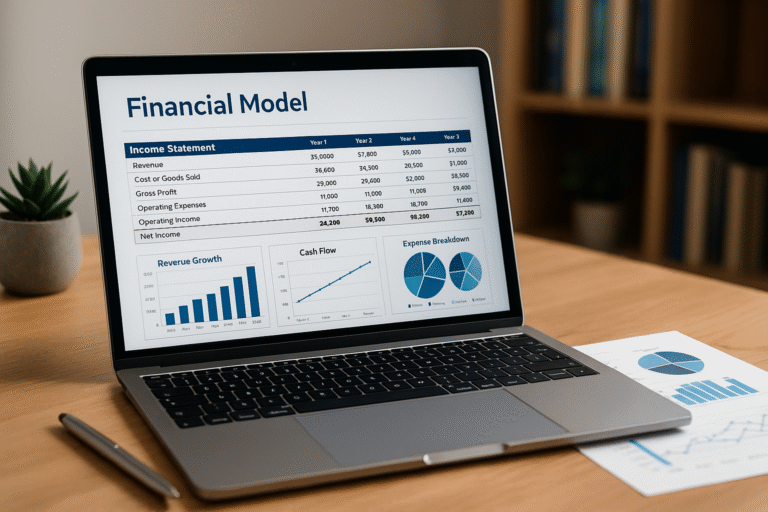
Freight Matched to the Order
Carrier invoices list consignments, the sales system holds orders, and matching the two by reference, date and destination is mechanical and usually never done.
- Consignments matched to the orders that caused them
- Shared consignments split by weight or volume as rated
- Formula repair for references that stopped pointing anywhere
- Performance — volatile formulas replaced with tables and pivots
Related: Excel consulting
Modeling
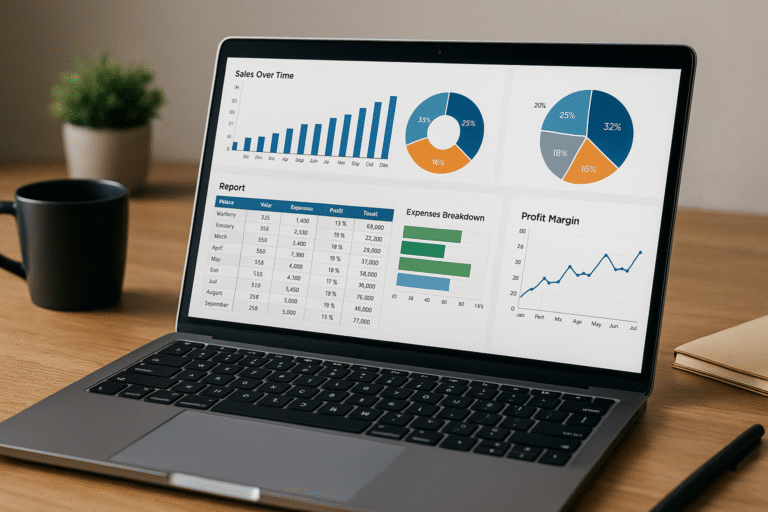
Where the Minimum Order Value Sits
Below a certain value, freight and handling exceed contribution. That point is calculable, and what a minimum would do to volume and margin is testable before it is announced.
- Minimum order value derived rather than chosen
- Consolidation incentives valued per customer
- Scenario switching across minimums and delivery charges
- Assumptions in one visible block, never inside formulas
Related: Excel financial modeling
Reporting
Cost to Serve, Beside Gross Margin
Two customers buying identical volumes at identical prices can differ substantially once frequency, destination and order size are counted.
- Ranked by cost to serve, not by margin alone
- Per-order handling charged against each order
- Live connections to the systems already holding the data
- Exception flags on orders below the calculated minimum
Related: Excel reporting
Automation
Carrier Invoices Matched Automatically
Freight files arrive monthly in whatever shape the carrier uses. Imported and matched on a schedule, cost to serve stays current instead of being a one-off study.
- Scheduled import and matching of carrier invoices
- Import cleanup for carrier formats that differ and change
- Refresh from source rather than from a saved download
- Rate checking against the agreed tariff, invoice by invoice
Related: Excel automation

Code
VBA for the Consignment Split
Where one consignment carried several orders the charge has to be apportioned the same way every month. A routine that does it and flags anything it cannot match.
- Apportionment applied identically every period
- Unmatched consignments flagged rather than absorbed
- Deterministic routines for anything run every period
- Legacy macro repair where whoever wrote it has gone
Related: VBA and macro development

Support
Expert Help and Team Training
Sometimes there is no project, only a customer whose account you suspect is unprofitable. An hour against the freight invoices usually answers it, and the finding goes to you in writing.
- Same-week attention when an account review is due
- Training on your own files rather than on sample data
- Written handover so the matching keeps running
- Retained hours where there is no in-house Excel depth
Related: Excel expert help and MS Office training
Where it starts
Eight Conversations That Begin a Covington Excel Project
Openings we hear from businesses that ship what they sell, and what the answer usually turns out to be.
"Margin looks fine and freight keeps rising."
Because margin is measured at the point of sale and freight is measured nowhere in particular. Attributing it to orders joins the two.
"Which customers are actually unprofitable?"
Usually the ones ordering small quantities frequently to distant destinations. Nothing in a margin report could identify them.
"Freight is one line in the accounts."
Which is why no order carries its own. Matching consignments to orders is mechanical and it has usually never been done.
"Does order size really matter that much?"
Considerably. Picking, packing, paperwork and booking cost roughly the same for one item or fifty, so small orders carry full handling.
"We have a minimum order value."
Is it calculated or chosen? The point where freight and handling exceed contribution is arithmetic, and usually not where people guessed.
"We cannot tell customers to order less often."
You can show them what the current pattern costs. A small consolidation incentive often works better than any refusal would.
"Nobody checks carrier invoices against the tariff."
Worth doing, and automatable. Rate checking every consignment against the agreed tariff sometimes pays for the whole build.
"The freight file is enormous and unusable."
Awkward rather than unusable. Imported and matched on a schedule it becomes the most informative data in the business.
A quick check
Signs Cost to Serve Has Never Been Measured
Nobody plans this work. It follows a year where volume grew and profit did not. Earlier signals look like this:
- Freight is one cost line with no order behind it
- Handling cost is not charged per order at all
- Customers are ranked by margin rather than by cost to serve
- The minimum order value was chosen rather than calculated
- Order frequency is not reported by customer
- Carrier invoices are not checked against the tariff
- Consignments carrying several orders are not apportioned
- Nobody can say which accounts are served below cost
What the unattributed freight costs
The expensive version is growth in exactly the wrong accounts. A sales effort rewarded on volume brings in more small frequent orders to distant destinations, revenue rises, and delivered margin falls with nothing in the reporting connecting the two.
The quieter cost is a minimum order value set by instinct. Too high and good customers are turned away for no reason; too low and every small order is subsidized. Both happen, and neither is visible without the calculation.
What happens before a quote
We look at the carrier invoices and the sales records, and at whether consignments can be matched to orders by reference, date or destination. That match decides the whole scope.
Frequently the finding is that the match plus a per-order handling estimate settles most of it, and that is the recommendation. Where a customer decision genuinely belongs with you alone, you will be told so. The first conversation is unpaid either way.
Work delivered
Three Builds and the Results Recorded
Real projects for real organizations, each figure as reported by the client after the tool had bedded in.

66% better
accuracy
A budget tool across thirty businesses
- At the outset
- Thirty companies under one management group, each budgeted independently and merged by hand afterward, with several people needing different levels of access to a single file.
- What we delivered
- A template carrying layered permissions, VBA lifting each approved budget into a master sheet, payroll, tax and benefits adjustable at the front, and totals loading directly into the accounting system.
- Afterward
- Keying figures twice stopped altogether. Accuracy climbed 66%, the build cycle ran more than ten times quicker, and reforecasting mid-year became something they could do.

40 hours
a month back
Reporting that had always been manual
- At the outset
- Internal management reports and submissions to outside funding institutions were built by hand, with one update cycle capable of running to three days.
- What we delivered
- A program pulling more than fifty sources into one document in roughly five minutes, letting each source be inspected first and turning out drafts for comparison.
- Afterward
- A job that had filled a working day now finishes in minutes, returning forty person-hours or more every month from effort that produced nothing new.

9 minutes
to 30 seconds
A file that had become unworkable
- At the outset
- Finding one row among twelve hundred could take as much as nine minutes, the result of array formulas piled on each other and years of code added without review.
- What we delivered
- The data rehoused on native Excel tables, pivots and slicers taking over the search logic, and the surplus array formulas and VBA taken out rather than tolerated.
- Afterward
- Thirty seconds for the same row on the same machine. What had held it back was the arrangement, never the hardware.
Who we work with
Industries We Serve in Covington
The six areas JAAD Group covers, described as they appear where the product has to be delivered.

Manufacturing & Logistics
Supply chain analysis, production scheduling, vendor performance. Producers shipping to customers whose order patterns differ sharply.

Finance and Accounting
Cash flow management, P&L tracking, budget analysis. Businesses whose gross margin is measured before delivery is paid for.

Real Estate & Construction
Investment models, cost forecasting, expense tracking. Suppliers delivering materials to scattered sites in part loads.

Retail and E-commerce
Inventory monitoring, sales tracking, profit calculations. Sellers where shipping and handling decide whether a small order pays.

Healthcare & Insurance
Patient record systems, policy tracking, compliance reports. Suppliers delivering consumables to many small sites frequently.

Education & Training
Enrollment reports, course progress dashboards, grant tracking. Providers shipping materials out to dispersed delivery locations.
If your industry relies on Excel for financial analysis, data tracking or reporting, we can optimize and automate your workflows to save time and improve performance.

How it runs
Working With an Excel Consultant in Covington
Five stages. The opening one is unpaid, and plenty of enquiries conclude there with guidance rather than a quotation.
Say how you ship and whether freight is attributed
And which account you suspect. Sending carrier invoices and the matching sales records makes the call considerably sharper.
We check whether consignments can be matched
By reference, date or destination, and how often one consignment carried several orders needing apportionment.
Scope and figure, documented
Both settled before construction. The records have been read by then, so vagueness about either would be a decision rather than a necessity.
Built in view
Each working version arrives as it is finished rather than everything at the end, which is what makes an early change inexpensive.
Handed over complete
The workbooks, any code behind them, a written note of the handling estimate and the apportionment rule, and time with whoever will maintain it.
Who does the work
Jeff Mattus
Owner & President, JAAD Group
JAAD Group is one person, Jeff Mattus, who put the practice together over more than twenty-five years of Excel and Office systems work and who arrived at the field through Computer Science rather than through a finance department. Where two data sets have to be matched before anything can be measured, that is the useful background.
The projects have reached into finance, healthcare, technology and property. The range is why an opening call usually ends in a diagnosis rather than a discovery phase: cost to serve works the same whether the delivery is a pallet, a parcel or a box of consumables.
Delivery is remote, so a Covington engagement runs exactly as a local one would. Whoever takes the first call prices the job and then builds it.
Organizations we have built for
Trusted With Business-Critical Spreadsheets














Why a specialist
Why Covington Businesses Use a Dedicated Excel Consultant
A single discipline
Excel, VBA and Office automation are the entire practice, which is why an opening read is usually accurate and the estimate close to the final number.
Built for the customer conversation
Showing an account what its order pattern costs usually works better than a refusal, and that conversation needs the attribution behind it.
Reshape ahead of rebuild
Where the existing records can be extended rather than replaced, that is the advice, and it is the cheaper route by a wide margin.
Handed over documented
Written explanation, any code and training are part of delivery, so the matching keeps running after the build.
Numbers the clients reported
Each outcome quoted above came from the organization running the tool, and all three builds appear at length earlier.
Remote, so it starts at once
Everything happens over a shared screen, so an account review due now gets attention today.
Questions
Frequently Asked Questions
What does Excel consulting in Covington usually involve?
Most often it is attributing freight to the orders that caused it by matching carrier consignments against sales orders, then adding a per-order handling cost.
From there it is cost to serve by customer, a calculated minimum order value, and valuing what consolidating a customer's order pattern would be worth.
Why is gross margin not enough?
Because it is measured at the point of sale, before delivery has been paid for. Two orders at identical margin can differ substantially once freight is counted.
One went in a full load to a single destination; the other went as a part consignment across the state. Nothing in a margin report distinguishes them.
Is handling cost really per order?
Largely, yes. Taking the order, picking it, packing it, producing paperwork, booking collection and handling any query afterward take roughly the same effort for one item or fifty.
Estimating that per-order cost feels like an approximation, and it is — but it is far closer to the truth than treating the cost as zero, which is what spreading it across units does.
Which customers usually turn out to be unprofitable?
Typically the ones ordering small quantities frequently to distant destinations. They look unremarkable in a margin report and consume disproportionate freight and handling.
The usual finding is a small number of accounts served at or below cost, and that none of the existing reporting could have identified them.
How should a minimum order value be set?
By calculation. There is a value below which freight and handling exceed contribution, and that point is arithmetic rather than judgment.
What to do about it — enforce it, charge delivery below it, or accept the loss for good customers — is commercial, but it should be decided against the figure.
Can we really change how customers order?
More often than people assume. A customer ordering weekly in small quantities is frequently doing so out of habit rather than need.
A modest incentive to consolidate into fortnightly orders can remove half the cost to serve without touching the price, and showing what the current pattern costs makes that an easy conversation.
What does an Excel consultant cost?
Scope decides it, which is why the records are examined before any figure is named and why that examination is free. Freight attribution with cost to serve is fixed-price.
In every case the deliverable and the price are agreed in writing before any building begins.
Do you work on site in Covington?
The work is delivered remotely by design rather than by limitation. Going through carrier invoices and sales records on a shared screen is identical at any distance.
It also means an account review due now gets looked at today, and no part of the invoice is travel.
Should we check carrier invoices against the tariff?
Yes, and it is worth automating rather than sampling. Rate checking every consignment against the agreed tariff is mechanical once the import exists.
It is not unusual for the recoveries from that alone to cover the cost of the whole build in the first year.
How long does a project take?
Freight matched to orders with a handling estimate and cost to serve is often one to two weeks, depending on how cleanly consignments match.
Adding minimum order modeling, rate checking and scheduled imports usually stays inside that. Whatever the size, the estimate is committed in writing before building starts.
What do we keep at the end?
The workbooks, any macro source code, a written note of the handling estimate and the consignment apportionment rule, and training for whoever will maintain it.
Nothing is locked to us and no subscription is needed to keep it running. Support afterward is available and entirely optional.
Are those six industries a limit?
No. They describe where most of the work has come from rather than what is accepted, and what decides scope is the nature of the problem rather than the sector.
A pallet, a parcel and a box of consumables all answer to the same cost-to-serve arithmetic.
Also serving
Excel Consulting Across Virginia
Everything is delivered over a shared screen, so your address has no bearing on the result. Other Virginia cities with their own pages:
By service: Excel consulting for freight attribution, financial modeling for the minimum order, Excel reporting for cost to serve, Excel automation for invoice matching, and VBA and macro development or Excel expert help for the rest.
Covington is the hub here — schematic, not to scale
Send Us the Workbook
Tell us how you ship and whether freight is attributed to orders, or attach carrier invoices with the matching sales records. You get a flat read on cost to serve, with nothing committed.
949-464-7489JAAD Group Excel Consulting · 2937 Hawksdale Dr, Las Vegas, NV 89134
Excel consulting services in Covington, VA and across Virginia, delivered remotely