
Excel consulting for Fairfax businessesCall 949-464-7489

Fairfax, Virginia · Independent city

Excel Consulting Services in Fairfax, VA

You charge a rate, you pay a salary, and the gap between them feels like margin. It is not. That gap has to cover every hour you paid for and did not sell — and until somebody has counted those hours, nobody knows whether the rate works at all. JAAD Group provides Excel consulting in Fairfax for businesses that sell their people's time.

  • Utilization rates
  • True cost per delivered hour
  • Rate setting that holds
  • Automation and VBA
25+Years building Excel and Office systems for businesses
40+Person-hours a month returned on one reporting rebuild
1700Faster record retrieval after a workbook was restructured
66Improvement in budgeting accuracy across thirty entities

The hour you did not sell

The Rate Is Only Half a Calculation

A rate divided by a salary gives a reassuring number and answers nothing. The question that matters is how many of the hours you pay for actually reach an invoice, because every hour that does not has to be carried by the ones that do. That proportion is the whole business, and it is rarely measured.

Paid hours go to a great many places that are not invoices: proposals, recruitment, internal meetings, training, administration, holiday, sickness, and the genuine gaps between pieces of work. None of those is waste and all of them are cost.

Divide the fully loaded annual cost of a person by the hours they actually billed, rather than by the hours they were contracted for, and the true cost of a delivered hour appears. It is usually a long way above what anybody assumed.

The uncomfortable arithmetic is that a modest fall in utilization wipes out a substantial rise in rate. Which means the rate conversation is the wrong conversation to have first.

A modest fall in utilization wipes out a substantial rise in rate. The rate is the second conversation, not the first.

What the work is really about

What Excel Consulting in Fairfax Usually Involves

Every paid hour has to be accounted for somewhere

The first requirement is that every paid hour lands in a category, including the ones nobody enjoys recording. Most timesheet systems capture billable work well and everything else poorly, which means the denominator of the whole calculation is missing. Making people account for all their hours sounds like surveillance and is not: the point is not to police individuals but to find out where the capacity of the business actually goes. Once the accounting is complete, the proportion reaching an invoice is simply a count, and that count is the most important number the business does not currently have. Establishing it is where Excel consulting on this kind of operation always starts.

Loaded cost, divided by billed hours, not contracted ones

Second, cost has to be fully loaded and then divided by the right denominator. Fully loaded means salary plus employer taxes, benefits, equipment, software, the share of premises and the share of management attention — a figure typically well above the salary line. Divided by contracted hours it gives a number that flatters. Divided by hours that actually reached an invoice it gives the true cost of a delivered hour, and the distance between those two figures is where most under-pricing in professional work lives.

Utilization is a per-person number before it is an average

Third, utilization has to be reported per person before it is reported as an average, because the average conceals exactly what you need to see. A team at seventy percent overall might be two people at ninety and three at fifty-five, and those are entirely different problems with entirely different answers. The person at ninety is a retention risk and probably the one everything routes through; the people at fifty-five may be under-sold rather than under-performing. One average hides both findings. It is a small piece of Excel reporting and it changes management conversations immediately.

Non-billable time deserves categories, not one bucket

Fourth, non-billable time needs categories rather than a single bucket labeled overhead. Proposal writing, recruitment, training, internal administration and genuine idle time behave completely differently: one of them is business development that should be measured against wins, another is investment with a payback period, and another is a scheduling failure. Lumped together they are a number nobody can act on. Split out, they usually show that one category has grown quietly to several times what anybody would have authorized.

The rate follows the arithmetic rather than the market

Fifth, with all of that in place the rate becomes an arithmetic question rather than a market one. You know the loaded cost of an hour, the utilization you actually achieve, and therefore the rate required to hit a target margin at that utilization. Comparing that number against what the market will bear is a real decision with two honest options: raise the rate, or raise utilization. Modeling both, with the sensitivity shown side by side, is a contained piece of financial modeling and it tends to settle an argument that has been running for years.

This is structural rather than a purchase

Nothing here needs a new system. The payroll, the timesheets and the invoices already exist; what is missing is complete hour accounting, a loaded cost figure and the right denominator. An hour with the timesheets open is usually enough to see whether your records can already produce it, and Excel expert help covers exactly that.

What gets built

Excel Consulting Services in Fairfax, VA — The Six Areas

Six kinds of work. For a business selling time, the first and third carry nearly all the value.

Excel consultant calculating fully loaded cost per delivered hour from timesheets Structure

Loaded Cost Over Billed Hours

Salary plus taxes, benefits, equipment, software and premises, divided by hours that actually reached an invoice rather than hours contracted.

  • Complete hour accounting, billable and otherwise
  • Loaded cost built up rather than taken from the salary line
  • Formula repair for references that stopped pointing anywhere
  • Performance — volatile formulas replaced with tables and pivots

Related: Excel consulting
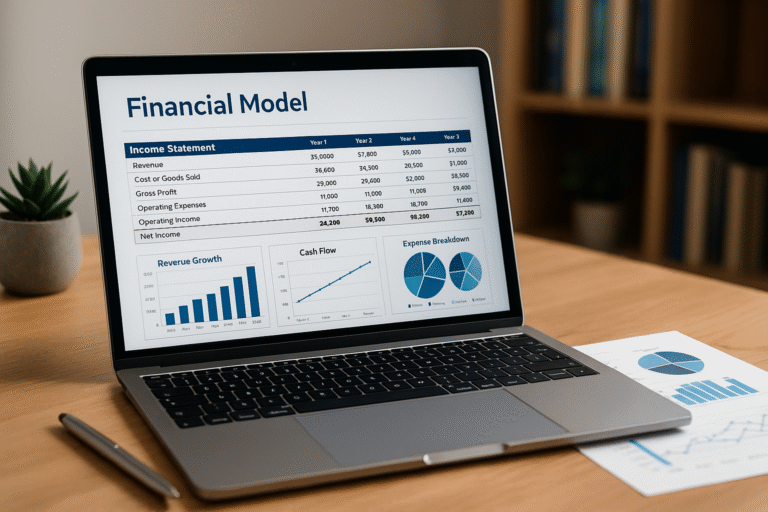
Excel model comparing a rate increase against a utilization increase Modeling

Raise the Rate or Raise Utilization

The required rate at your actual utilization, and the utilization that would make the current rate work. Both shown together, with the sensitivity visible.

  • Required rate derived from loaded cost and utilization
  • Rate against utilization sensitivity side by side
  • Scenario switching for a weaker or stronger year
  • Assumptions in one visible block, never inside formulas

Related: Excel financial modeling
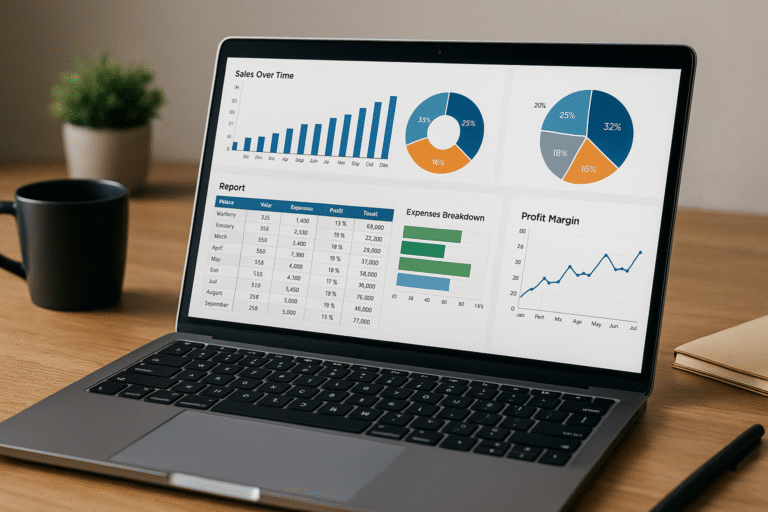
Excel report showing utilization per person rather than as a team average Reporting

Utilization Per Person, Then the Average

A team at seventy percent might be two people at ninety and three at fifty-five. Those are different problems, and one average hides both of them.

  • Per person first, with the average underneath
  • Non-billable split into proposals, training, admin and idle
  • Live connections to the systems already holding the data
  • Exception flags when one person carries too much of the load

Related: Excel reporting

Automated consolidation of timesheets, payroll and invoices in Excel Automation

The Numbers Arrive Without Being Chased

Timesheets, payroll and billing sit in different places and somebody currently stitches them together. Scheduled, utilization is ready at the start of each month.

  • Scheduled consolidation across time, payroll and billing
  • Refresh from source rather than from a saved download
  • Import cleanup for exports that shift format between runs
  • Rolling utilization so a slide is visible in weeks, not quarters

Related: Excel automation

VBA timesheet entry that requires every paid hour to be categorized Code

VBA So the Hours Add Up to the Week

The calculation collapses if non-billable time goes unrecorded. Entry that will not accept a week which does not reconcile to contracted hours.

  • Week must reconcile before it will submit
  • Categories enforced rather than left to habit
  • Deterministic routines for anything run every period
  • Legacy macro repair where whoever wrote it has gone

Related: VBA and macro development

Remote Excel expert help session with a Fairfax business Support

Expert Help and Team Training

Sometimes there is no project, only a rate decision due before a renewal and no reliable utilization figure. An hour with the timesheets open generally answers it, and the method is written up for you.

  • Same-week attention when a rate decision will not wait
  • Training on your own files rather than on sample data
  • Written handover so the calculation keeps being run
  • Retained hours where there is no in-house Excel depth

Related: Excel expert help and MS Office training

Where it starts

Eight Conversations That Begin a Fairfax Excel Project

Openings we hear from businesses that sell time, and what the answer usually turns out to be.

"The rate looks healthy against the salary."

Against the salary, yes. Against loaded cost divided by hours actually billed, frequently not. That second figure is the real one.

"We do not know our utilization."

Because non-billable hours go unrecorded, so the denominator is missing. Complete hour accounting is the fix and it is not surveillance.

"Our team average is around seventy percent."

Which could be two people at ninety and three at fifty-five. Reported per person, those are different problems with different answers.

"Should we put the rate up?"

One of two honest options. The other is raising utilization, and the model shows which gets you further for less disruption.

"Overhead keeps climbing."

Often non-billable time growing inside a single bucket. Split into proposals, training, admin and idle, one category is usually the culprit.

"One person is in everything."

Visible the moment utilization is reported individually. It is a retention risk and a capacity ceiling at the same time.

"Nobody can produce the figures but me."

Which holds until the week you are unavailable. Written procedure and scheduled consolidation remove that dependency entirely.

"The timesheet file has become painful to use."

Usually lookups spanning whole columns, or a formula recalculating the entire year on every keystroke. Rebuilt on tables it is instant.

A quick check

Signs the Rate Is Resting on an Assumption

Nobody plans this work. It follows a busy year that produced less profit than a quieter one. Earlier signals look like this:

  • Rates are set against salary rather than loaded cost
  • Non-billable hours are not recorded at all
  • Utilization is an average or not a number at all
  • Overhead is one line absorbing all unsold time
  • Nobody knows the true cost of a delivered hour
  • Proposal effort is never measured against wins
  • A busy month and a profitable month are not the same month
  • The required rate has never been calculated from the arithmetic

What the missing denominator costs

The expensive version is years of work priced slightly below cost. Each engagement looked acceptable against salary, the business grew, and the margin never appeared because the unsold hours were always being carried quietly by the sold ones.

The quieter cost is the wrong fix applied with confidence. A business that raises rates when its real problem was utilization loses work it needed and keeps the underlying gap, which is a worse position than the one it started from.

What happens before a quote

We look at payroll, timesheets and invoices together, and at how much of the paid week is currently accounted for. That proportion tells both of us immediately how much of this is measurement and how much is rebuild.

Frequently the finding is that complete hour accounting and a loaded cost figure settle the whole question, and that is the recommendation. Where a pricing decision genuinely belongs with you alone, you will be told so. The first conversation is unpaid either way.

Work delivered

Three Builds and the Results Recorded

Real projects for real organizations, each figure as reported by the client after the tool had bedded in.

Excel budgeting template with tiered access across thirty companies

66% better
accuracy

A budget tool across thirty businesses

At the outset
Thirty companies under one management group, each budgeted independently and merged by hand afterward, with several people needing different levels of access to a single file.
What we delivered
A template carrying layered permissions, VBA lifting each approved budget into a master sheet, payroll, tax and benefits adjustable at the front, and totals loading directly into the accounting system.
Afterward
Keying figures twice stopped altogether. Accuracy climbed 66%, the build cycle ran more than ten times quicker, and reforecasting mid-year became something they could do.

Automated report drawing on more than fifty sources

40 hours
a month back

Reporting that had always been manual

At the outset
Internal management reports and submissions to outside funding institutions were built by hand, with one update cycle capable of running to three days.
What we delivered
A program pulling more than fifty sources into one document in roughly five minutes, letting each source be inspected first and turning out drafts for comparison.
Afterward
A job that had filled a working day now finishes in minutes, returning forty person-hours or more every month from effort that produced nothing new.

Workbook rebuilt onto native Excel tables with pivot tables and slicers

9 minutes
to 30 seconds

A file that had become unworkable

At the outset
Finding one row among twelve hundred could take as much as nine minutes, the result of array formulas piled on each other and years of code added without review.
What we delivered
The data rehoused on native Excel tables, pivots and slicers taking over the search logic, and the surplus array formulas and VBA taken out rather than tolerated.
Afterward
Thirty seconds for the same row on the same machine. What had held it back was the arrangement, never the hardware.

Who we work with

Industries We Serve in Fairfax

The six areas JAAD Group covers, described as they appear where the product is somebody's time.

Manufacturing and Logistics icon

Manufacturing & Logistics

Supply chain analysis, production scheduling, vendor performance. Engineering and technical services billing skilled hours against fixed salaries.

Finance and Accounting icon

Finance and Accounting

Cash flow management, P&L tracking, budget analysis. Practices whose rate was set against salary rather than against loaded cost.

Real Estate and Construction icon

Real Estate & Construction

Investment models, cost forecasting, expense tracking. Consultancies and surveyors carrying unsold hours inside overhead.

Retail and E-commerce icon

Retail and E-commerce

Inventory monitoring, sales tracking, profit calculations. Agencies and service sellers whose delivery cost is almost entirely people.

Healthcare and Insurance icon

Healthcare & Insurance

Patient record systems, policy tracking, compliance reports. Practices where an unfilled appointment slot is a cost nobody records.

Education and Training icon

Education & Training

Enrollment reports, course progress dashboards, grant tracking. Providers whose tutors are paid by contract and billed by session.

If your industry relies on Excel for financial analysis, data tracking or reporting, we can optimize and automate your workflows to save time and improve performance.

How it runs

Working With an Excel Consultant in Fairfax

Five stages. The opening one is unpaid, and plenty of enquiries conclude there with guidance rather than a quotation.

  1. Say how you set rates and what you know about utilization

    And whether non-billable hours are recorded anywhere. Sending a month of timesheets makes the call considerably sharper, though it is not required.

  2. We check how much of the paid week is accounted for

    What the timesheets capture, what payroll holds, and whether a loaded cost figure can be built from what exists.

  3. Scope and figure, documented

    Both settled before construction. The records have been read by then, so vagueness about either would be a decision rather than a necessity.

  4. Built in view

    Each working version arrives as it is finished rather than everything at the end, which is what makes an early change inexpensive.

  5. Handed over complete

    The workbooks, any code behind them, a written note of how loaded cost was built up, and time with whoever will maintain it.

Jeff Mattus, Owner and President of JAAD Group Excel Consulting

Who does the work

Jeff Mattus

Owner & President, JAAD Group

JAAD Group is one person, Jeff Mattus, who put the practice together over more than twenty-five years of Excel and Office systems work and who arrived at the field through Computer Science rather than through a finance department. Where a ratio is being quoted without its denominator, that is the instinct that asks for the denominator.

The projects have reached into finance, healthcare, technology and property. The range is why an opening call usually ends in a diagnosis rather than a discovery phase: utilization behaves the same whether the hour is billed by an engineer, a clinician or a tutor.

Delivery is remote, so a Fairfax engagement runs exactly as a local one would. Whoever takes the first call prices the job and then builds it.

Organizations we have built for

Trusted With Business-Critical Spreadsheets

CAPTRUST
Trutina
Linmore LED
Gro-Well
McGregor Benefits
The Benefits Academy
Glen Acres HOA
Health Insurance Team
SSIS
OEC
SBA
Jesse Consulting

Why a specialist

Why Fairfax Businesses Use a Dedicated Excel Consultant

A single discipline

Excel, VBA and Office automation are the entire practice, which is why an opening read is usually accurate and the estimate close to the final number.

Built for the rate decision

A required rate derived from loaded cost and real utilization is a defensible position; a rate set against salary is a guess that has been repeated.

Reshape ahead of rebuild

Where the existing records can be extended rather than replaced, that is the advice, and it is the cheaper route by a wide margin.

Handed over documented

Written explanation, any code and training are part of delivery, so the calculation keeps being run after the build.

Numbers the clients reported

Each outcome quoted above came from the organization running the tool, and all three builds appear at length earlier.

Remote, so it starts at once

Everything happens over a shared screen, so a rate due before a renewal gets attention the same day.

Questions

Frequently Asked Questions

What does Excel consulting in Fairfax usually involve?

Most often it is building the two figures a time-selling business needs and rarely has: fully loaded cost per person, and the proportion of paid hours that actually reach an invoice.

From those comes the true cost of a delivered hour, utilization reported per person, and a required rate derived from arithmetic rather than from the market.

Why is comparing rate to salary misleading?

Because the salary is only part of what an employed hour costs, and because the hours you sell have to carry the hours you do not.

Loaded cost divided by billed hours is usually far above salary divided by contracted hours, and the distance between them is where most under-pricing in professional work sits.

Is recording all hours not just surveillance?

It would be if the purpose were to police individuals, and that is not the purpose. The point is to find out where the capacity of the business actually goes.

Without complete accounting the denominator of every useful calculation is missing, which means nobody can tell whether a rate works or whether a team is under-sold.

Why report utilization per person first?

Because the average conceals exactly what you need to see. Seventy percent across a team might be two people at ninety and three at fifty-five.

Those are different problems. One is a retention risk and a capacity ceiling; the other may be under-selling rather than under-performing. The average hides both.

Should non-billable time really be split up?

Yes, because the categories behave nothing alike. Proposal writing should be measured against wins, training is investment with a payback, and idle time is a scheduling failure.

In one bucket they are a number nobody can act on. Split out, one category has usually grown to several times what anybody would have authorized.

Rate increase or utilization increase?

Both are honest answers and the model shows which gets you further. Raising the rate risks work you need; raising utilization needs capacity you may not have.

Seeing the sensitivity of each side by side tends to settle an argument that has been running inside the business for years.

What does an Excel consultant cost?

Scope decides it, which is why the records are examined before any figure is named and why that examination is free. Loaded cost with utilization reporting is fixed-price.

In every case the deliverable and the price are agreed in writing before any building begins.

Do you work on site in Fairfax?

The work is delivered remotely by design rather than by limitation. Going through timesheets and payroll together on a shared screen is identical at any distance.

It also means a rate decision due before a renewal gets looked at this week, and no part of the invoice is travel.

The person who built our utilization reporting has left. Is it recoverable?

Usually. The workbook gets read back to first principles, the cost build-up reconstructed, and each fragile part repaired or replaced depending on what is honestly warranted.

What the work needs is time with whoever runs the timesheets now, because the conventions they apply matter as much as the file.

How long does a project take?

Loaded cost with per-person utilization is often under a week. Adding the non-billable split, a required-rate model and scheduled consolidation usually runs two weeks.

Whatever the size, that estimate is committed in writing before building starts rather than emerging as the work proceeds.

What do we keep at the end?

The workbooks, any macro source code, a written note of how loaded cost was built up and what each hour category means, and training for whoever will maintain it.

Nothing is locked to us and no subscription is needed to keep it running. Support afterward is available and entirely optional.

Are those six industries a limit?

No. They describe where most of the work has come from rather than what is accepted, and what decides scope is the nature of the problem rather than the sector.

A billable hour, a clinical appointment and a teaching session are the same calculation with different vocabulary.

Also serving

Excel Consulting Across Virginia

Everything is delivered over a shared screen, so your address has no bearing on the result. Other Virginia cities with their own pages:

By service: Excel consulting for loaded cost, financial modeling for the required rate, Excel reporting for utilization, Excel automation for the monthly numbers, and VBA and macro development or Excel expert help for the rest.

Fairfax is the hub here — schematic, not to scale

Send Us the Workbook

Tell us how you set rates and what you know about utilization, or attach a month of timesheets. You get a flat read on what the rate is really covering, with nothing committed.

949-464-7489

JAAD Group Excel Consulting · 2937 Hawksdale Dr, Las Vegas, NV 89134
Excel consulting services in Fairfax, VA and across Virginia, delivered remotely